
What Are Journal or Diary Studies in Market Research? Types, Use Cases, and Benefits
Key takeaways
- A journal or diary study is a longitudinal qualitative research method in which participants record their experiences in real time over days, weeks or months.
- Because entries are made as things happen, diary studies avoid recall bias and show how behaviour, satisfaction and emotion change over time.
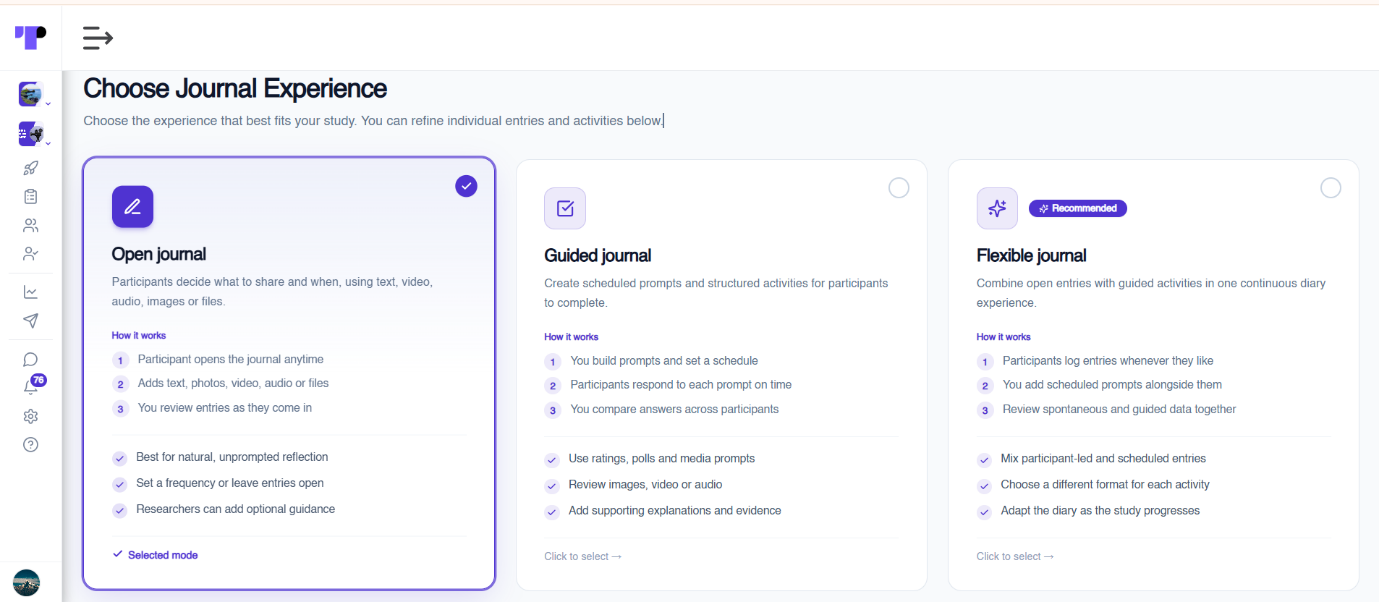
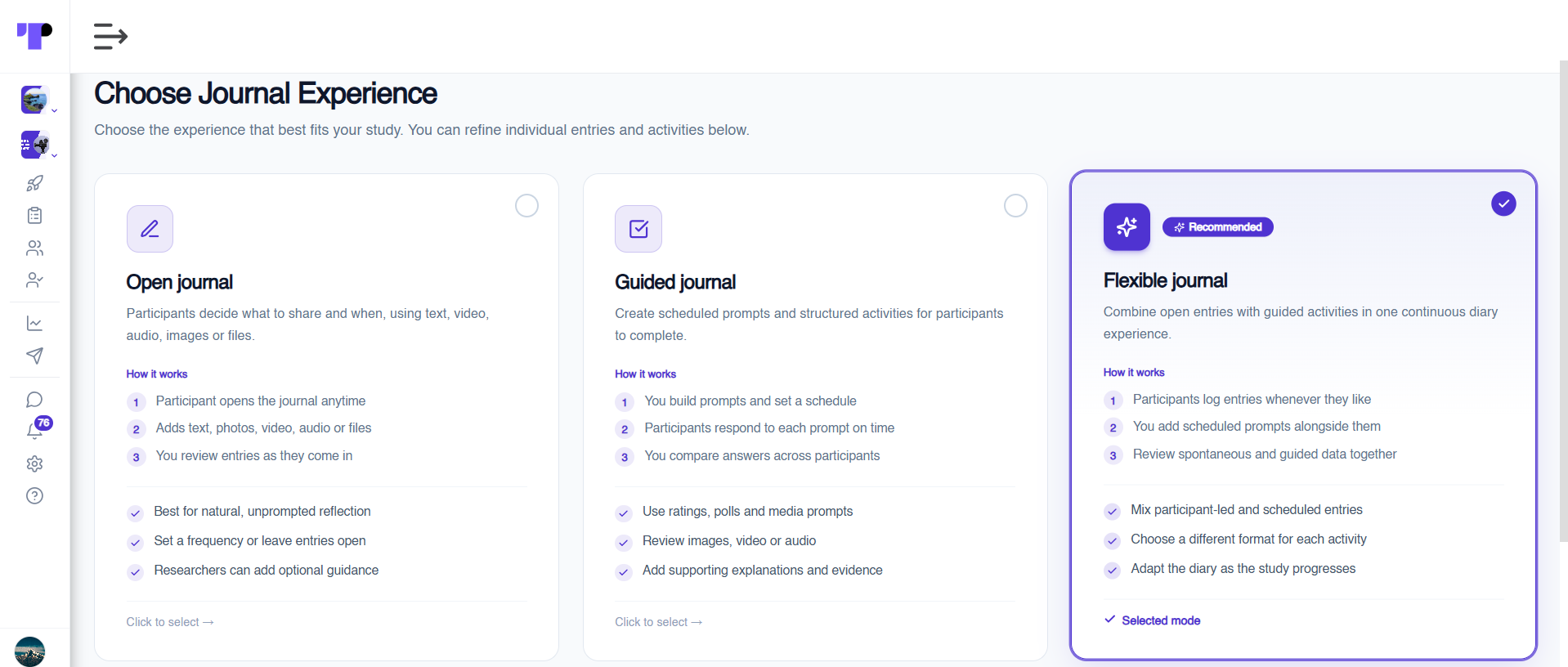
- There are three journal modes on Terapage: open journals for exploration, guided journals for structured tasks, and flexible journals that combine both.
- Entries can include text, photos, videos and voice notes, giving researchers real context about where, when and how products are used.
- AI-powered analysis on Terapage surfaces emerging themes, codes and sentiment across all journal entries.
Your research team conducted the study. The results came out clean. But when stakeholders and decision-makers asked one question, the team went blank.
But why did people stop using it by week three? What was actually going on that stopped them from using your serum?
To know the actual story, research teams prefer a daily journal activity instead of a one-off survey that only captures a single moment filtered through memory. Comparatively, a daily journal captures real-time emotions, feelings, experiences, frustrations, choices and preferences.
Modern market research platforms like Terapage allow research participants to record their experiences as they happen, in real time, over days or weeks. This enables research teams to unravel how a choice or behaviour has evolved over time. Modern markets are not static, so to study consumer behaviour, teams need journal studies to read between the lines.
What Are Journal or Diary Studies in Market Research?
In qualitative research, journal or diary studies are a longitudinal research method that allows participants to record their emotions, behaviours, choices, thoughts, experiences and reactions in real time over a set period, such as days, weeks or months.
It doesn’t depend on recall memory, making it the most authentic method to study human behaviour. For instance, instead of asking participants,
“How do you feel about your baby swing?”
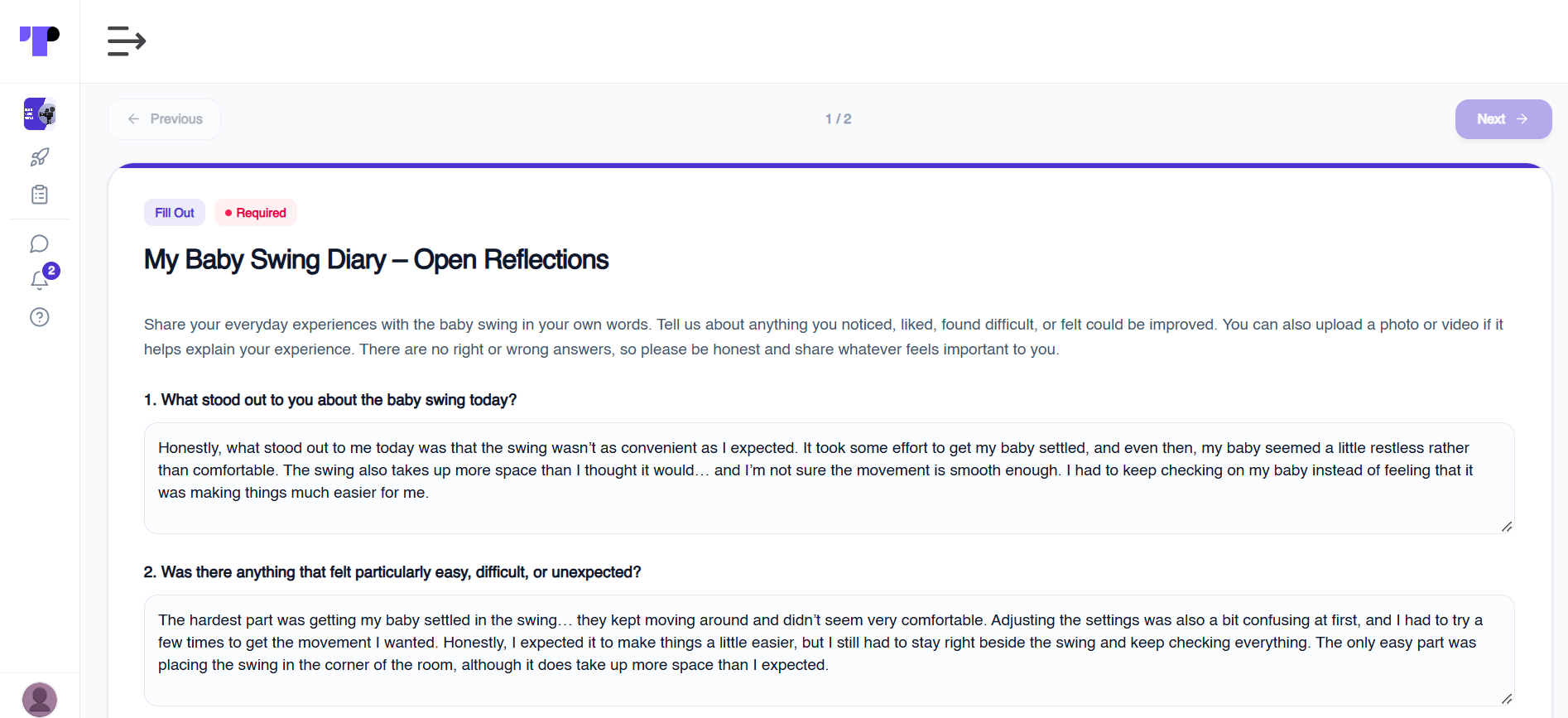
journal or diary studies allow them to log their daily use experience, like what their child likes and dislikes, how the product fits into their daily routine and what challenges come up, as those things happen.
Moreover, journal entries are not limited to written reflections. Participants can also contribute photographs, videos and audio recordings to show what they encounter in their everyday environments.
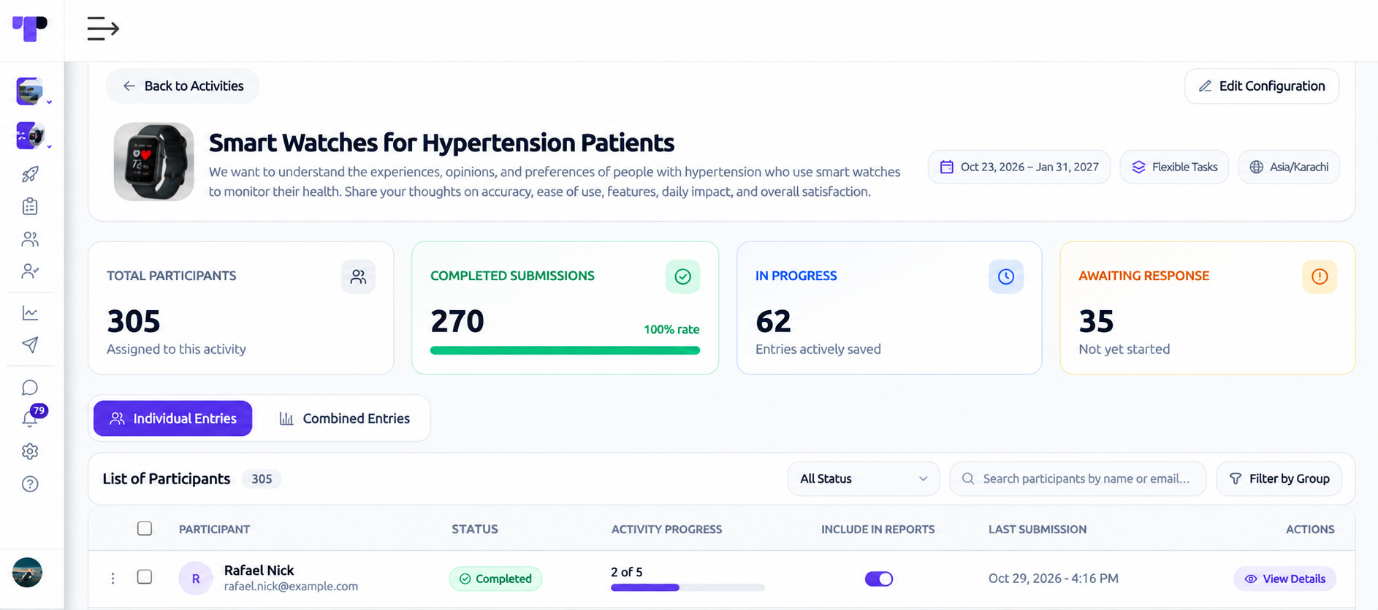
Terapage supports this approach through its Journal Activity feature, where researchers can configure structured tasks or open-ended entries, set submission intervals, and collect multimedia feedback throughout a study.
The method is especially valuable for:
- Habit and routine tracking: seeing how behaviours form, stick or fade.
- Product and experience research: observing real usage in real environments, such as how people use and feel about a skincare serum, a baby product or a wearable device.
- Behavioural studies: capturing the context, timing and triggers around decisions.
- Learning and progress studies: tracking how skills, confidence or attitudes change over time, for example in education research.
- Change over time: spotting shifts in satisfaction, emotion or opinion that a snapshot would miss.

What Are the Types of Journal or Diary Studies?
Journal or diary studies are the most reliable method to study human behaviour, but the real challenge is design. How you structure the diary shapes everything you get back, and that is where the three journal modes come in.
1. Open Journal
Open journal or diary studies give participants considerable freedom to decide what they record and how they describe their experiences. Researchers establish the study objectives and timeframe but avoid prescribing detailed questions for every entry. Participants can focus on the moments, observations and experiences they consider important.
Open journal or diary studies are particularly suitable for:
- Exploratory market research: discovering unmet needs, emerging behaviours and unexpected customer experiences.
- Consumer behaviour studies: understanding how people make everyday decisions without restricting them to predefined categories.
- Early-stage product research: exploring how customers naturally interact with a new product or service, and building products people will buy.
- Customer experience research: identifying frustrations and opportunities that researchers may not have anticipated.
- Lifestyle and habit research: exploring routines, motivations and contextual influences on behaviour.
Trade-off: The cost is variability, because entries differ in depth, length, topic and format, which makes comparison harder. Therefore, research teams should communicate expectations clearly to encourage meaningful reflection without restricting participants’ choices.

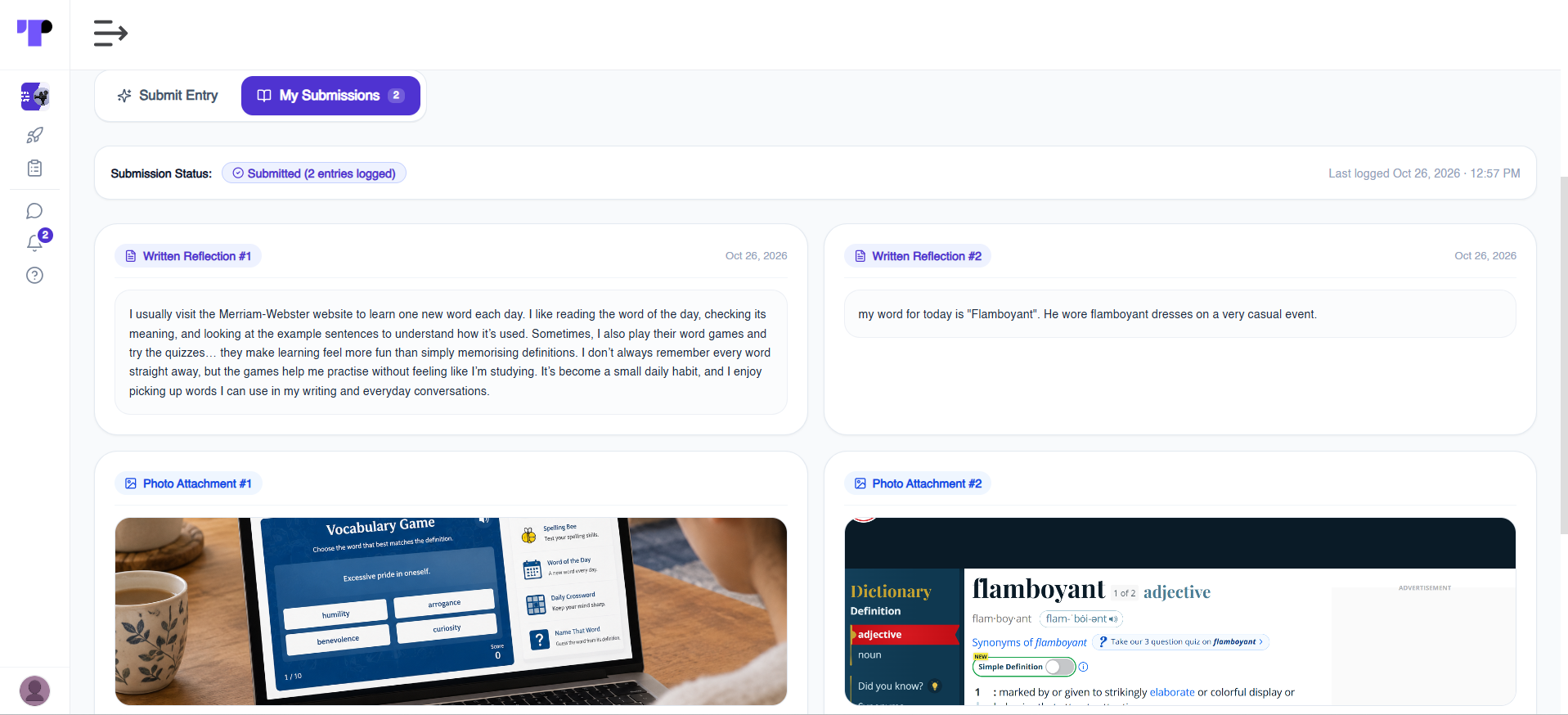
2. Guided Journal
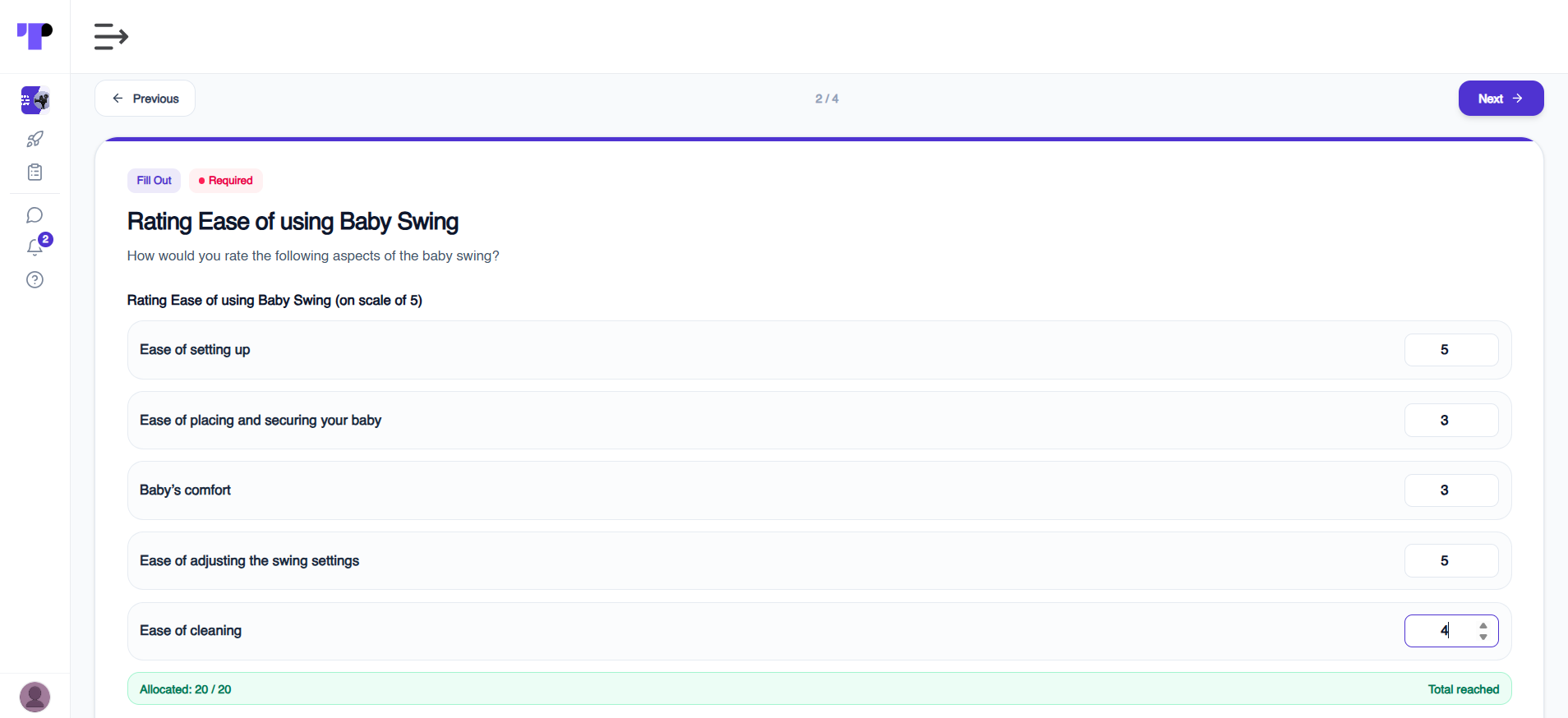
Guided or structured journal or diary studies use predefined questions, prompts or activities to direct participants towards specific aspects of their experiences. Researchers decide what information they need and design journal tasks accordingly. They also set schedules for when to complete a certain task and how many responses should be logged for that entry. For example, a company testing a mobile banking app might ask participants to record their experience after completing a transaction. Each entry could explore what they were trying to accomplish, how easy the process felt, whether they encountered difficulties, and whether they achieved their goal.
Guided journal or diary studies are suitable for:
- Usability testing: identifying difficulties while completing specific tasks in an app, website or digital product.
- Product testing: tracking product usage, perceived performance and satisfaction over repeated interactions, as in in-home usage testing.
- Customer journey research: investigating defined stages such as product discovery, purchase, onboarding and post-purchase support.
- Advertising and concept testing: recording participants’ reactions to campaign messages, creative concepts or brand communications at specified intervals.
- Service evaluation: understanding particular interactions with customer support, delivery services or subscription platforms.
- Behaviour-change studies: tracking progress towards a goal, such as adopting a new routine or changing consumption habits.
Trade-off: Too many questions can make journal or diary studies feel like a repetitive survey. Leading prompts can also influence what participants report. Researchers should keep tasks manageable, use neutral wording, and leave room for participants to mention experiences beyond the questions.
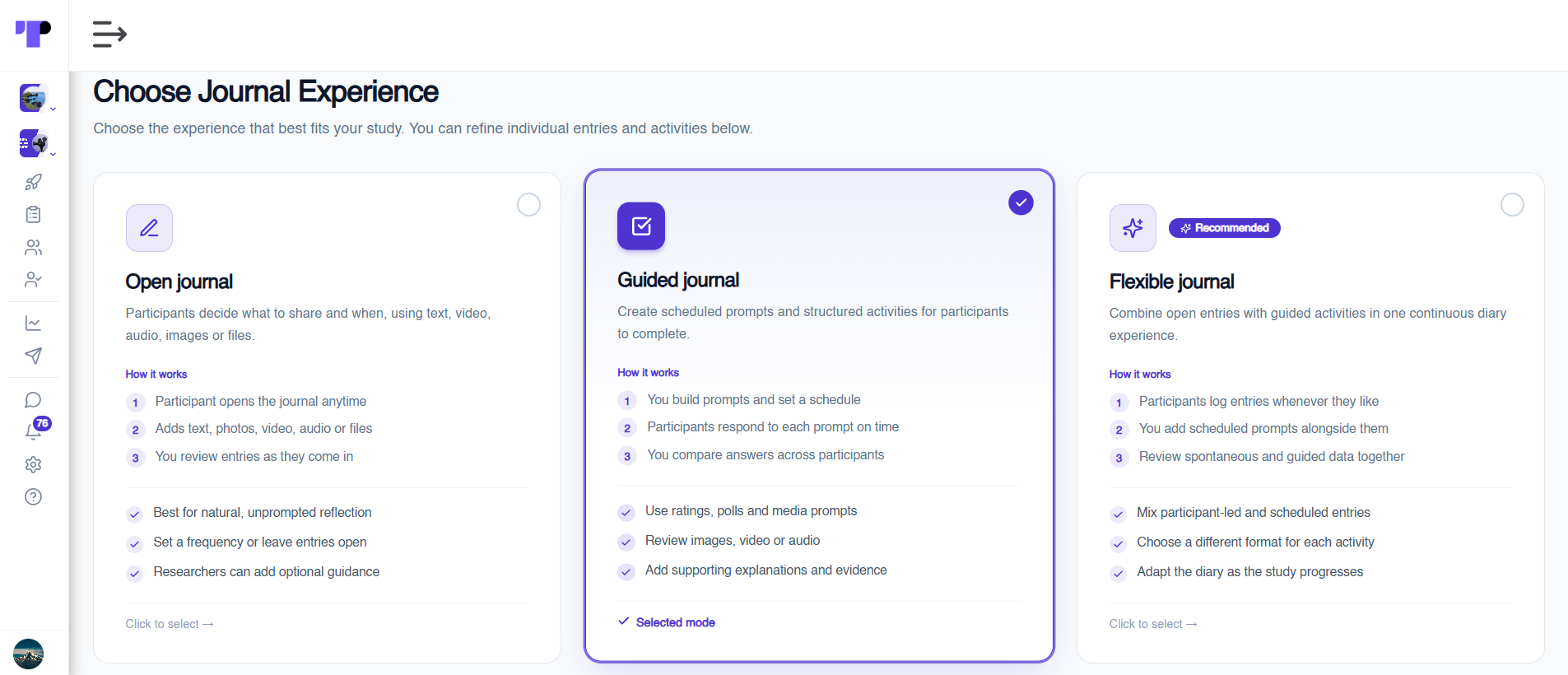
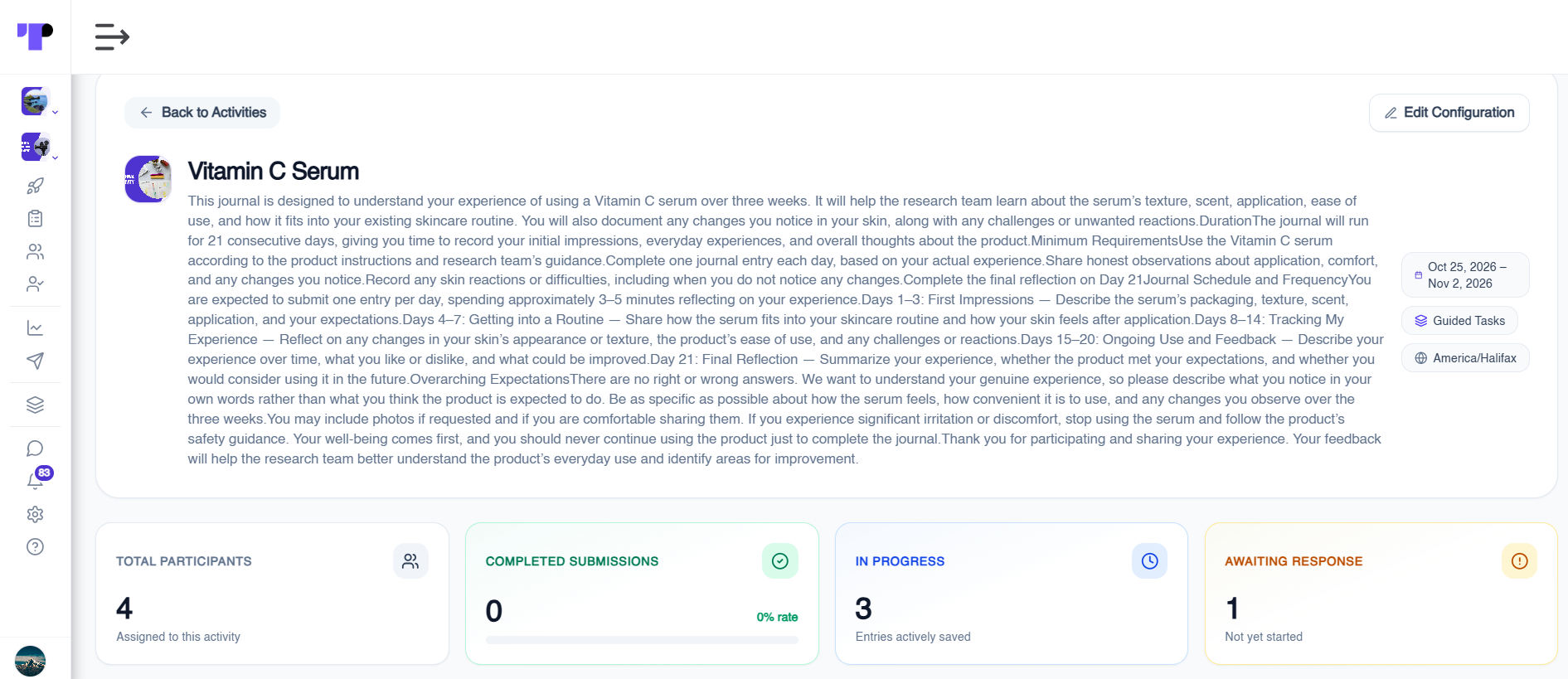
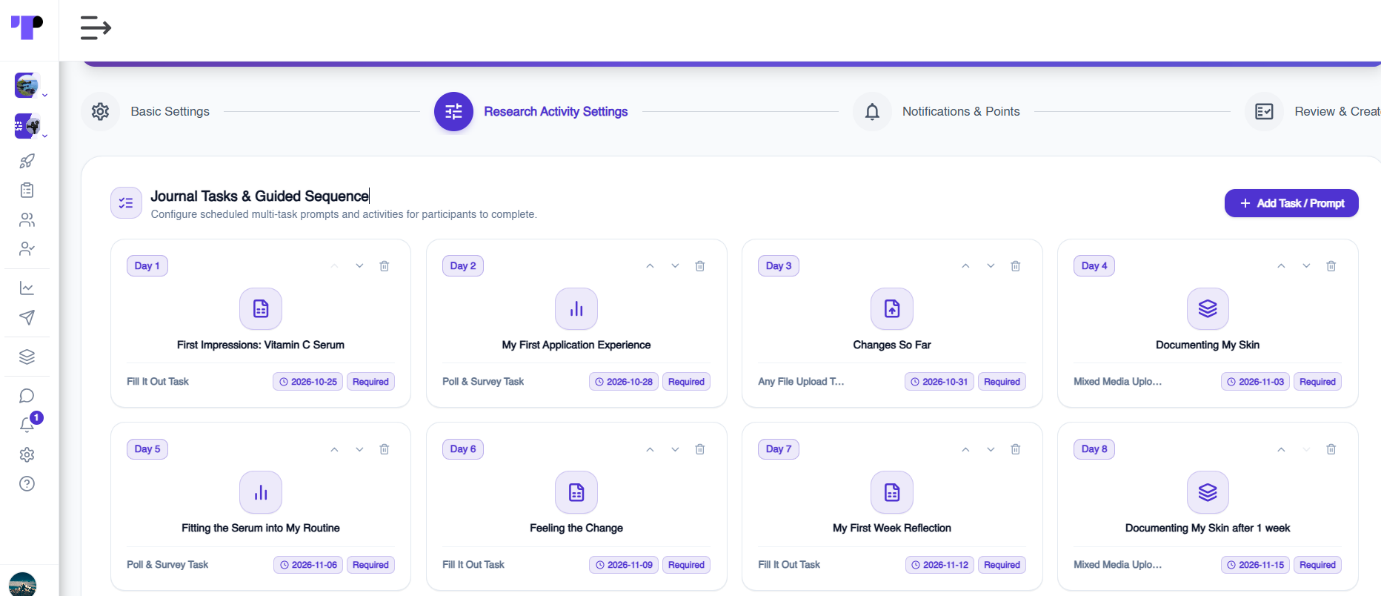
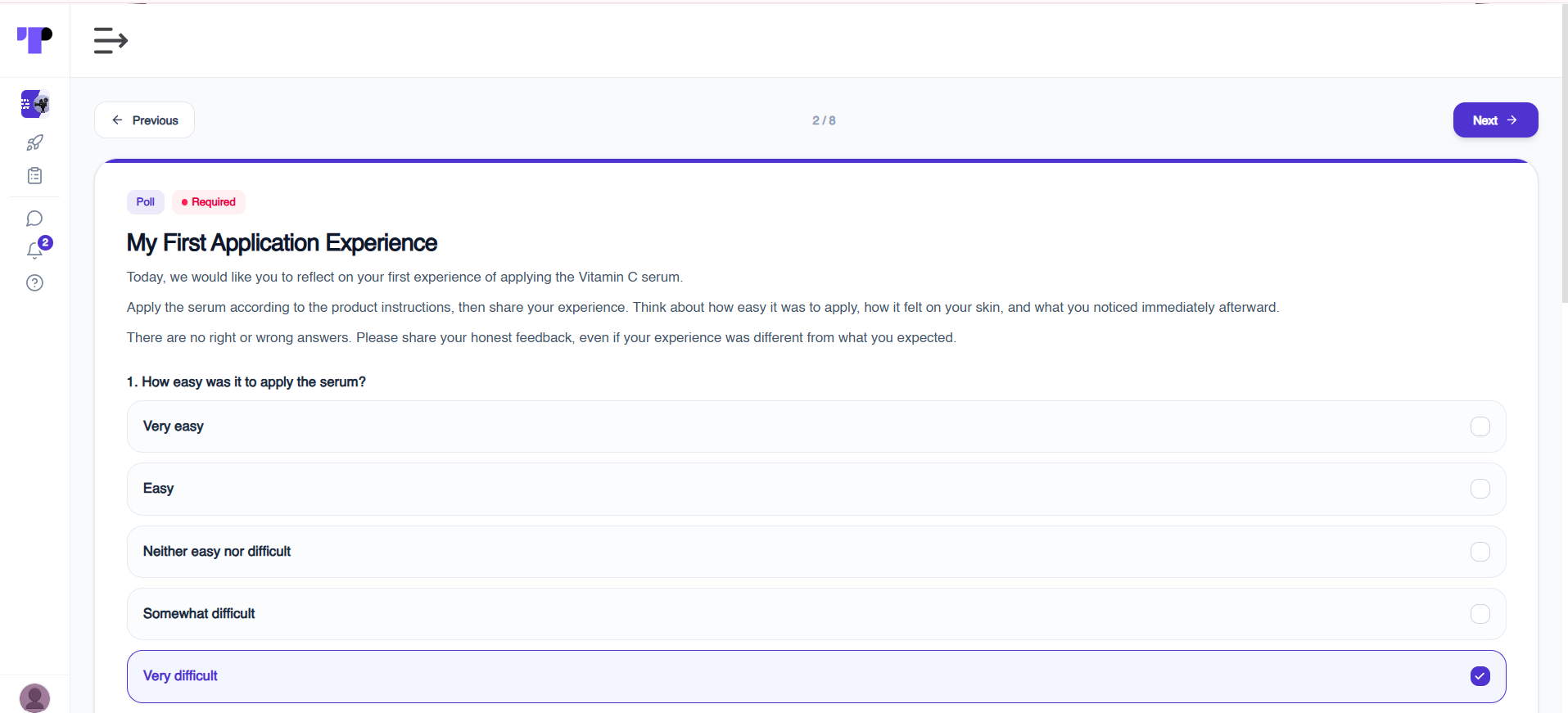
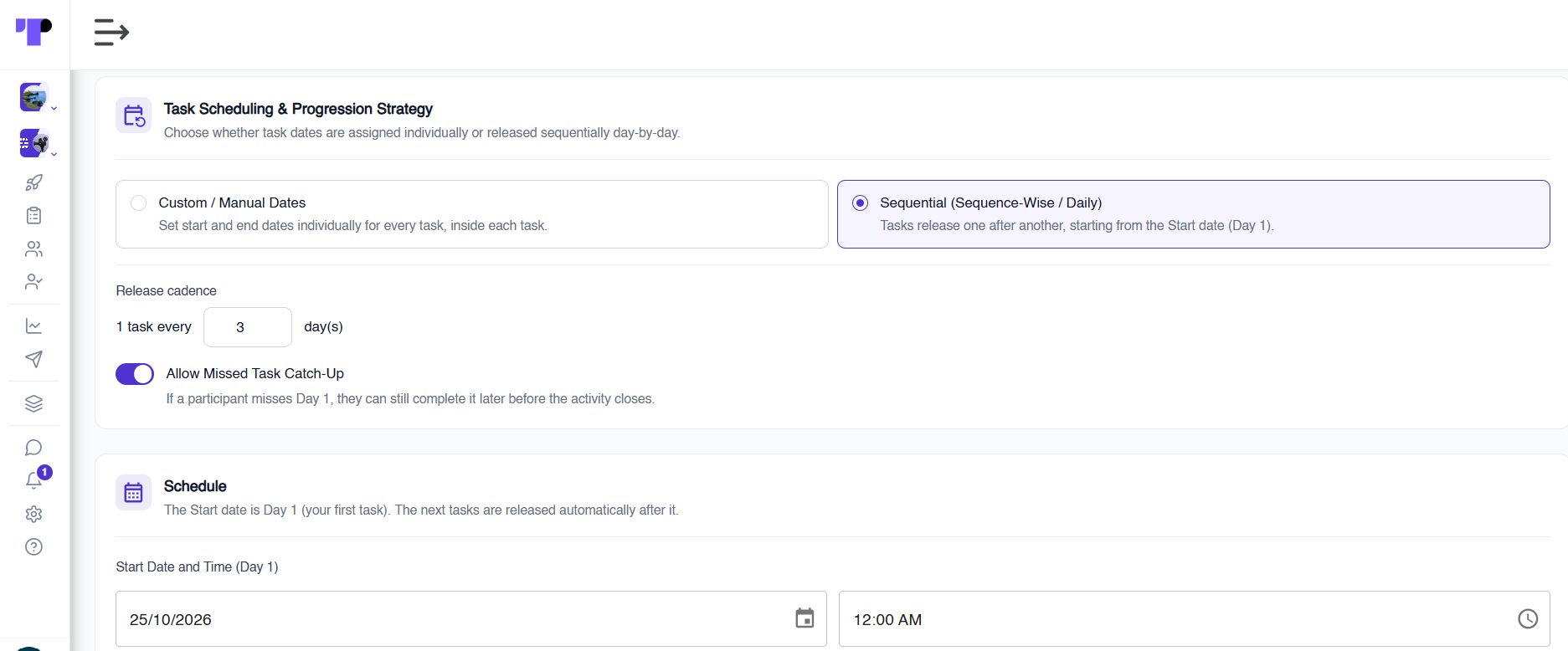
In a guided journal, Terapage lets research teams decide whether participants can complete tasks they have missed. If late submissions are switched off, a participant cannot submit a task once its window has closed. This keeps responses within the defined period, so the feedback reflects what participants experienced at that moment and not what they remember later.

3. Flexible Journal
Flexible journal or diary studies combine guided and open journal or diary studies. Researchers define the main topics, tasks or reporting intervals but allow participants to contribute additional observations in their own way. In flexible journal or diary studies, researchers can control:
- Task types: build the journal from forms, polls, ranking and sorting, media uploads, and image, video or audio reviews.
- Scheduling: researchers can give each task its own start date and time, end date and time, and archive date and time, or leave the schedule blank so the task inherits the overall activity dates.
- Required tasks: they can mark tasks as required so participants complete them before moving on.
- Supporting evidence: they can ask participants to explain their answers and add evidence alongside ratings and polls.
Flexible journal or diary studies are particularly suitable for:
- Longitudinal customer research: understanding how opinions, expectations and behaviours change over time, for example within insight communities.
- Customer experience studies: combining feedback about defined interactions with unexpected observations.
- Product adoption research: investigating how people learn to use a product and incorporate it into their routines.
- Mobile ethnography: capturing experiences in participants’ natural environments through entries and multimedia.
- Brand relationship studies: exploring how perceptions and preferences develop through repeated interactions.
- Complex customer journeys: investigating experiences that vary considerably between individuals.
Trade-off: Flexible journal or diary studies require a thoughtful balance. If instructions are too broad, entries may be inconsistent; if the framework is too restrictive, participants may have little opportunity to introduce new themes.

What Are the Benefits of Journal or Diary Studies in Market Research?
1. Captures In-the-Moment Behaviour
Memory is selective. Journals record the moment itself, so research teams get the frustration at 9 pm on a Tuesday instead of a tidy summary a month later based on recalled memory.
2. Captures Real-Time Patterns
A survey gives you one data point. A journal shows how habits form, how satisfaction rises or fades and when enthusiasm drops. That is how you answer “why did people stop using it?”
3. Reveals Real Context
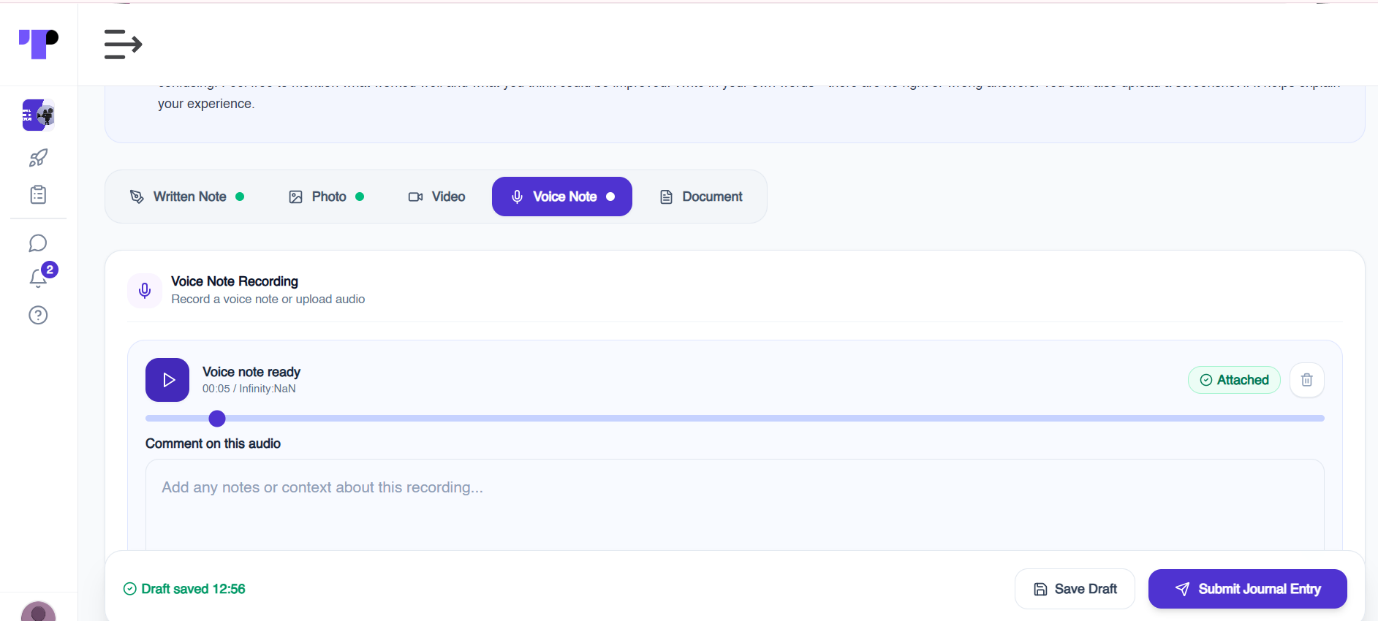
Written experiences do not provide the whole picture and context. Multimedia journal entries, such as photos, screenshots, videos and voice notes, show where, when and how people actually use a product. For instance, a parent can show you the swing in their living room, and a student can attach the feedback email that changed how they write.

4. Unexpected Insights
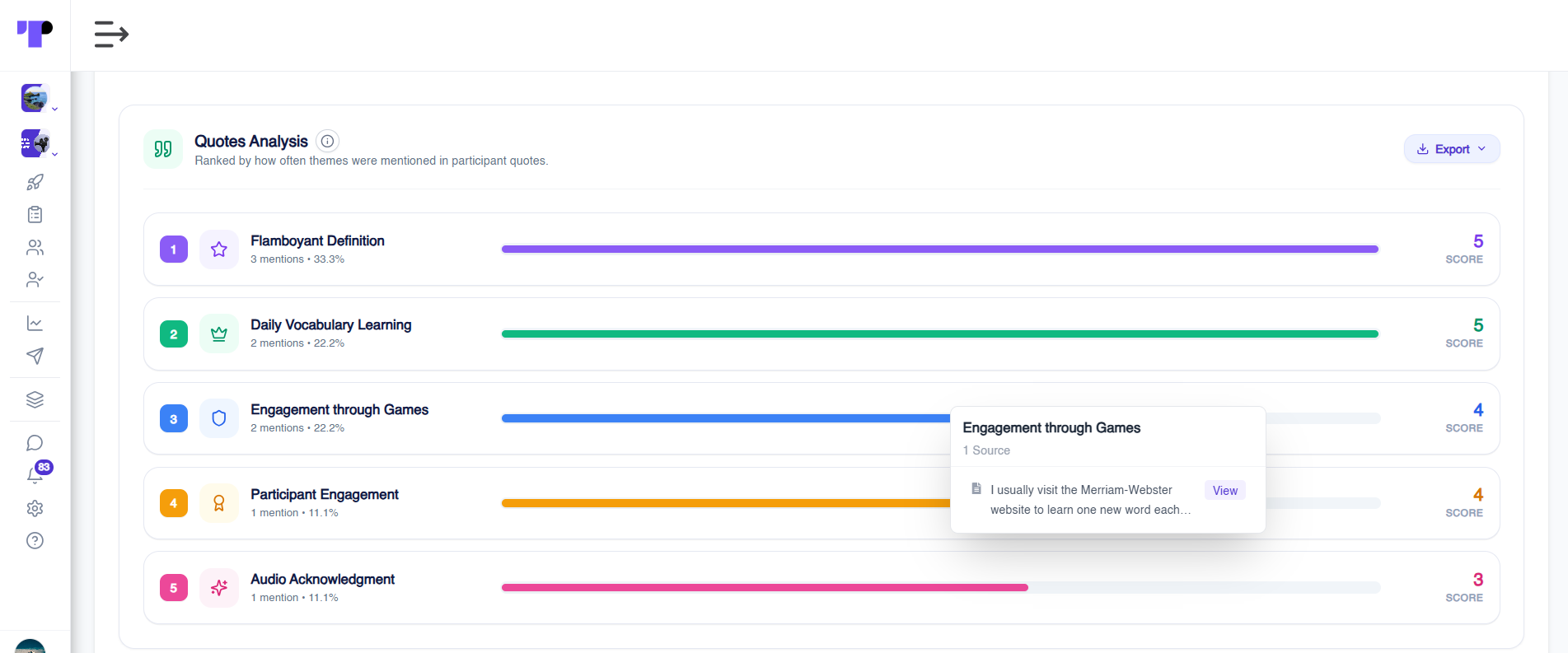
When participants share their everyday experiences in their own words, researchers can uncover unmet needs, workarounds and unexpected ways people use a product that they may not have thought to ask about in a questionnaire.
5. Collecting Emotions Along with Opinions
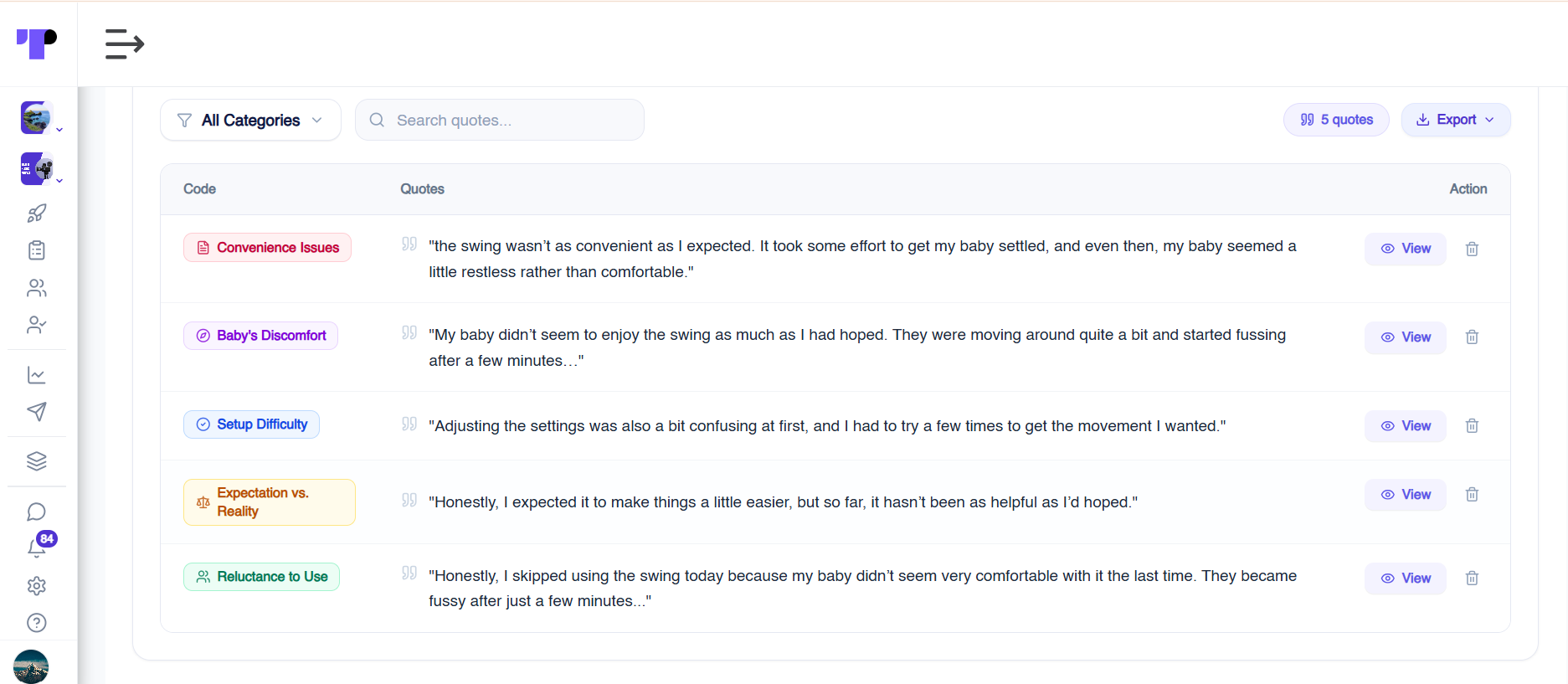
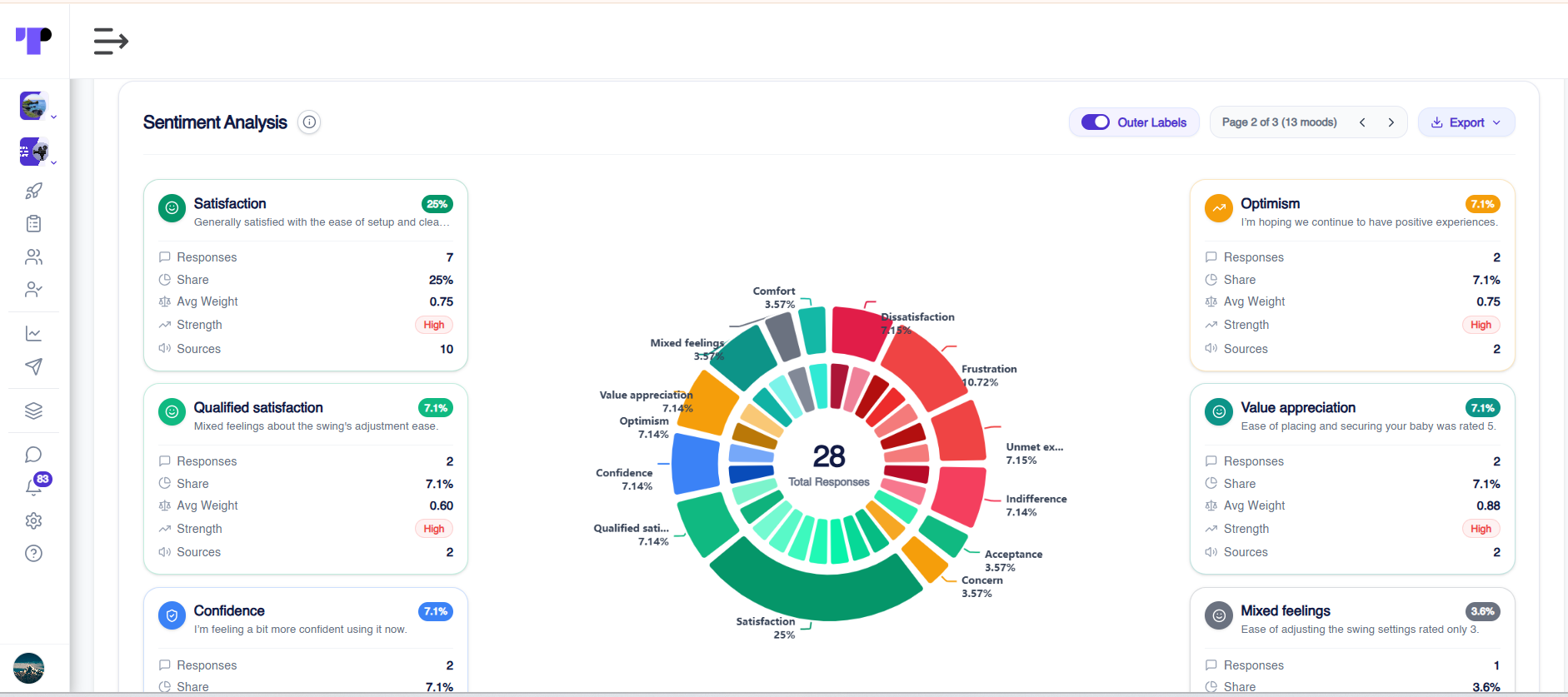
Since journal or diary study entries are written close to the experience, they carry real feelings, frustrations and preferences. AI-powered sentiment analysis in Terapage helps you spot those emotional trends across all entries, so you can see where feelings shift and read the entries behind them.
6. Multi-Purpose Research Needs
Journals suit habit and routine tracking, product and experience research, behavioural studies, learning and progress studies, and any question about change over time.
Journal or Diary Studies in Market Research Are More Than Submitting Entries
In market research, journal or diary studies are about turning everyday participant experiences into meaningful research insights. They explore how people think, feel, behave and interact with products in their everyday lives. From the small challenges they encounter to the workarounds they develop and the unexpected ways they use a product, journal studies help researchers discover insights that may never emerge through traditional questionnaires alone.
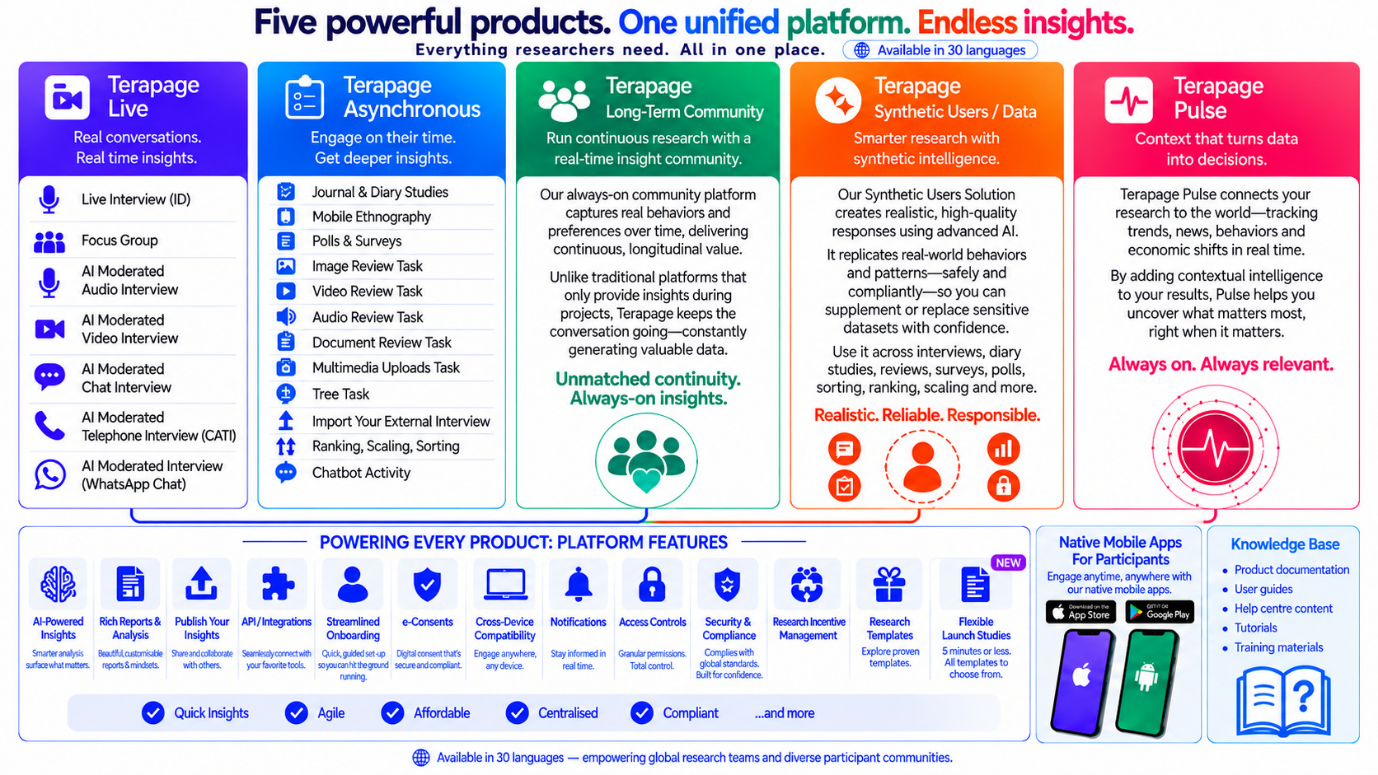
With Terapage, research teams can choose between open, guided and flexible journal or diary studies, capture experiences through multiple formats, and use AI-powered analysis to identify emerging themes, sentiments and patterns in real time. This integrated approach helps researchers uncover unmet needs, understand behaviours in context, and turn authentic participant experiences into actionable findings that inform better decisions.
Ready to uncover deeper insights through journal or diary studies? Book a demo with Terapage and discover how AI-powered journal studies can turn real participant experiences into actionable research insights.
Ready to run your first diary study?
No credit card required. Need participants for a longitudinal study? See our participant recruitment services.