Market Research Templates: What They Are and How to Use Them to Design a Study
Key takeaways
- A market research template is a pre-built study plan: the activities participants complete, such as interviews, surveys or short tests, with the questions already written.
- Templates give teams speed with quality, a questionnaire that misses nothing and a solid starting point, even without a research methods background.
- The five main types are interview, survey, user and product, market and customer, and mixed-method templates.
- Designing a study with a template takes eight steps, from setting your goal to reviewing AI-powered analysis.
- Templates work best when you define the objective first, edit the questions, check study settings and plan how you will use the findings.
Starting from a blank page is the slowest start.
You heard it right.
Research moves fast, and you can’t afford to spend most of your time designing surveys. Every hour spent building a study from scratch is an hour your competitors could spend learning what customers want.
That’s why smart teams now start with ready-made research templates. They pick a proven structure, adjust it and launch, driving rich insights before their competitors do. Modern research platforms like Terapage make this easy with a wide variety of templates, from customer surveys to interviews and usability tests. This guide explains what market research templates are, why they work and how to use them to design a study.
What Is a Market Research Template?
A market research template is a pre-built study plan. It includes the activities participants will complete, such as interviews, surveys or short tests, with the questions already written for each one.
Instead of drafting everything yourself, you pick a template that matches your goal, adjust it, and launch. Just think of it like a recipe. The ingredients and steps are laid out for you, and you can add your own flavour.
Clarification: A research template only provides an initial structure; it does not automatically determine every aspect of the research. Researchers use templates as an aid during research design by defining their objectives, selecting relevant participants, and adapting the activities to their specific context. In other words, market research templates are an aid to faster research and insights.
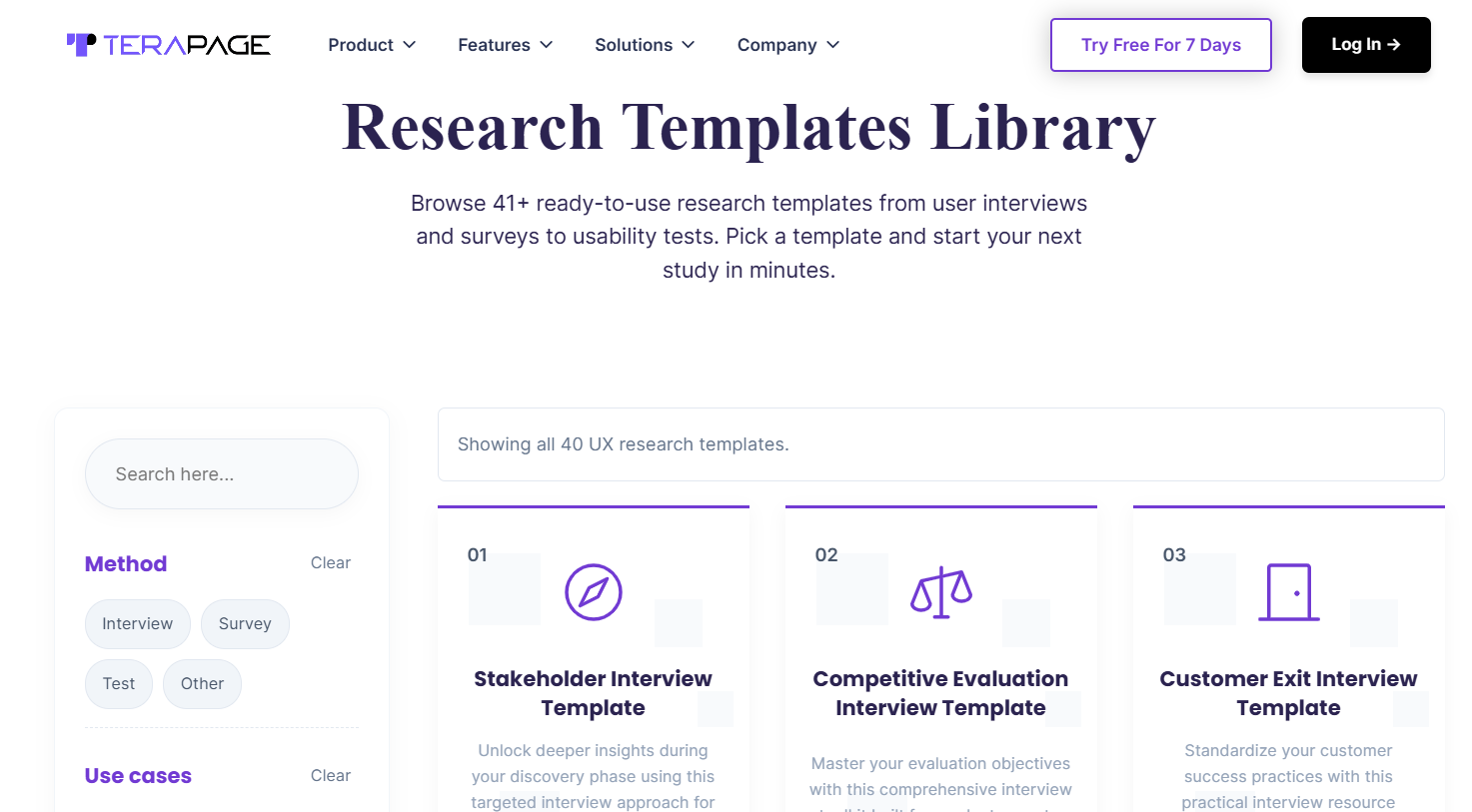
Note: Do not mistake templates for a survey or questionnaire. A questionnaire focuses on the questions participants answer, while a research template provides a broader structure for organising study activities and related research settings.
Why Does Your Team Need a Research Template?
1. Speed with Quality
Earlier, research teams used to spend hours designing a research setup, drafting questions, planning tasks, and organising the research process. Research templates offer speed with quality, as they are already built by experts and research teams only need to adjust them according to their study requirements.
2. A Questionnaire That Misses Nothing
Researchers designing questionnaires often miss certain points for reasons such as time, resources or expertise. Research templates, however, are already approved and tested, so they contain questions covering every aspect of the study. Your team will never miss a question if it uses a research template already built by experts, following the same principles behind effective user research questions.
3. No Research Design Background Needed
Marketers, product managers and customer success teams can run solid studies without a methods background, because research templates bring the expertise of market experts in survey design.
4. A Solid Starting Point
Research teams are not bound to use research templates as they are. They can use them as a head start, then edit the questions, reorder the activities, and remove anything they do not find relevant to their research goals.
What Are the Different Types of Market Research Templates?
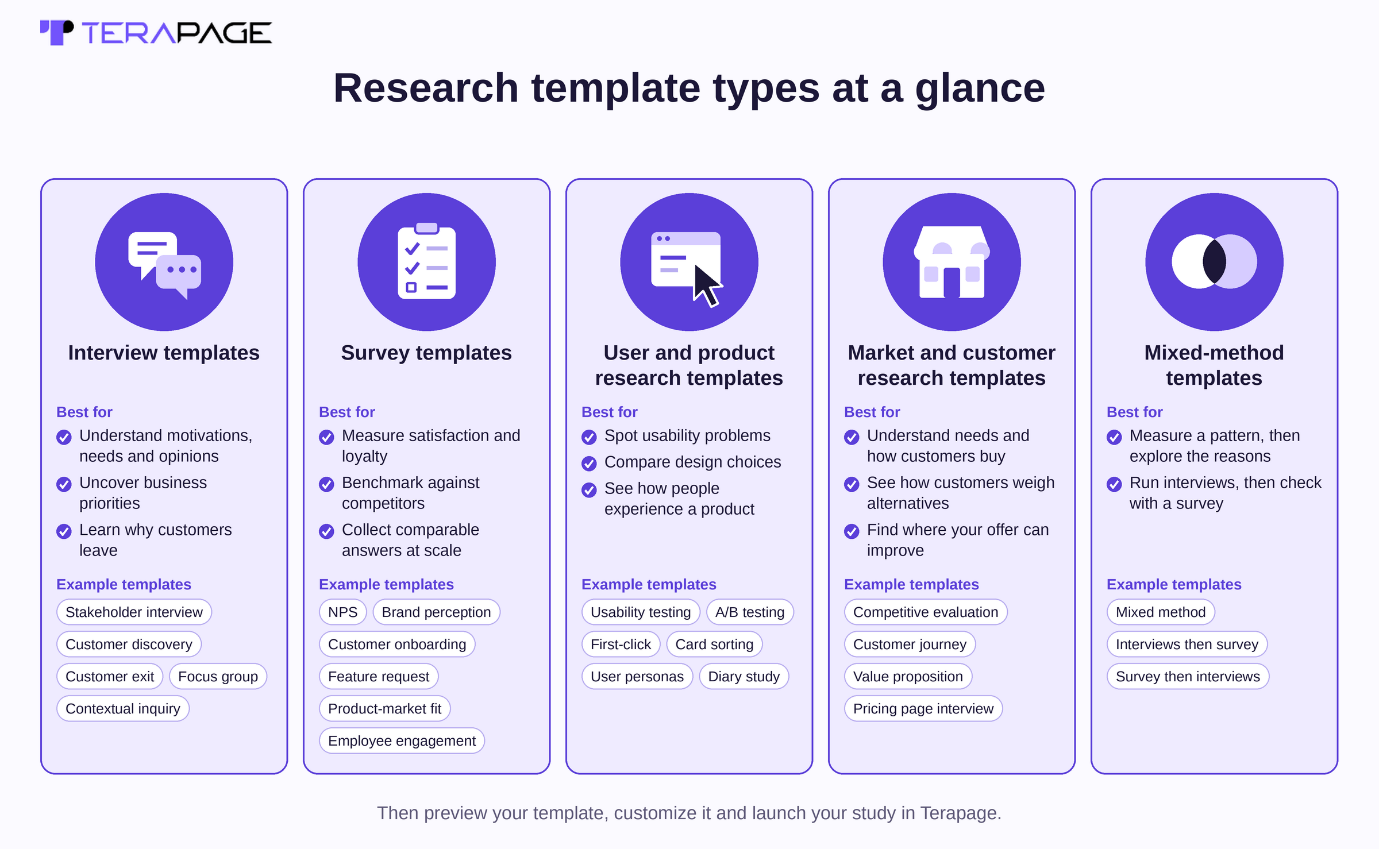
Templates come in different formats. The right template depends on what your organisation or team wants to learn. Here are the five main types that are crucial to understand before opting for a research template.
1. Interview Templates
Interview templates help you understand experiences, motivations, needs and opinions in depth. Use them when you want to hear the “why” in people’s own words.
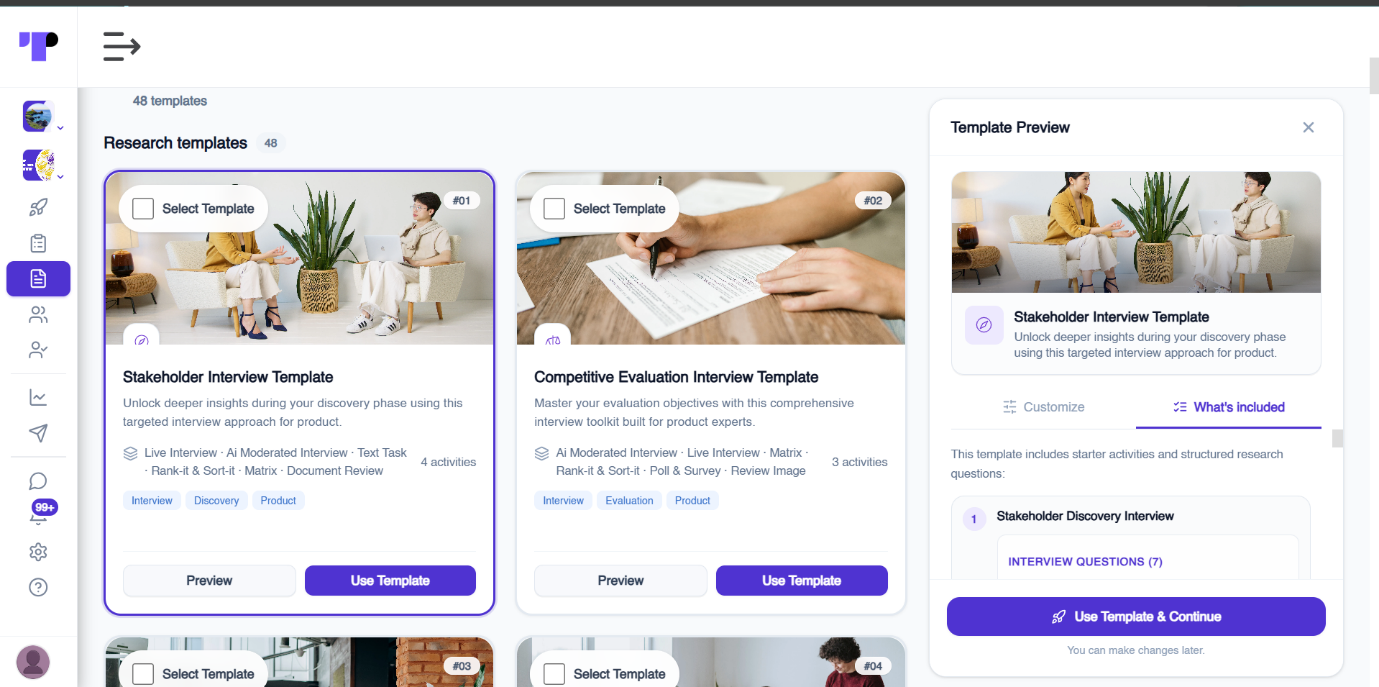
Examples include stakeholder interviews, customer discovery interviews and customer exit interviews. They help you uncover business priorities, learn how customers experience your product and understand why people make the choices they do. Focus group and contextual inquiry templates extend the same idea to group discussions and real-life observation.
2. Survey Templates
Survey templates give you a structured way to collect responses from many people at once. They are ideal when you want comparable answers and clear patterns, on topics such as customer satisfaction, brand perception, loyalty and how you stack up against competitors.
Most include a short intro, screening questions to confirm the right people take part, the core questions, a few demographic questions and a thank-you message.
- Closed questions (multiple choice, rating scales) give you numbers you can compare.
- Open-ended questions give you the reasons behind those numbers.
Popular examples include:
- Net Promoter Score (NPS)
- Brand Perception
- Customer Onboarding
- Feature Request
- Product-Market Fit
- Employee Engagement
3. User and Product Research Templates
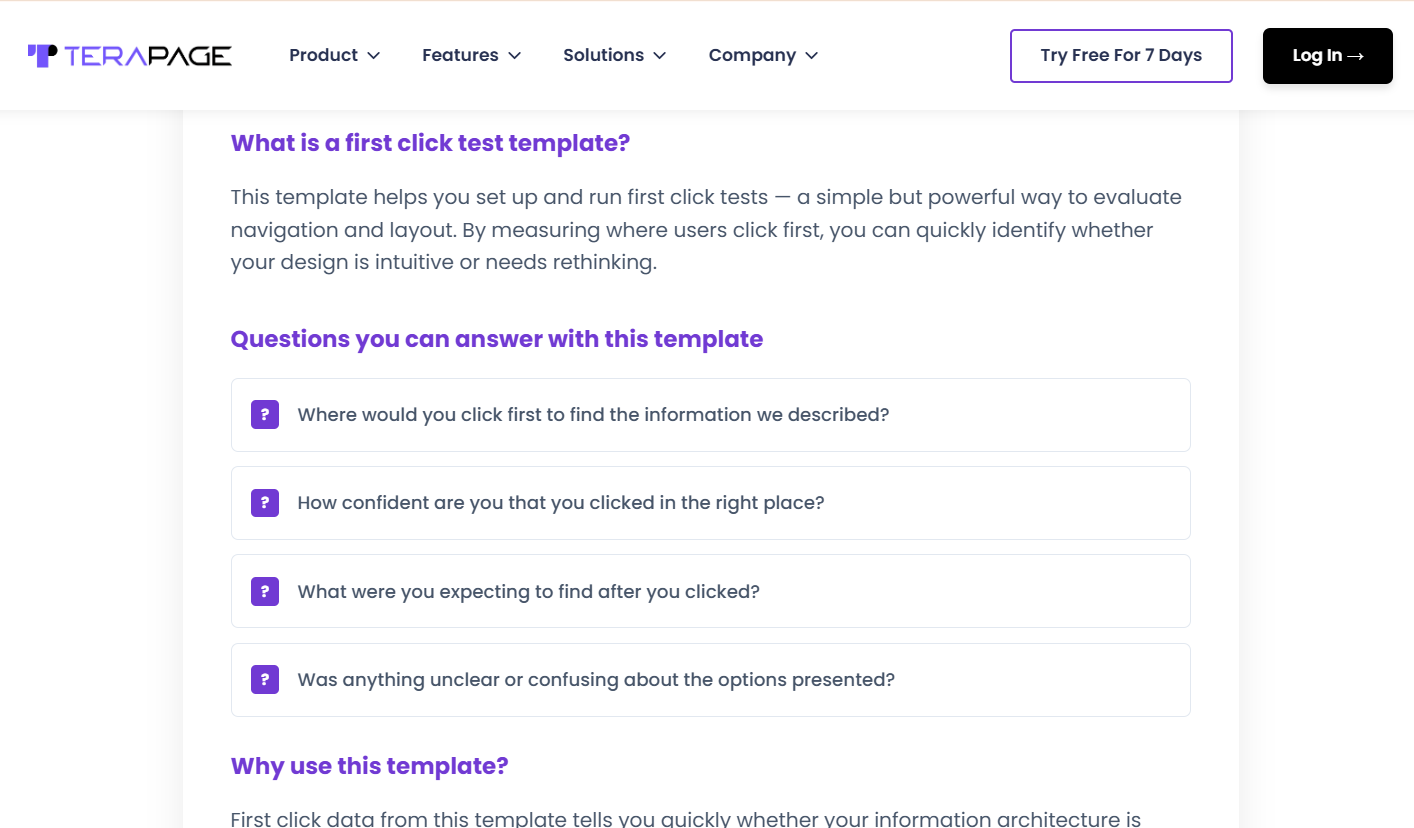
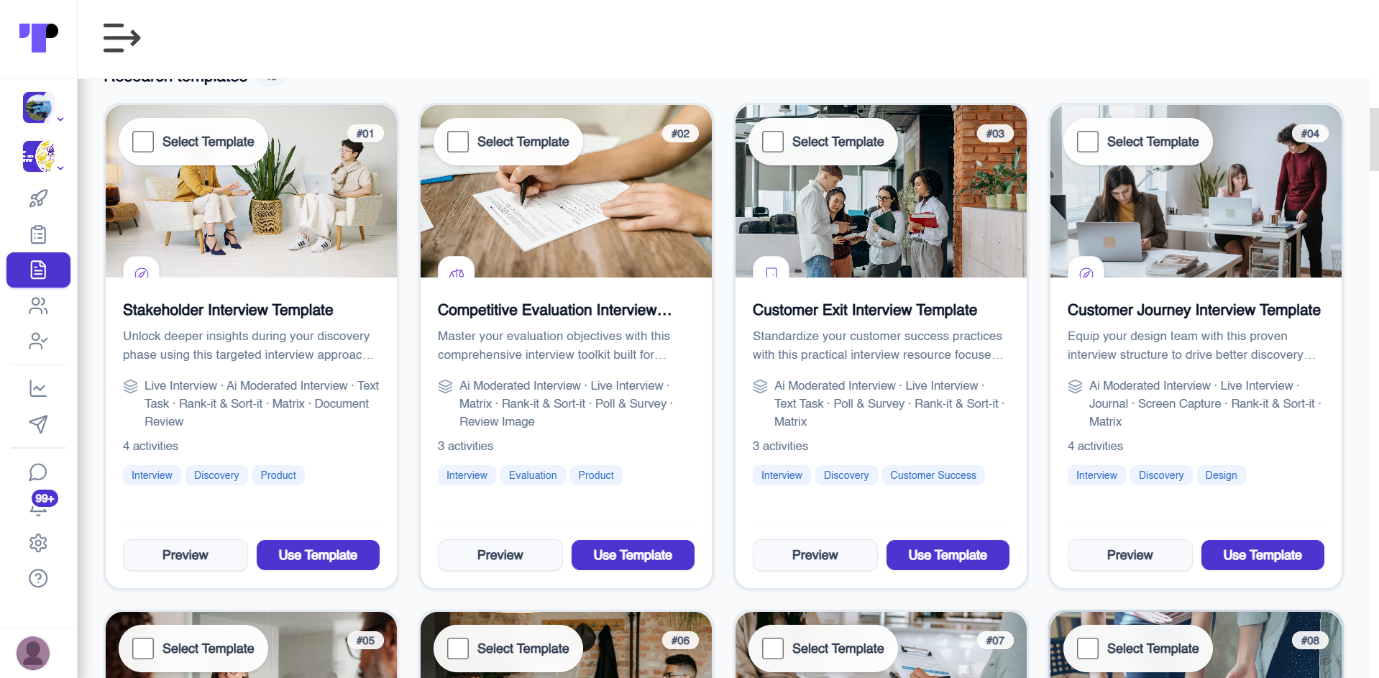
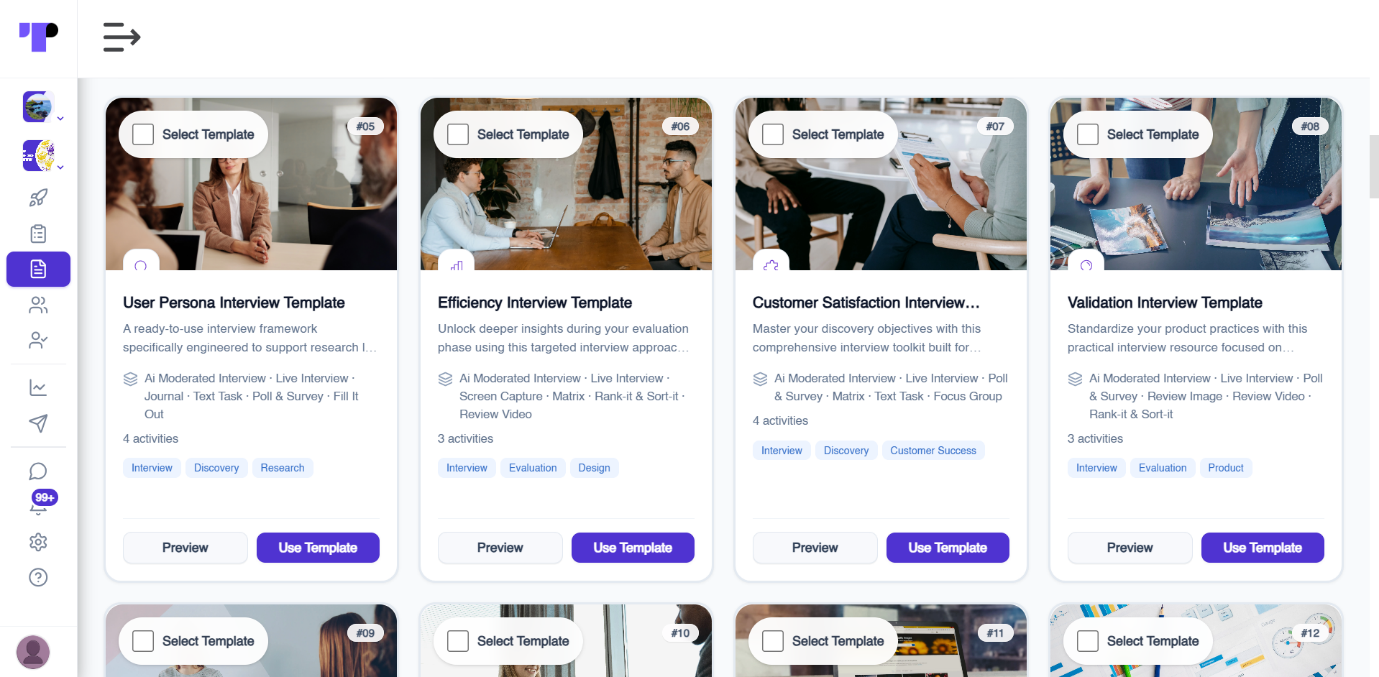
These templates focus on how people actually use products and services. Examples include usability testing, A/B testing, first-click testing, card sorting, user persona research and diary studies.
They help you spot usability problems, compare design choices, understand real behaviour and see how people experience a product over time.
4. Market and Customer Research Templates
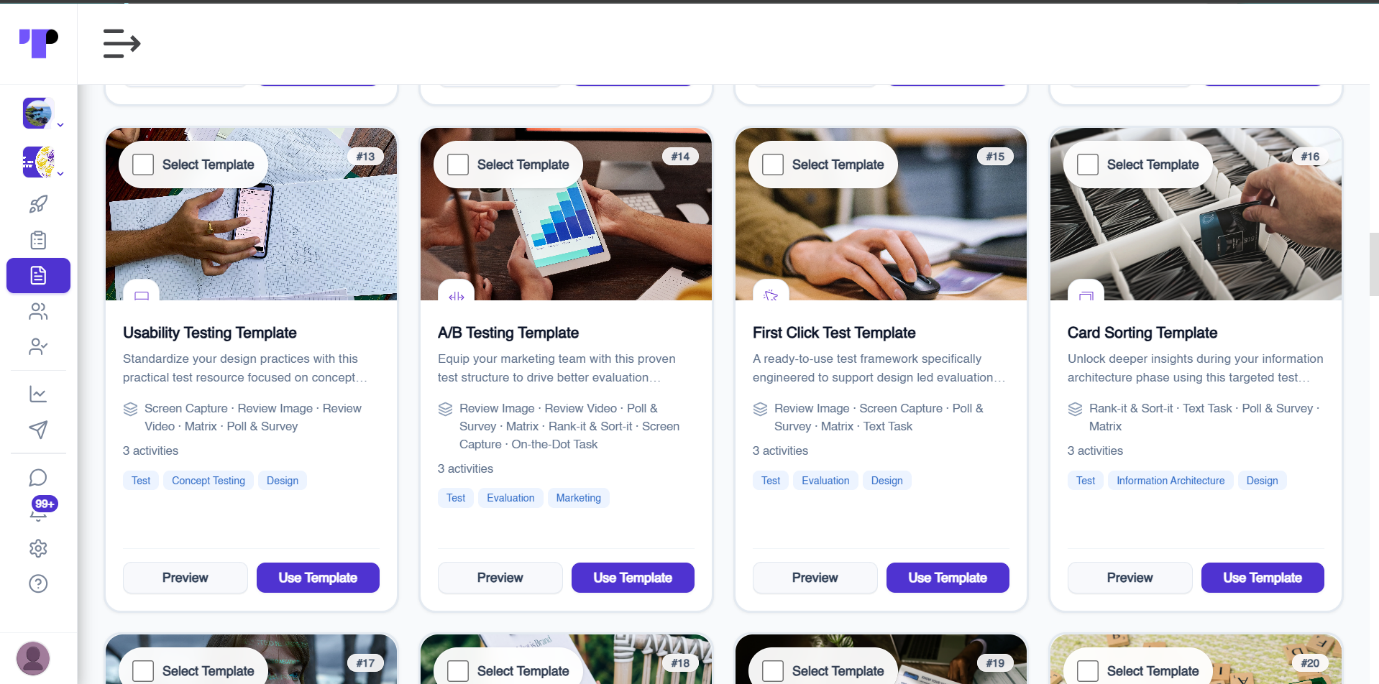
These templates help you understand what customers need, how they buy and which alternatives they weigh. Examples include competitive evaluation, customer journey research, value proposition testing and pricing page interviews. Use them to see how customers compare their options and where your offer can improve.
5. Mixed-Method Templates
Some questions need both stories and numbers. Qualitative research explains experiences and motivations, while quantitative research measures patterns and outcomes.
A mixed-method template lets you do both. Measure a pattern first, then investigate the reasons behind it, or start with interviews and use a survey to check how widely the findings hold.
How to Use Market Research Templates to Design a Study
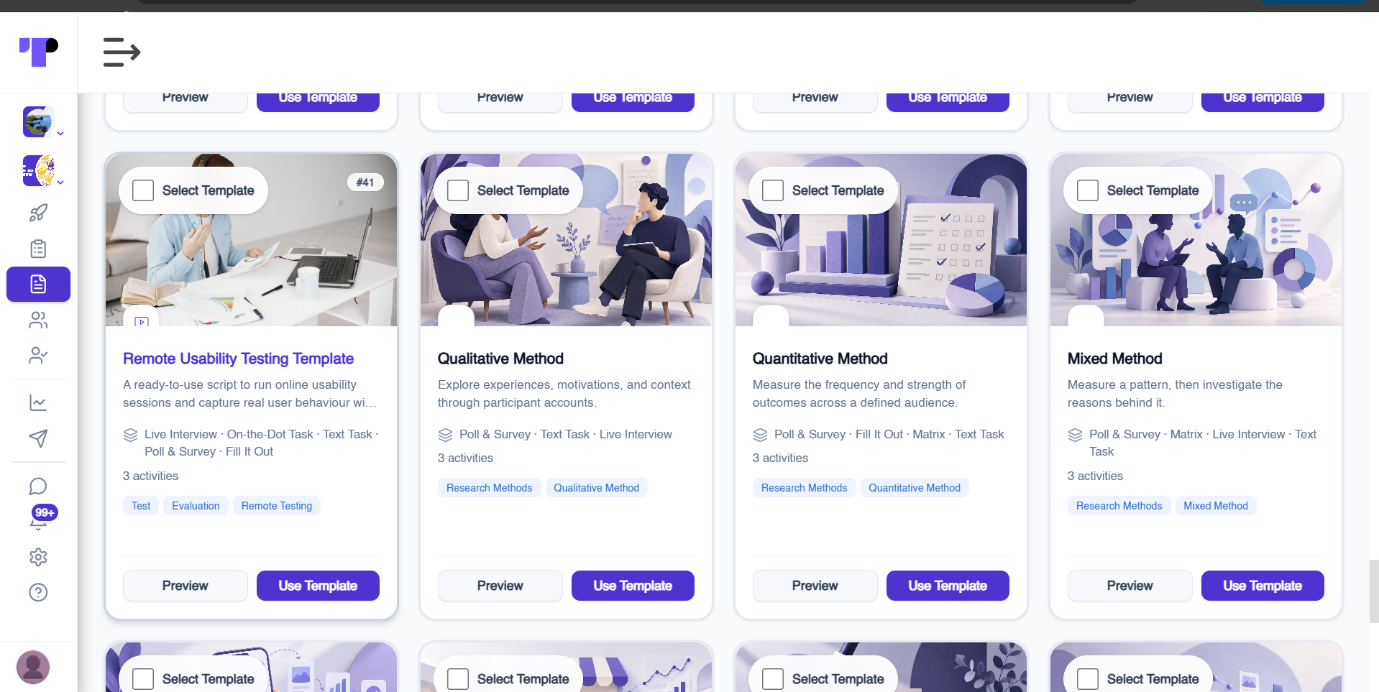
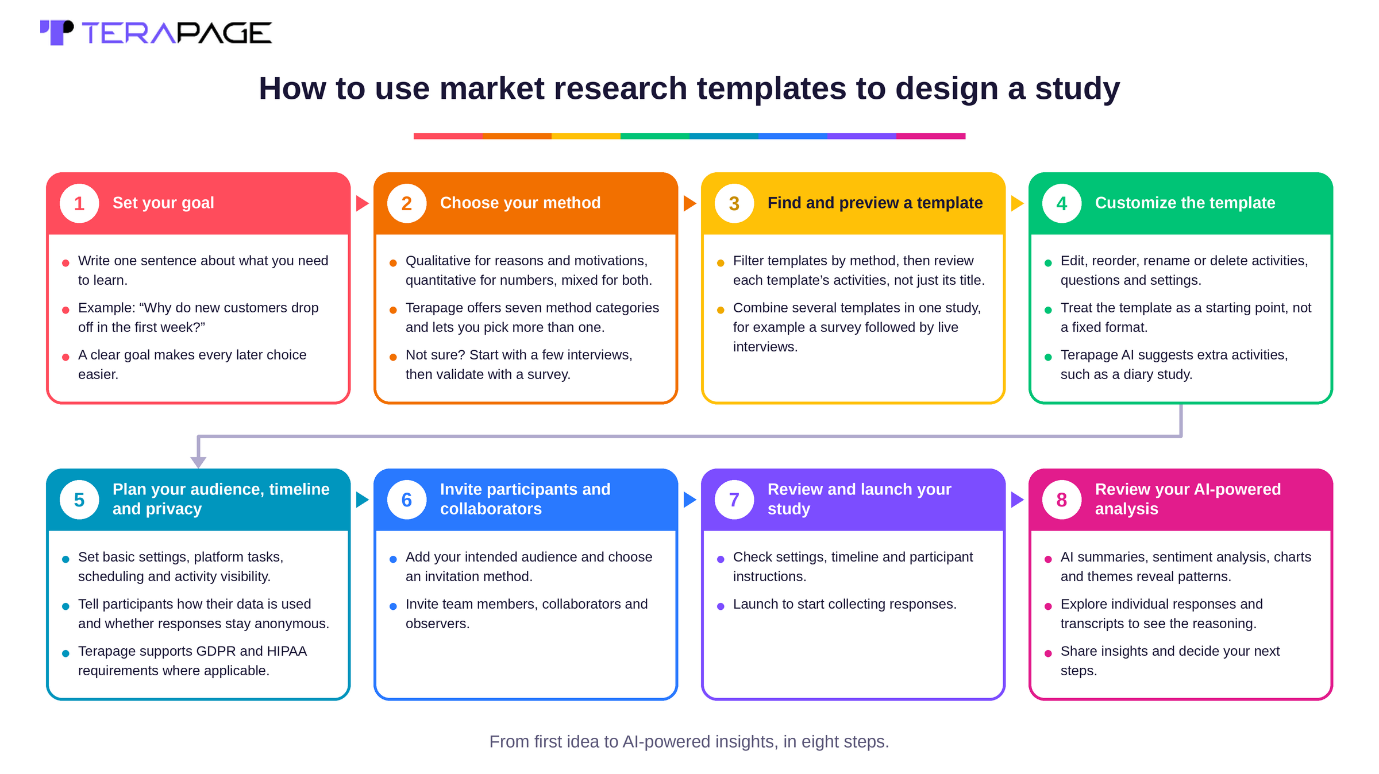
Designing a study with a template takes eight steps, from setting a clear goal to reviewing AI-powered analysis.
Step 1: Set Your Goal
Before you browse, write one sentence about what you need to learn. For example: “Why do new customers drop off in the first week?” A clear goal makes every later choice easier, from the method to the questions you keep.
Step 2: Choose Your Method
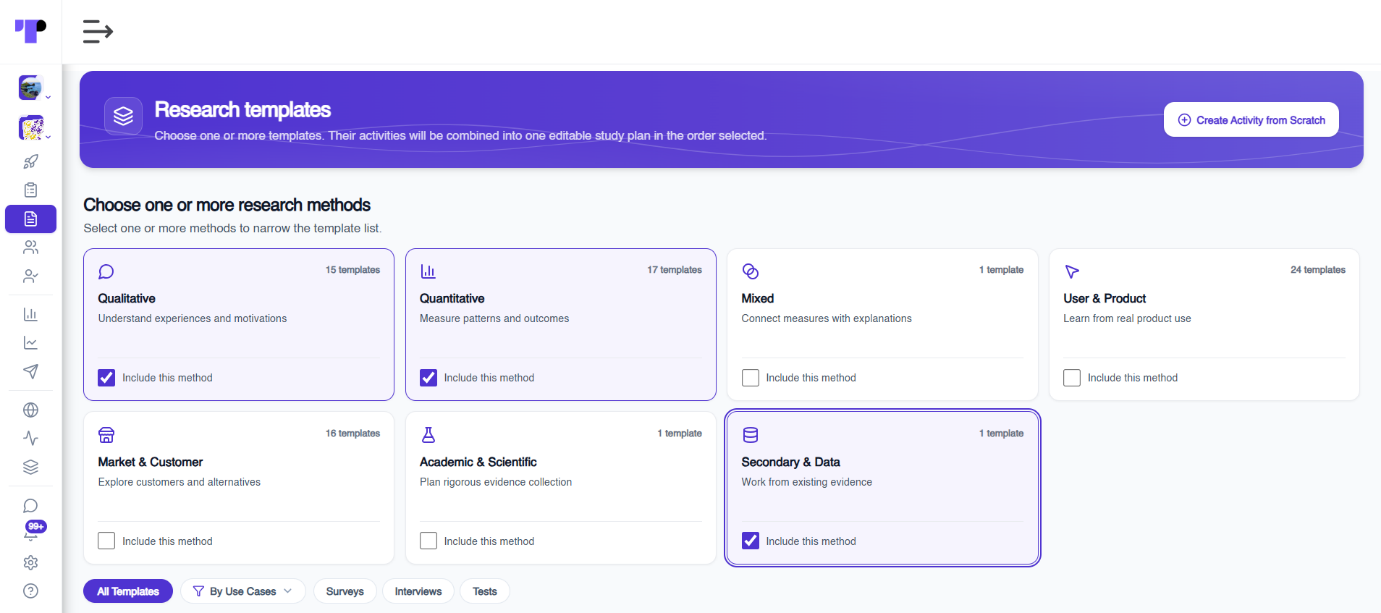
The second most important step in choosing a research template is the method. If your team is looking for answers, reasons, motivations, choices, behaviours or patterns, it needs to choose qualitative research methods. On the contrary, if it wants numbers, figures, percentages or ratios, it must opt for quantitative methods. If the study requires both, your team can select mixed methods. Sometimes research teams themselves are unsure about the method, so a good rule of thumb is to start with a handful of interviews to learn what matters, then validate it with a survey. See our comparison of qualitative vs. quantitative research for more.
Terapage offers multiple research methods and allows research teams to select more than one method for a study. The available categories include:
- Qualitative
- Quantitative
- Mixed
- User & Product
- Market & Customer
- Academic & Scientific
- Secondary & Data
For instance, a customer survey can also incorporate mixed methods and secondary data to provide richer insights and help decision-makers make more informed decisions.
Step 3: Find and Preview a Template
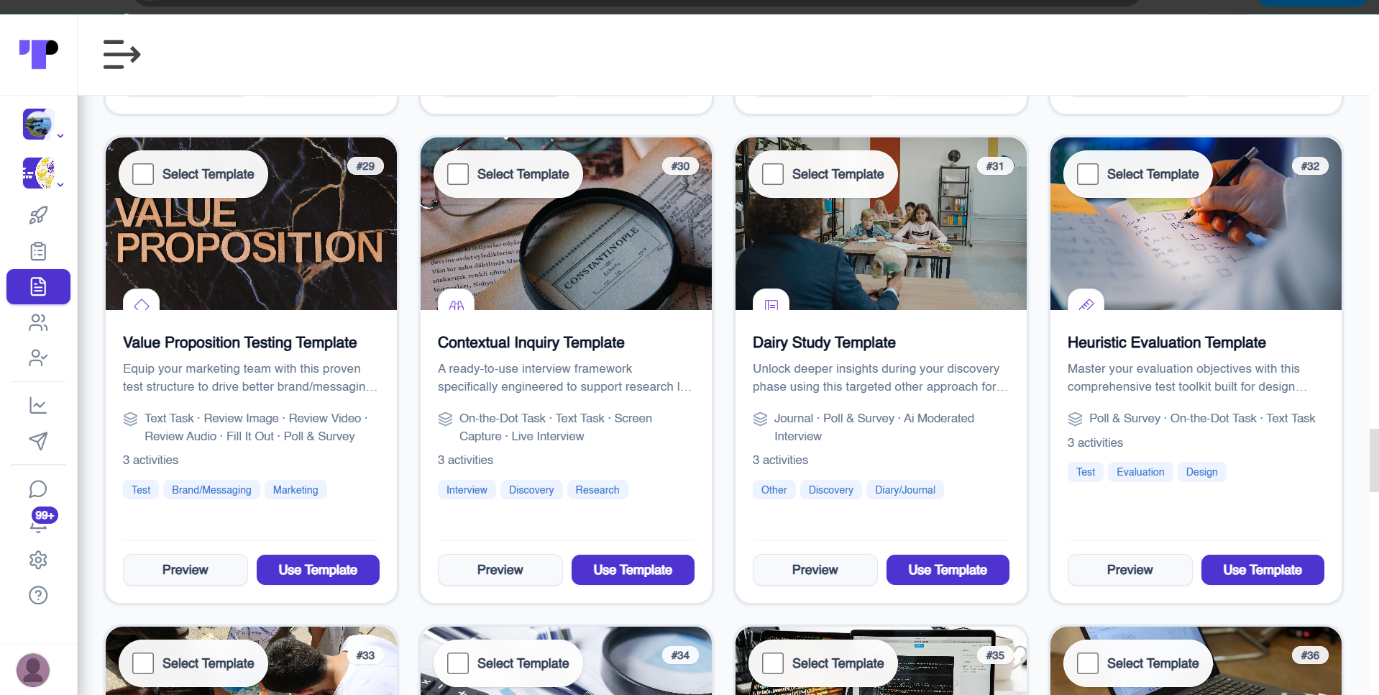
Once the research method has been decided, research teams can more easily filter templates according to their requirements. However, template titles alone should not determine the selection, as each template may include different activities and tasks. Therefore, research teams should carefully review the details of each template and select the one that best meets their research objectives.
Moreover, research teams are not limited to using a single template. They can combine multiple templates within one study, depending on its nature and objectives. For instance, a survey can be followed by live interviews with a selected group of respondents to explore their answers in greater depth.
Step 4: Customise the Research Template
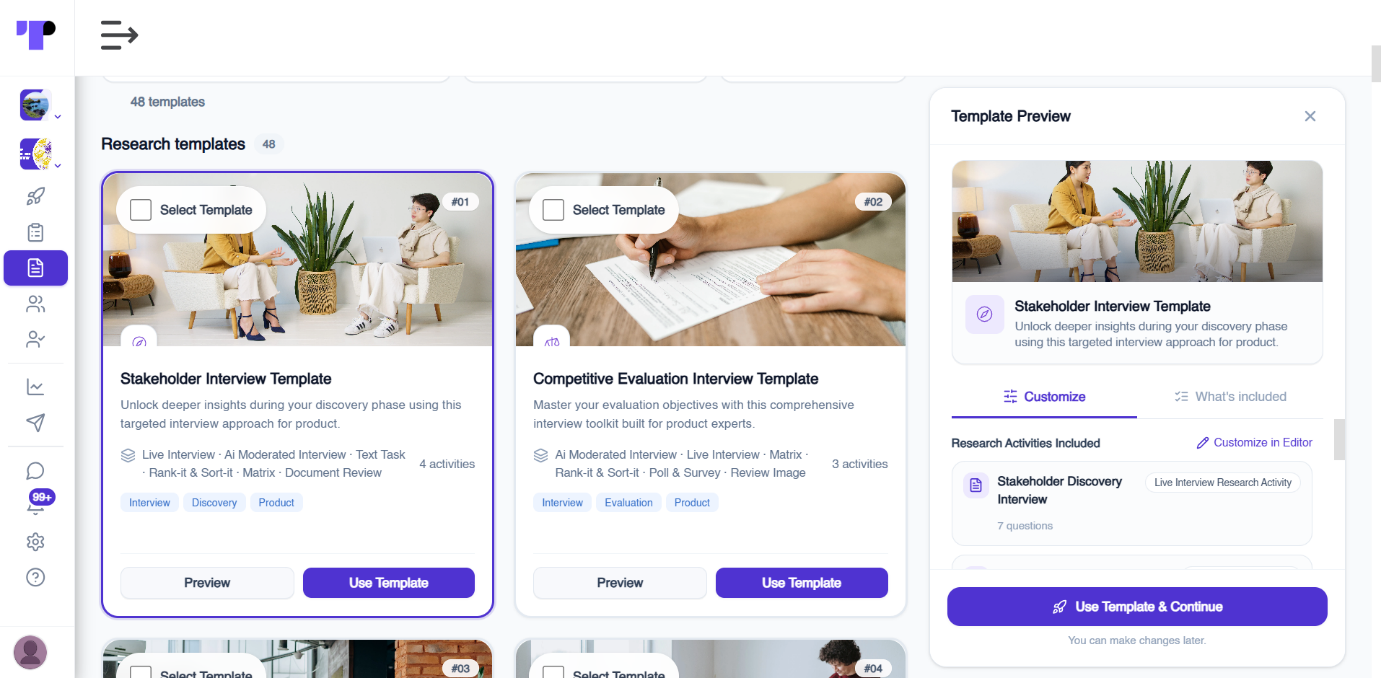
Research templates are not rigid formats that must be followed exactly. If researchers repeatedly use the same template without adapting it, they undermine the purpose of research, as each study should address its own specific objectives rather than produce the same content repeatedly. Templates are simply starting points that can be edited and customised according to the requirements of each study.
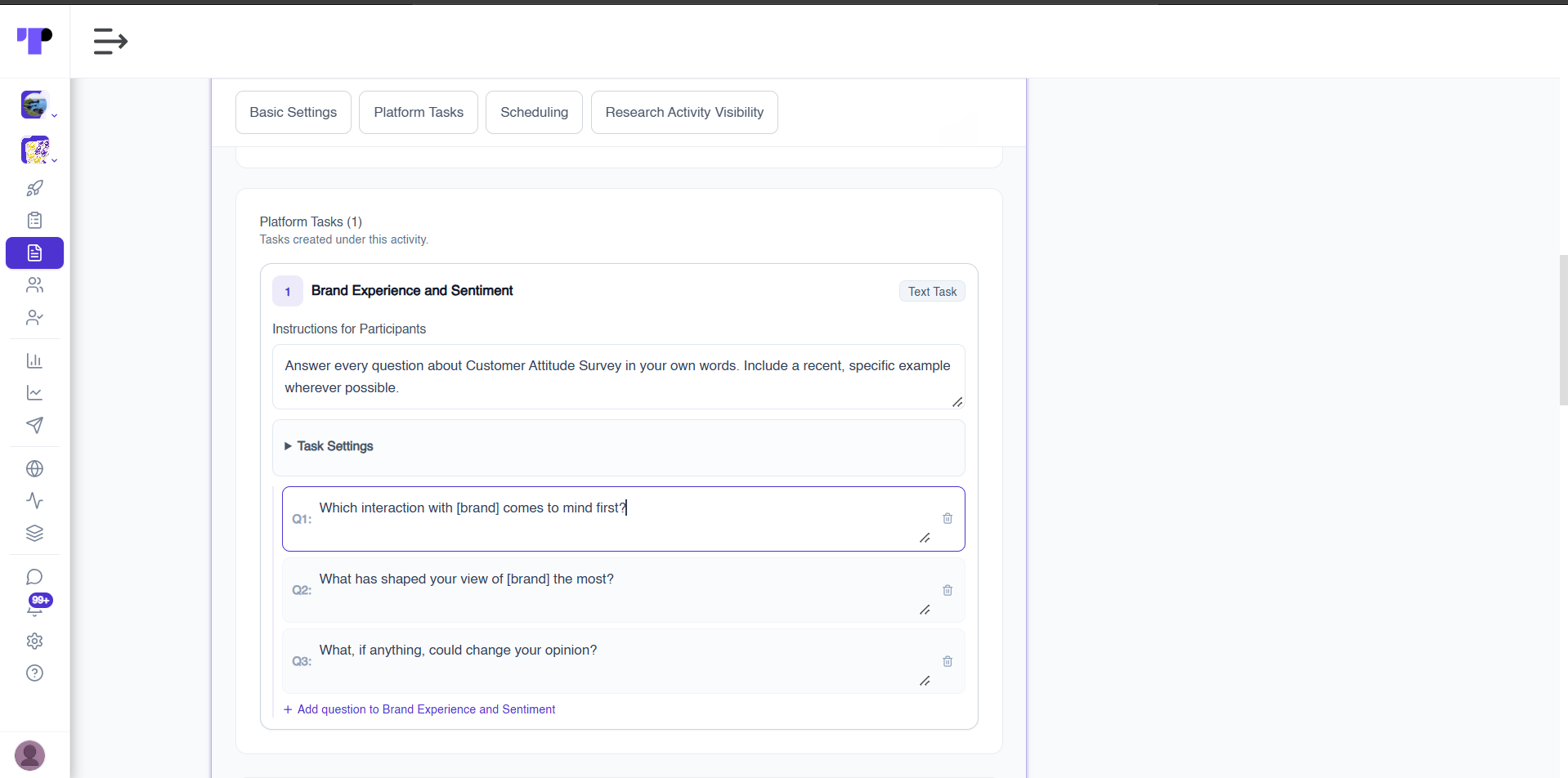
At Terapage, once researchers shortlist one or more templates for a study, they can customise the activities, questions, tasks, and study settings to align with their specific research objectives and requirements.
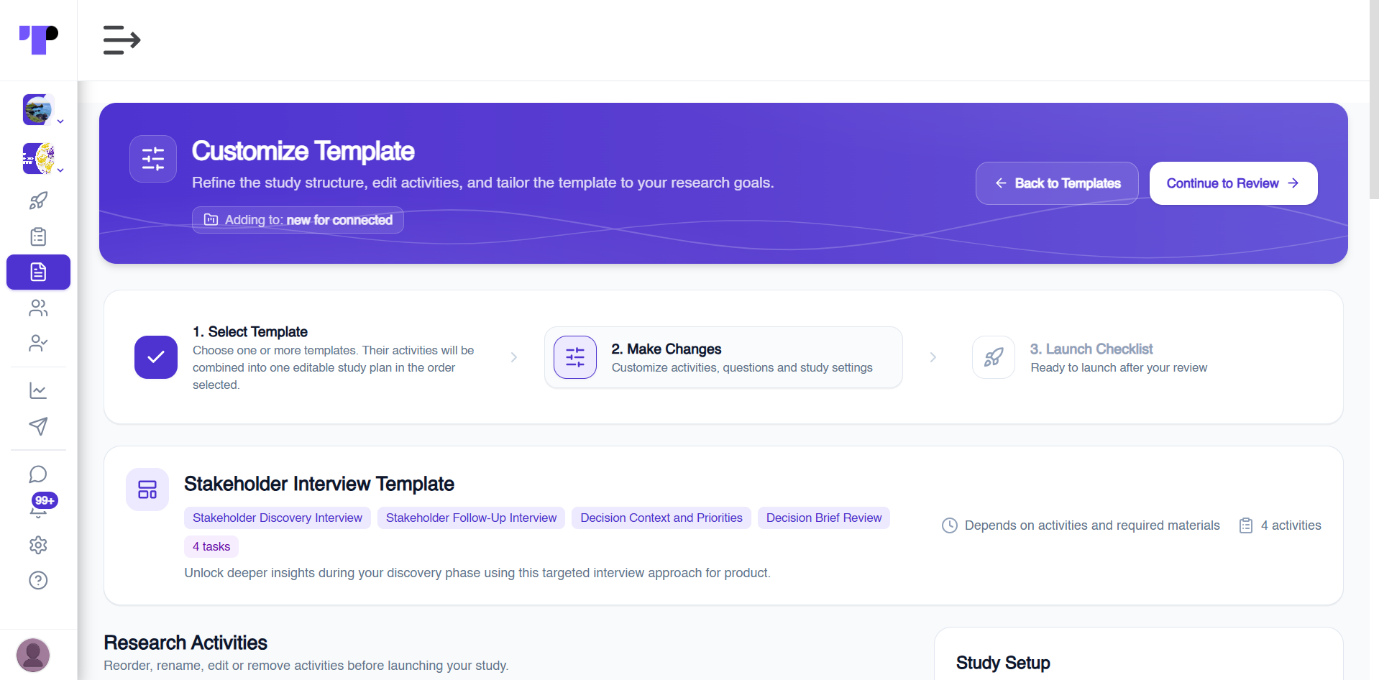
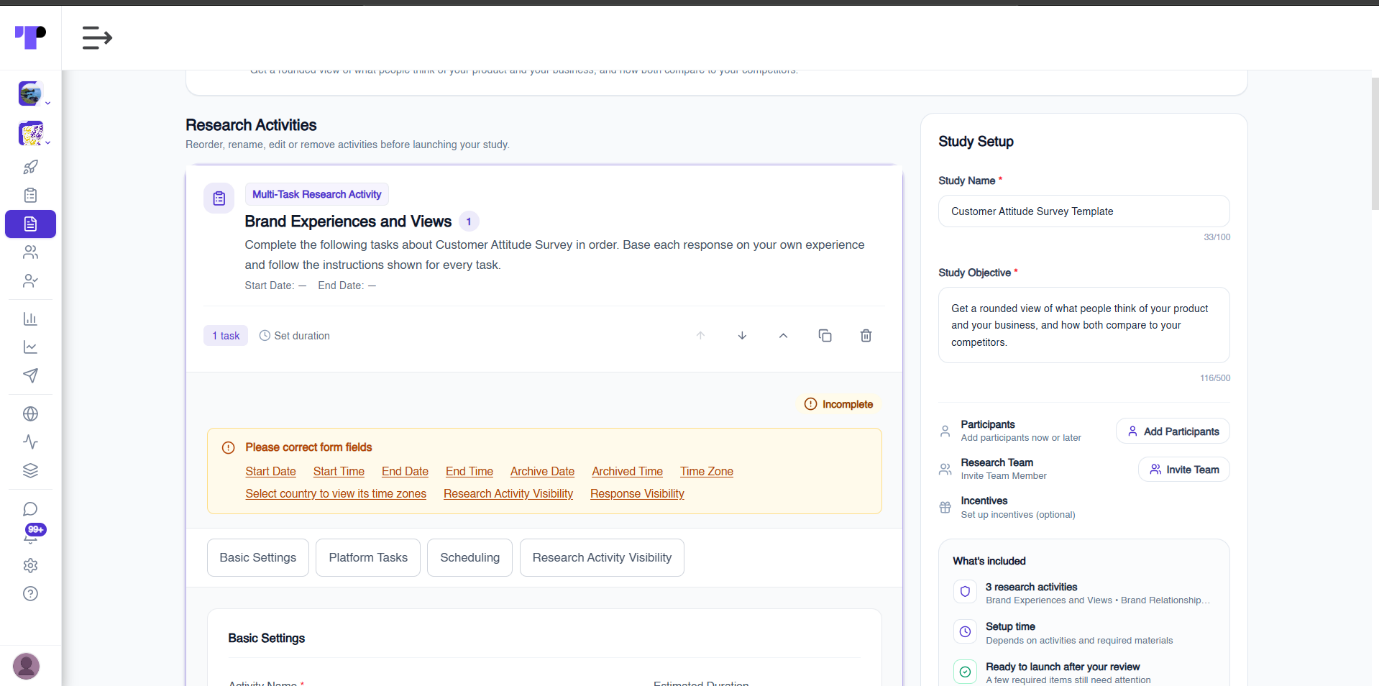
Modern market research platforms like Terapage allow researchers to edit, reorder, rename, or delete activities before launching the study.
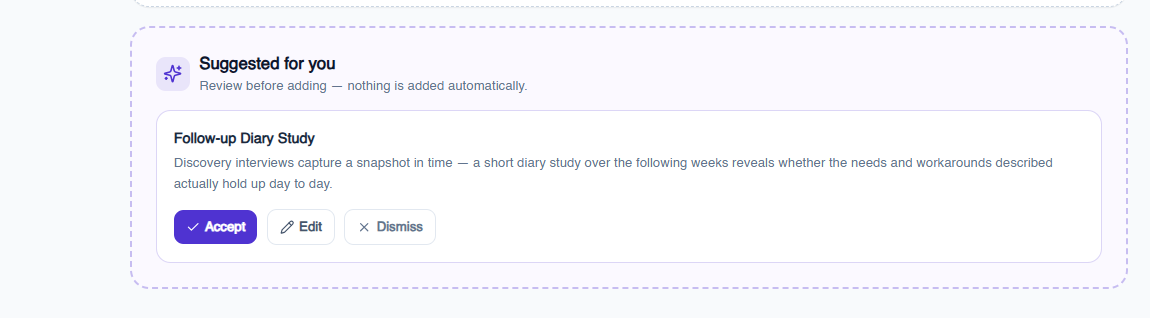
As an advanced, AI-powered market research platform, Terapage also suggests relevant research activities based on the study details provided during customisation. These recommendations help research teams explore additional areas, ask deeper questions, and avoid missing valuable opportunities to gather meaningful insights.
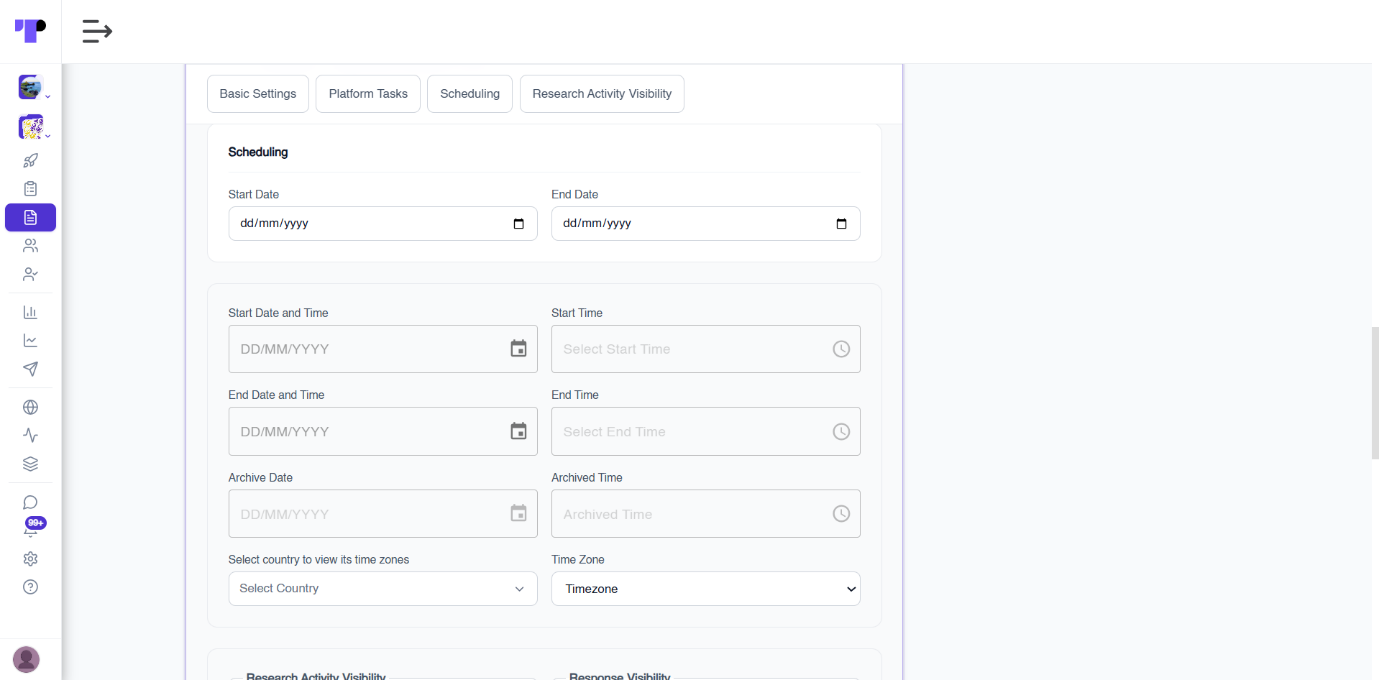
Step 5: Plan Your Audience, Timeline and Privacy
Designing a research study involves more than simply selecting a template and sharing it with participants to collect responses. Research teams must also define their target audience and customise the following details:
- Basic Settings
- Platform Tasks
- Scheduling, including the start date, end date, country and relevant time zone
- Research Activity Visibility
Privacy is another important consideration. Research teams need to clearly explain to participants how their responses will be used, how their data will be handled, and whether their participation and responses will remain anonymous. These details help participants understand what to expect before taking part in the study. Read more on protecting participants in online research.
Terapage prioritises data privacy and security, with compliance measures designed to support applicable data protection and privacy requirements, including the GDPR and HIPAA, where applicable. This helps research teams consider data protection as part of their study planning process.
Step 6: Invite Participants and Collaborators
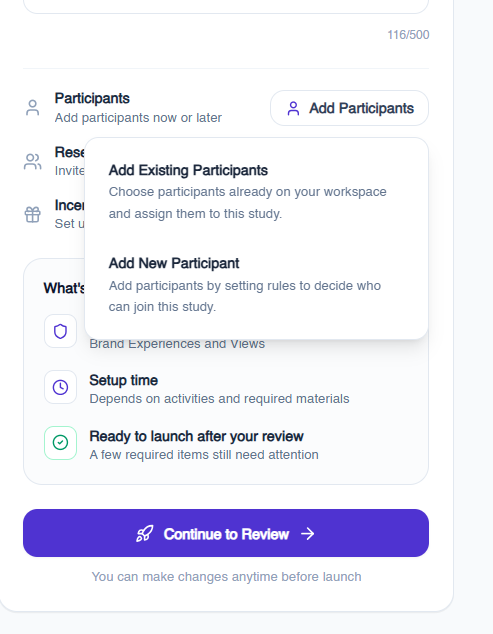
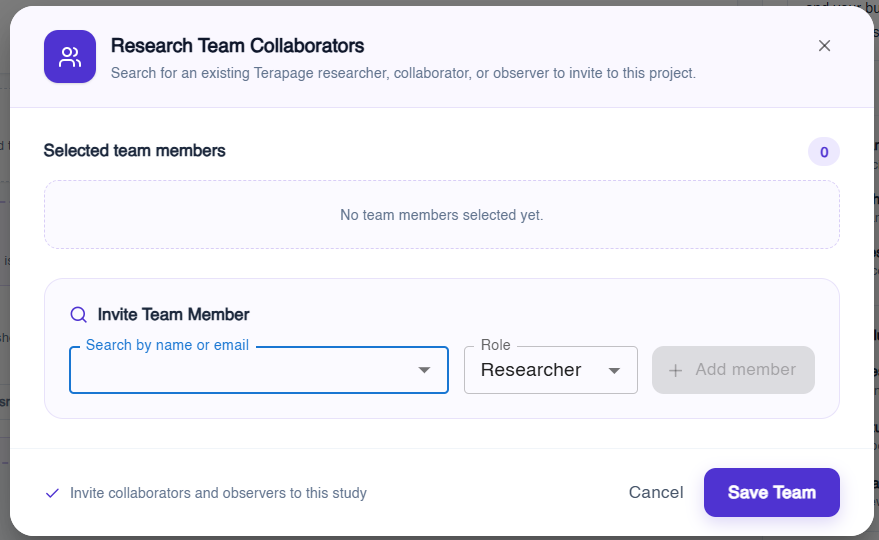
Once the basic settings and research activities are configured, research teams can move on to inviting participants. In Terapage, researchers can prepare their study for participation by adding the intended audience and ensuring the study details are ready. Depending on the study requirements, they can choose an appropriate participant invitation method and provide participants with access to the research activities.
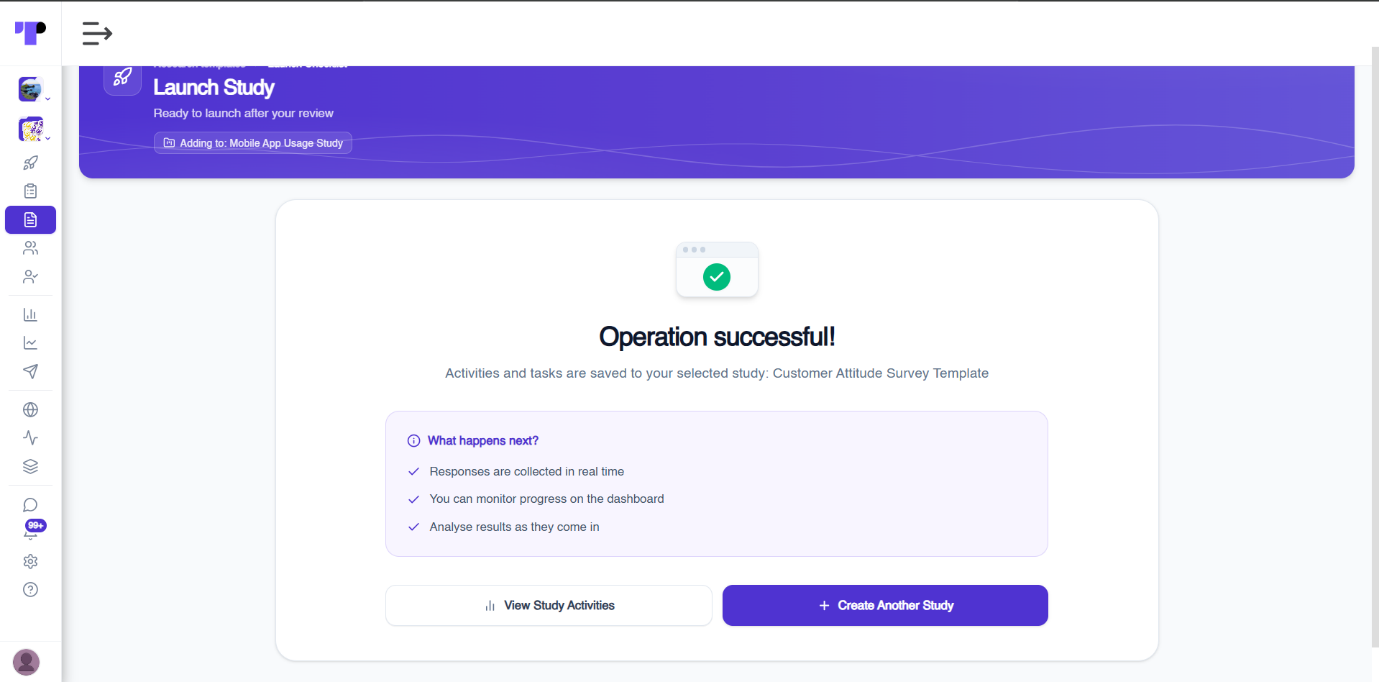
Step 7: Review and Launch Your Research Template
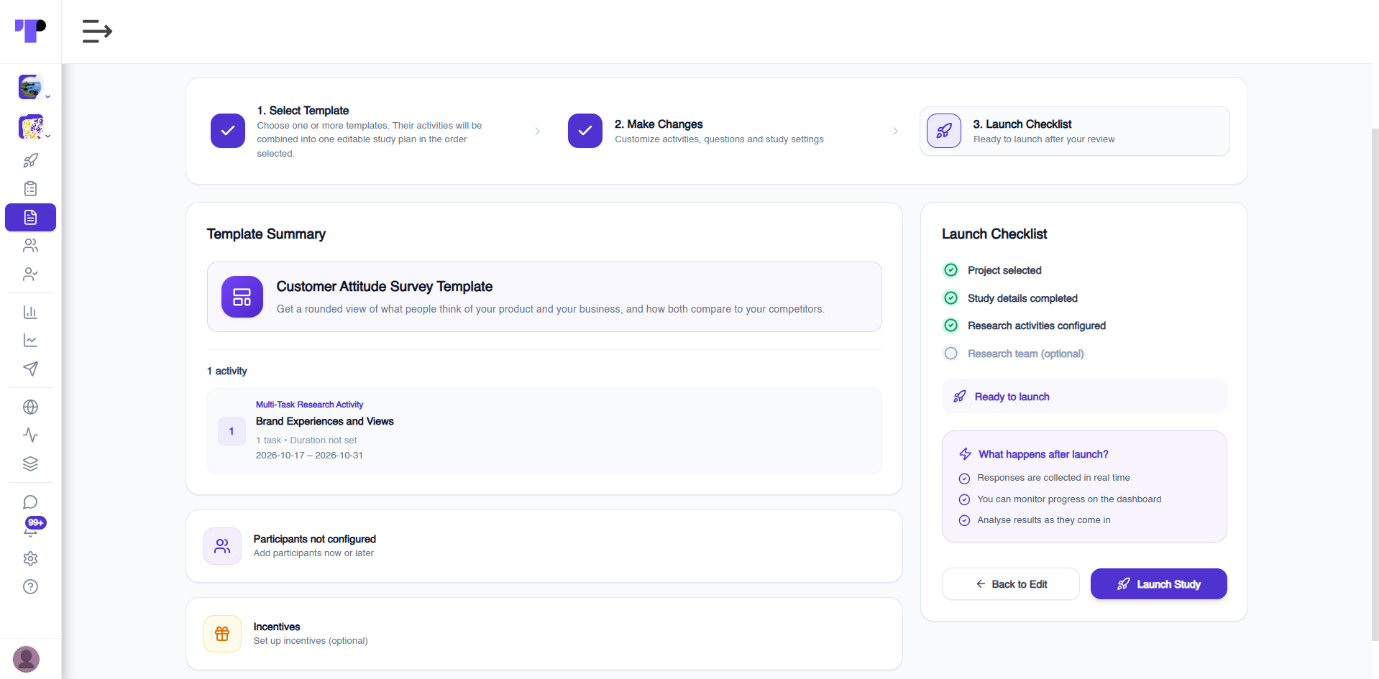
Before launching the research template to collect responses, it is important to review the study settings, timeline, and participant instructions to ensure everything is in place. Once the Terapage research template is ready, researchers can review the details and launch it to start collecting responses. This final step brings the planning process together, allowing teams to move from designing their research study to gathering insights from their target audience.
Step 8: Review Your AI-Powered Analysis
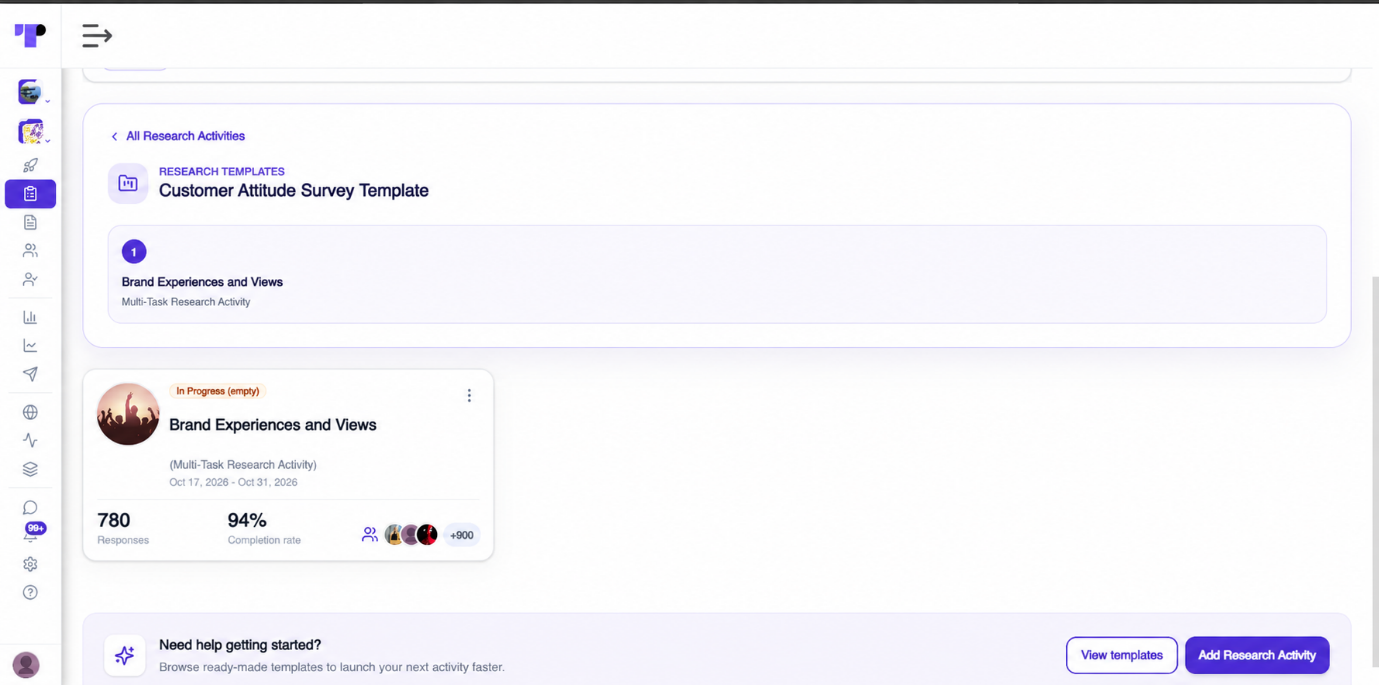
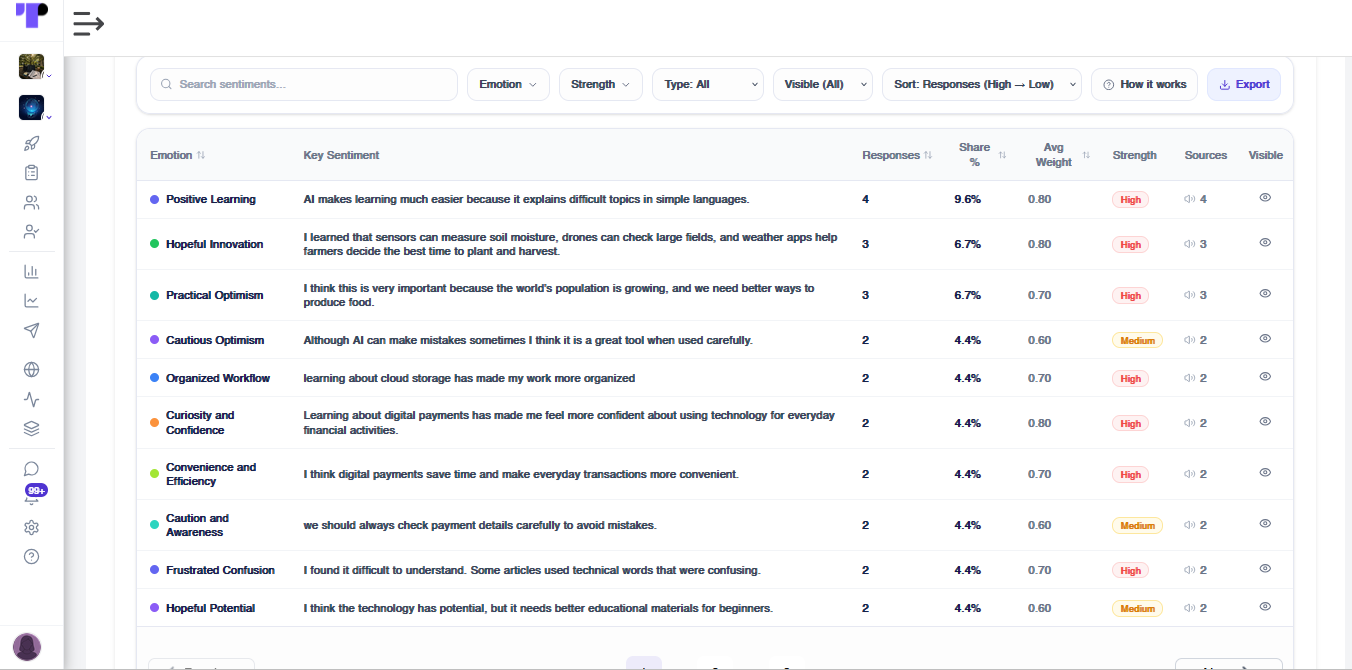
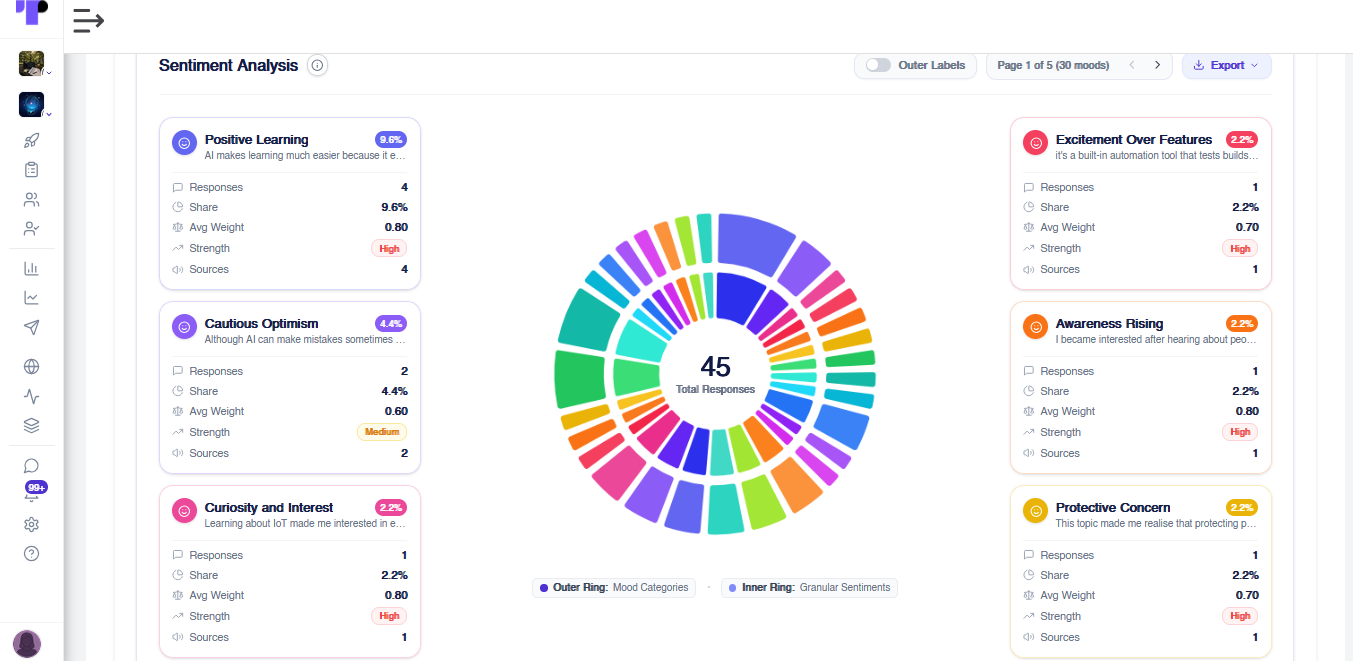
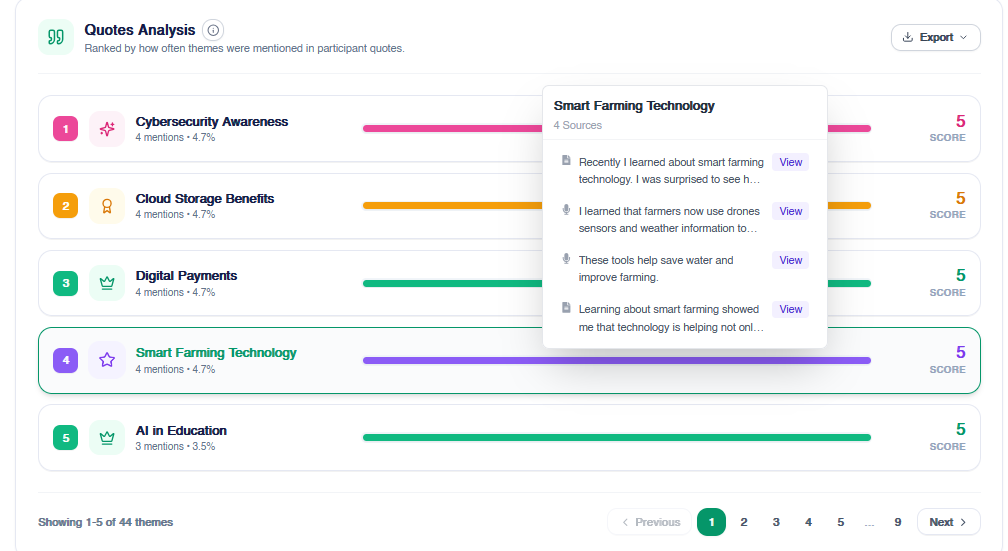
Once responses start coming in, AI-powered research tools help researchers make sense of the data more efficiently. Instead of reviewing every response manually, researchers can use AI-generated summaries, sentiment analysis, charts, and thematic categorisation to identify recurring patterns and understand participants’ perspectives. They can then explore individual responses, transcripts, and supporting media to understand the reasoning behind those patterns. With Terapage, researchers can bring these findings together, share insights with their teams, and decide on the next steps based on what they have learned.
What Mistakes Should You Avoid When Using Research Templates?
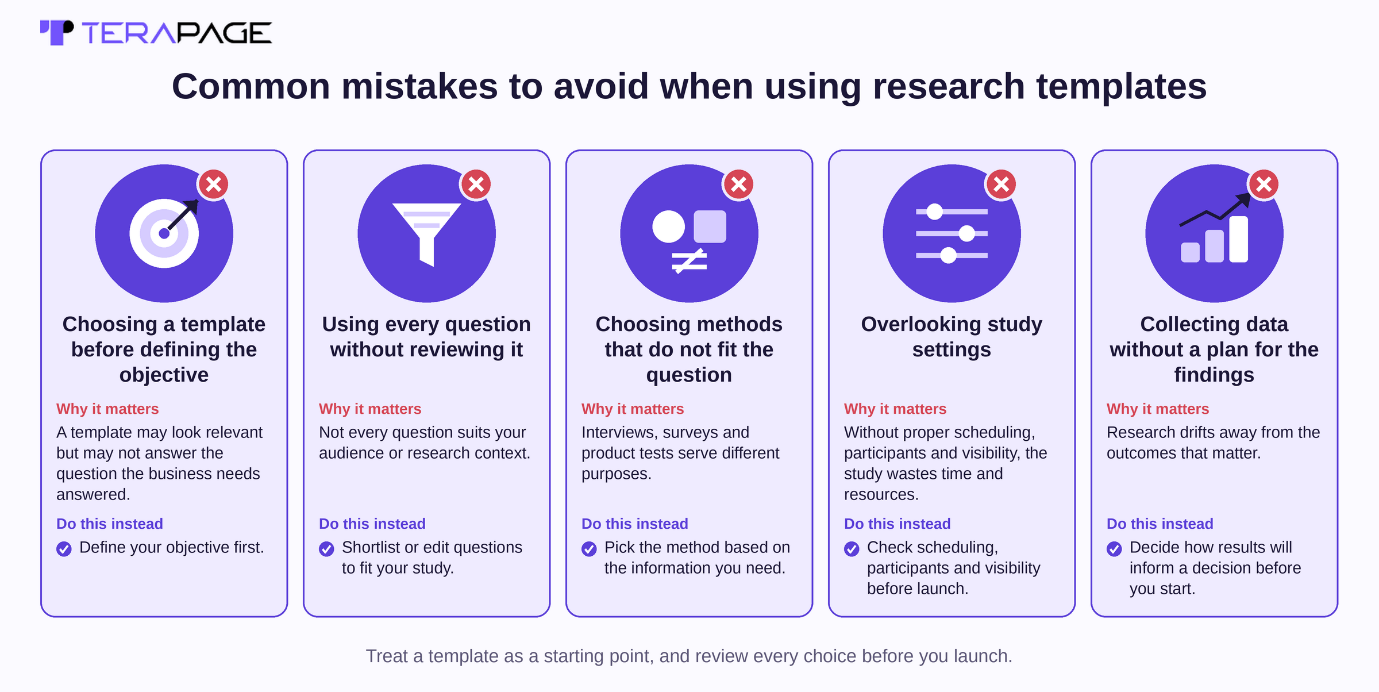
Templates can make research planning easier, but they are most effective when researchers use them thoughtfully.
1. Choosing a Template Before Defining the Objective
A template may look attractive and relevant, but that does not ensure it will address the actual question the business needs to answer. Therefore, defining your objective is the foundation stone of your research study.
2. Using Every Question Without Reviewing It
Not every question will be appropriate for your audience or research context. Therefore, questions should be shortlisted or edited as per the needs of your research study.
3. Choosing Methods That Do Not Fit the Research Question
If your team likes a survey, it does not mean the research question supports that template. As interviews, surveys, and product tests serve different purposes, market researchers must select the method based on the information they need.
4. Overlooking Study Settings
Even a well-structured set of activities needs appropriate scheduling, participant arrangements, visibility, and other relevant settings. If these are not set properly, the study becomes a waste of time and resources.
5. Collecting Data Without a Plan for Using the Findings
Decide how the results will inform a business or product decision before the study begins. This helps keep the research focused on outcomes that matter.
Start Your Next Study From a Research Template
Every great decision starts with a good question, and ready-built research templates help you ask it well. But the real magic happens when you stay in the driver’s seat by setting a clear goal, picking the right type, trimming the questions that don’t belong and double-checking your settings before you hit launch.
Your next study doesn’t have to start from zero. So pick a template, make it yours and let Terapage turn your questions into insights.
Ready to launch your next study from a template?
No credit card required. Need help adapting a template? Our Co-pilot Research Services team can help.