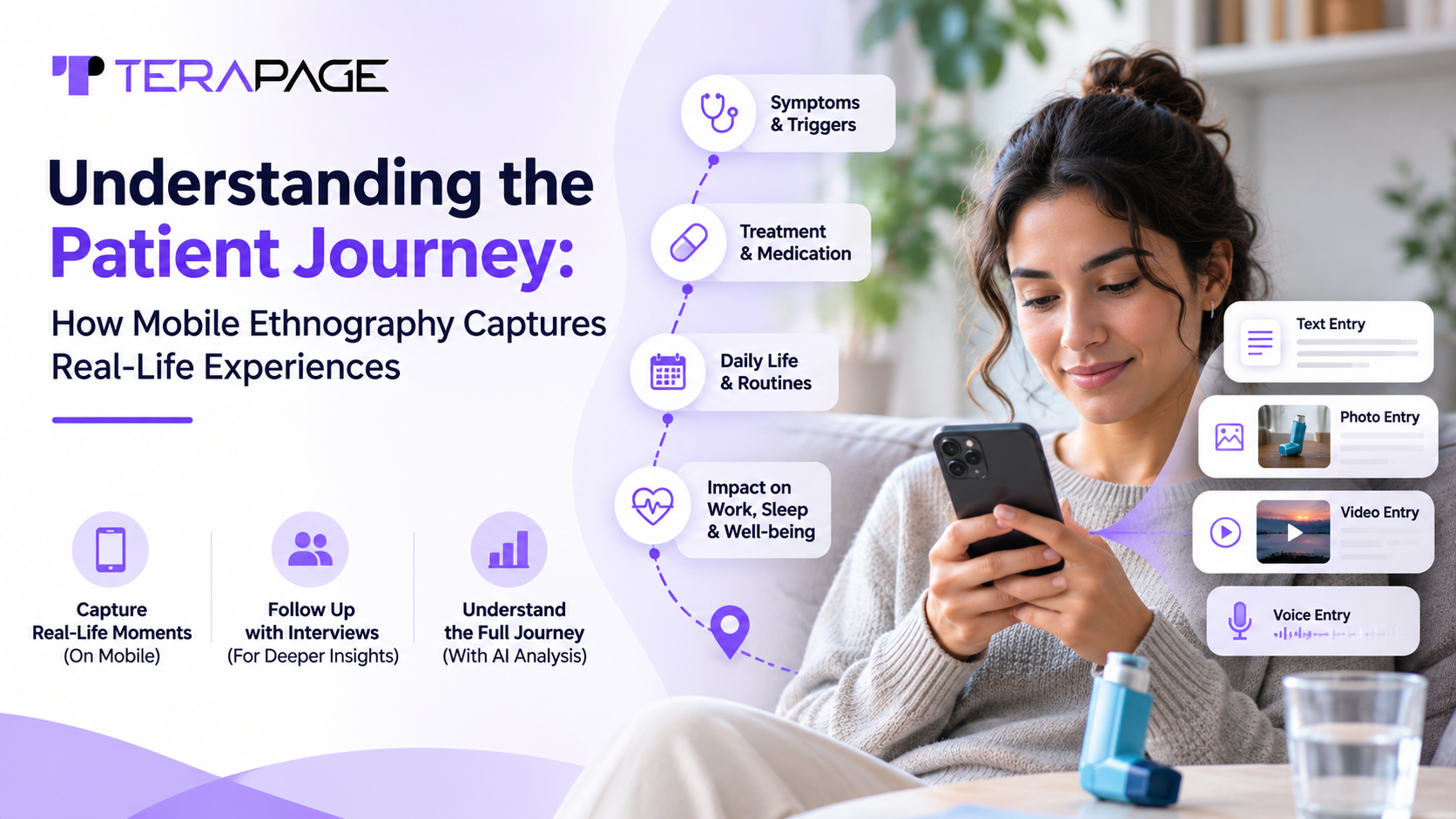
Understanding the Patient Journey: How Mobile Ethnography Captures Real-Life Experiences
Key takeaways
- The patient journey covers everything from first symptoms and diagnosis to treatment, care visits and daily self-management, including what happens between appointments.
- Mobile ethnography lets patients record that journey on their own phones, in text, photos, voice notes, videos and documents, as it happens.
- The strongest patient journey studies combine a mobile patient diary (what happens) with a one-to-one live video interview (why it happens).
- This guide walks through a real example: a 21-day asthma patient diary followed by a 30-minute deep-dive interview on Terapage.
- AI summaries, sentiment analysis, excerpts and taxonomies turn patient stories into findings, translated into more than 130 languages.
A patient with asthma gets ten minutes with their nurse. The nights spent coughing on the sofa, the early exit from the bus and the worried child at home rarely make it into that conversation. Yet these are the moments that shape how patients manage their condition.
The scale is huge. The World Health Organization reports that asthma affected 363 million people in 2023, and under-treated asthma disrupts sleep, energy and focus. Mobile ethnography helps researchers see this hidden side of care. Patients record their experiences on their phones as they happen, and researchers follow up to understand the reasons behind them.
What Is the Patient Journey in Healthcare Research?
“The patient journey is the full experience of living with a condition, from first symptoms and diagnosis to treatment, care visits and daily self-management, including everything that happens between appointments.”
Most research only sees the clinic side of this journey. Surveys and one-off interviews depend on memory, so small but important moments, like a skipped inhaler or a new trigger, are easily forgotten. For healthcare and pharmaceutical research teams, these everyday details often hold the most useful insight.
Why Mobile Ethnography Works for Patient Journey Research
Mobile ethnography is a form of ethnography where participants record their own lives on their smartphones, in their own settings. Instead of asking patients to remember, it lets them show what happens as it happens. Learn more in our guide to mobile ethnography. For patient research, it:
- Captures moments in real time, so symptoms and feelings are recorded while they are fresh.
- Shows real-life settings, such as home, work and the daily commute.
- Gives patients a voice, letting them share emotions they may not mention in a clinic.
- Fits around daily life, with no travel or clinic visit needed.
How to Set Up a Mobile Ethnography Study to Map the Patient Journey
The strongest studies combine two methods. A patient diary captures what happens in daily life, and a live video interview explores why it happens. Our example is a 21-day asthma diary followed by a one-to-one interview, both run on Terapage.
Create a Patient Diary Activity
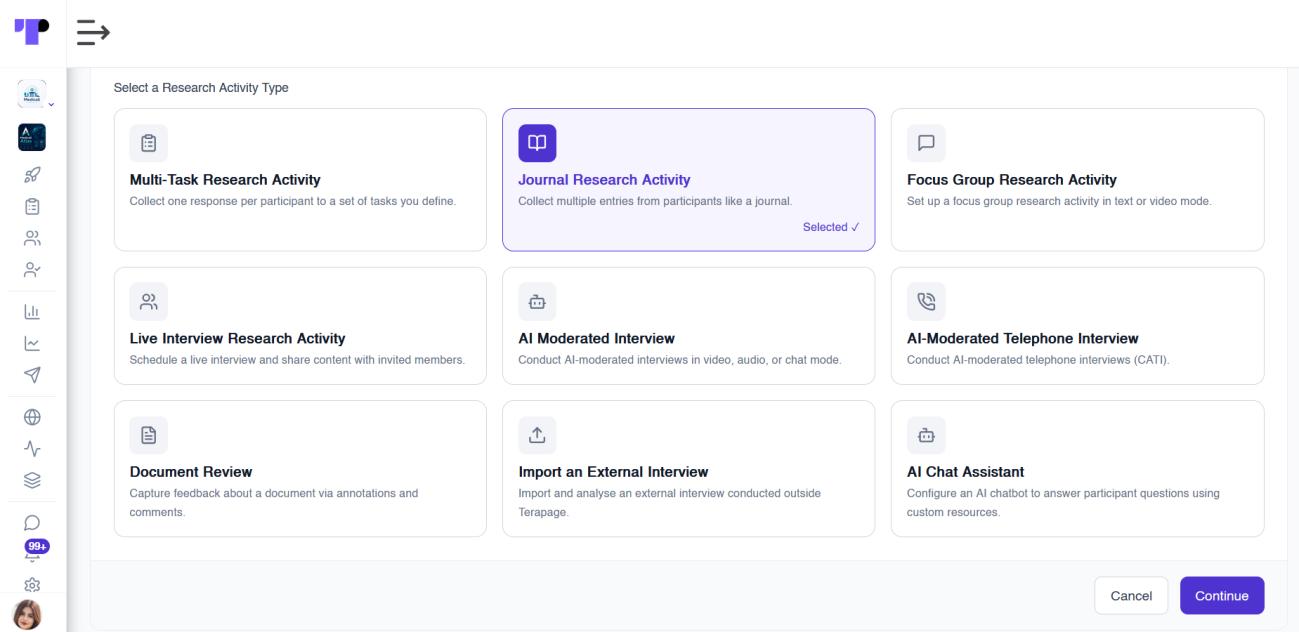
Start by creating a new research activity and selecting Journal Research Activity. This lets each patient submit multiple diary entries over the study period, building a clear picture of their journey over time.
Write Simple, Patient-Friendly Instructions
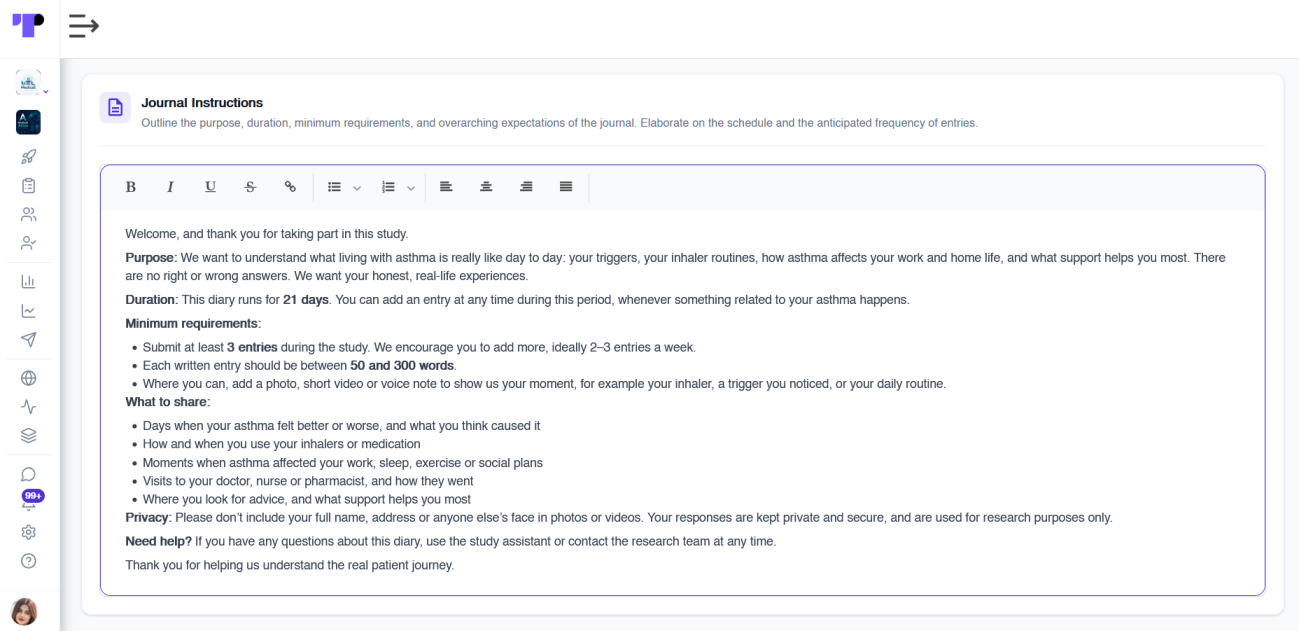
Clear instructions help patients know exactly what to share. Our diary explains the purpose, the 21-day duration, the minimum of three entries, what to record and how privacy is protected. Health data is sensitive, so Terapage keeps it on a secure, GDPR-compliant platform.
How Mobile Ethnography Captures Real-Life Patient Experiences
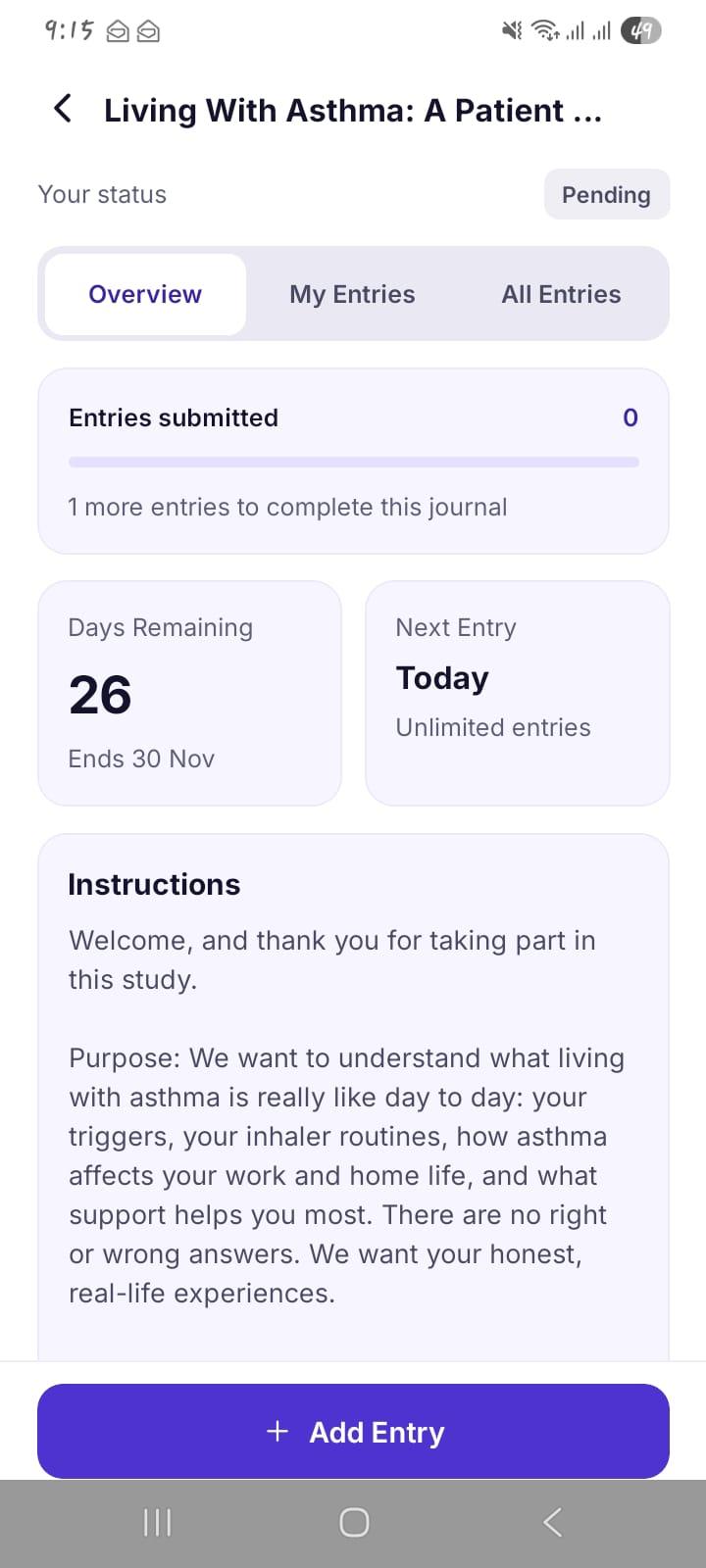
Once the diary is live, patients take part from their own phone, on any device. They can add an entry whenever something happens and choose the format that suits the moment.
Tracking the Patient Journey Day by Day
The diary dashboard shows each patient their entries submitted, days remaining and when their next entry is due, with the study instructions always in view. If a patient forgets, daily reminders prompt them to log their entry, and unfinished entries are saved as drafts they can resume anytime. This means fewer drop-outs and richer data.
Capturing Patient Experiences in Their Own Words
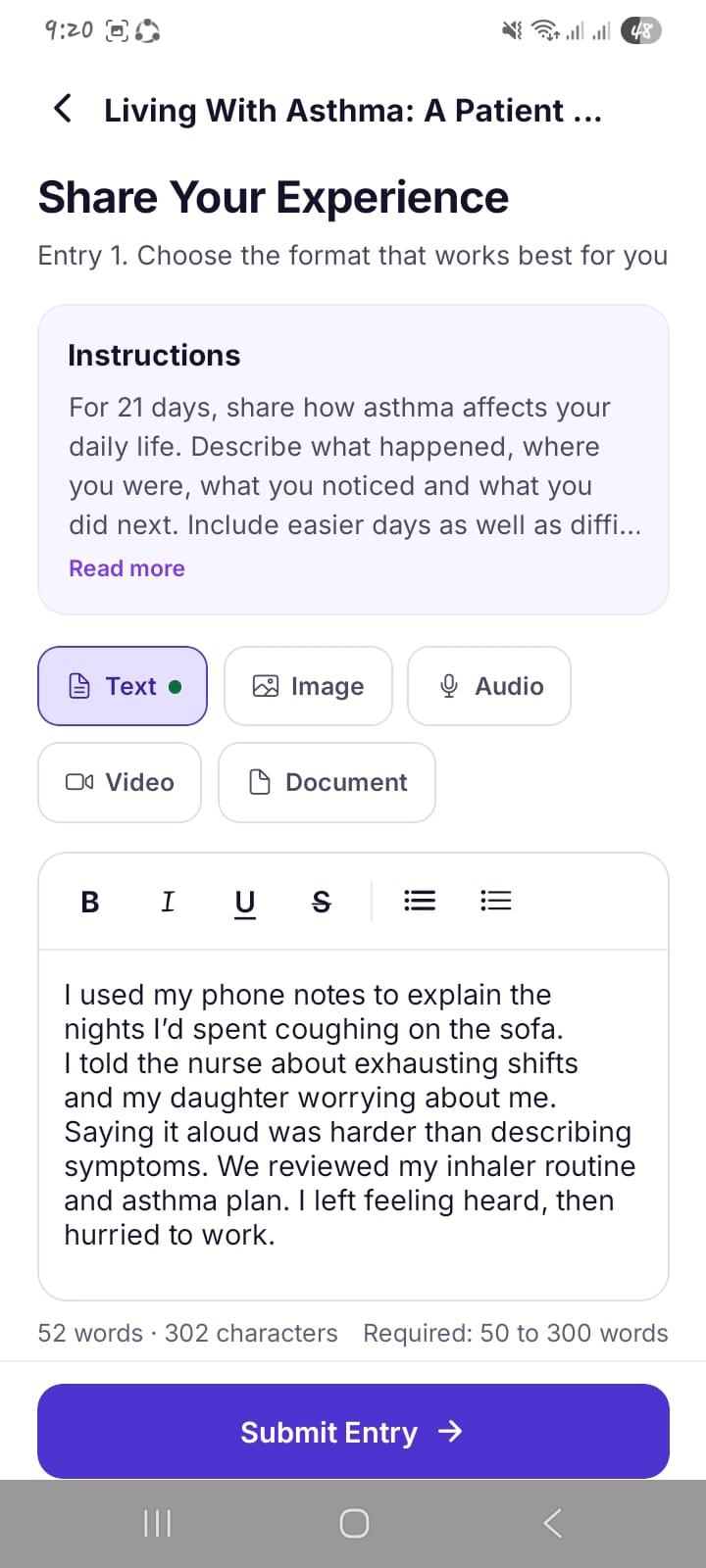
Text entries let patients describe what happened and how it felt, and they save automatically as patients type. In this entry, a patient shares how hard it was to talk about broken nights and work shifts with their nurse.
Seeing Real-Life Context Through Patient Photos
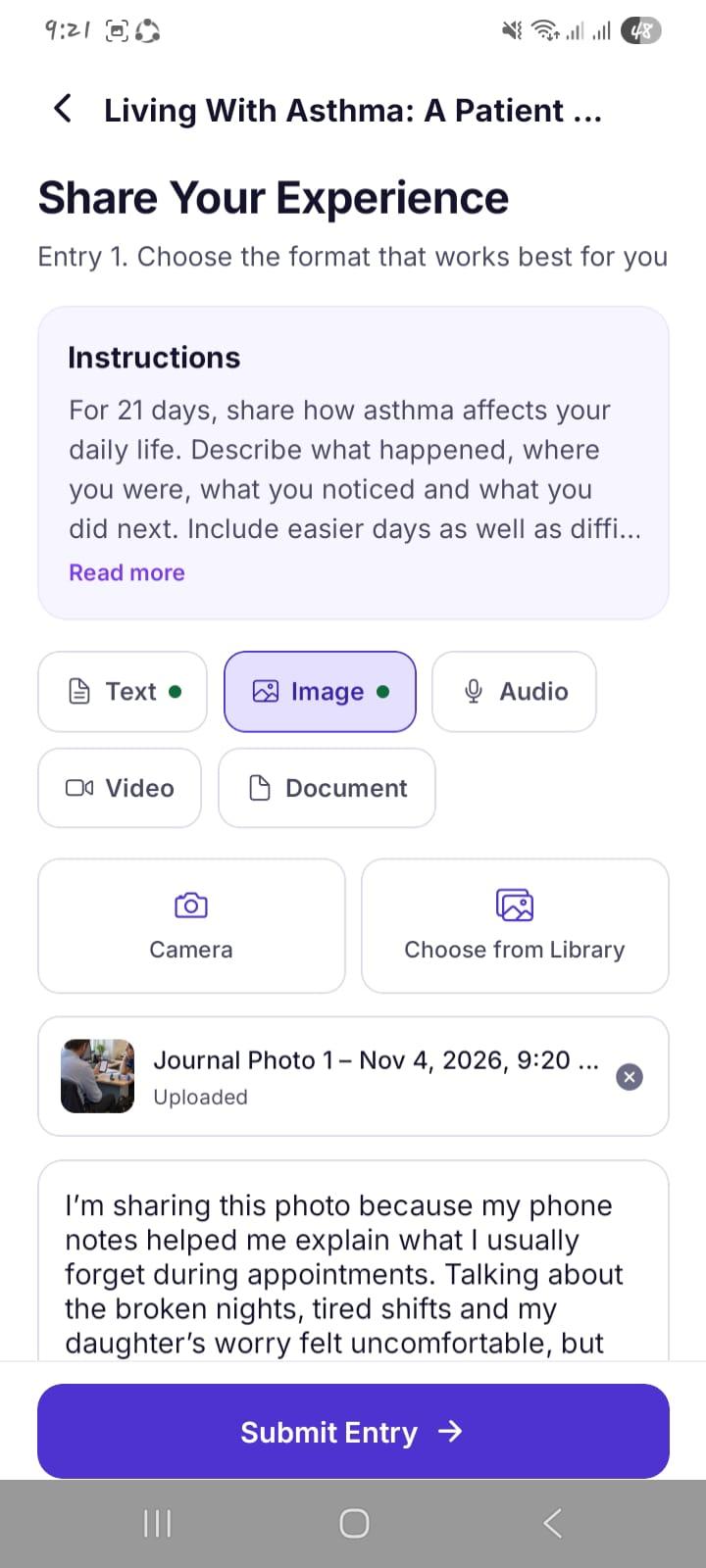
A photo with a short note shows what words can miss, like where a patient keeps their inhaler. This photo voice method gives researchers a direct view into the patient’s world.
Recording In-the-Moment Symptoms With Voice Notes
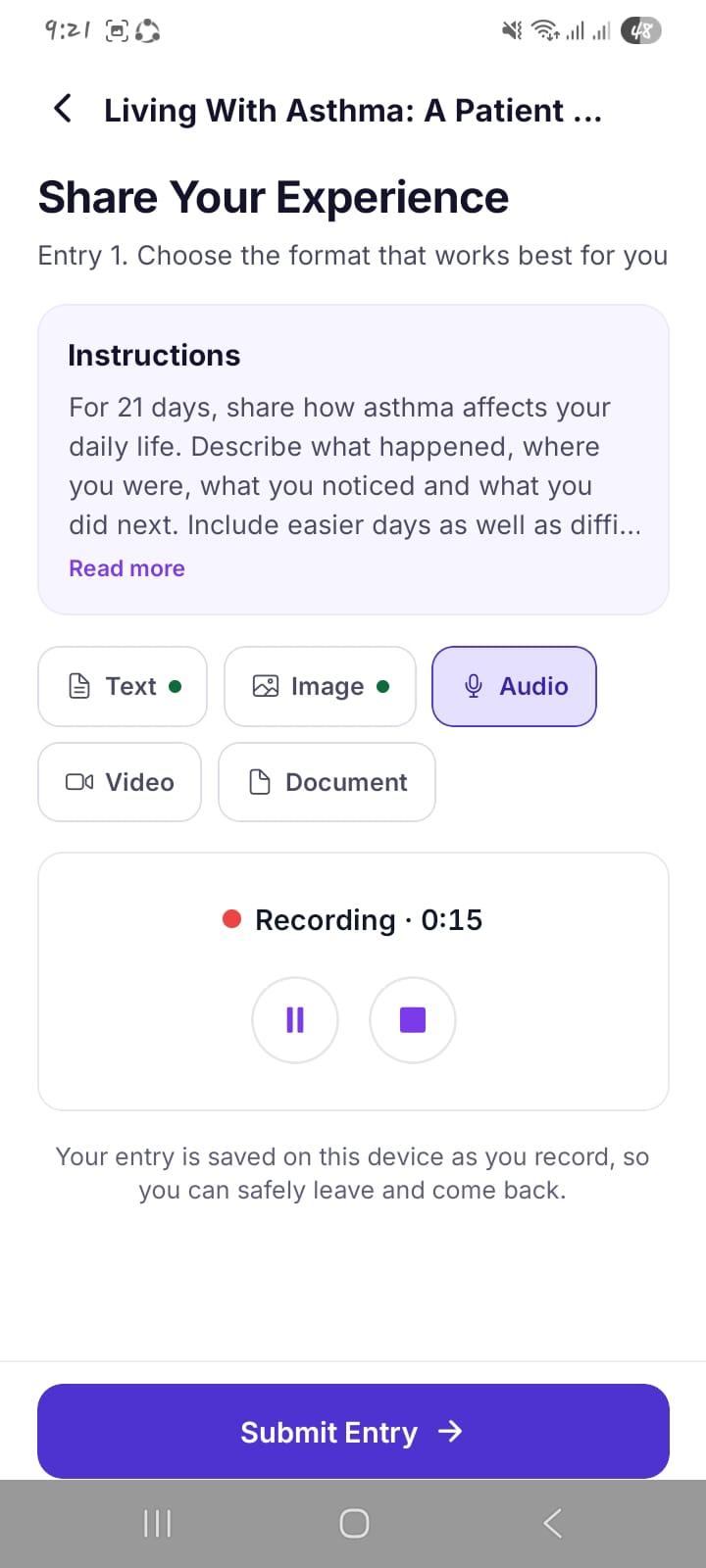
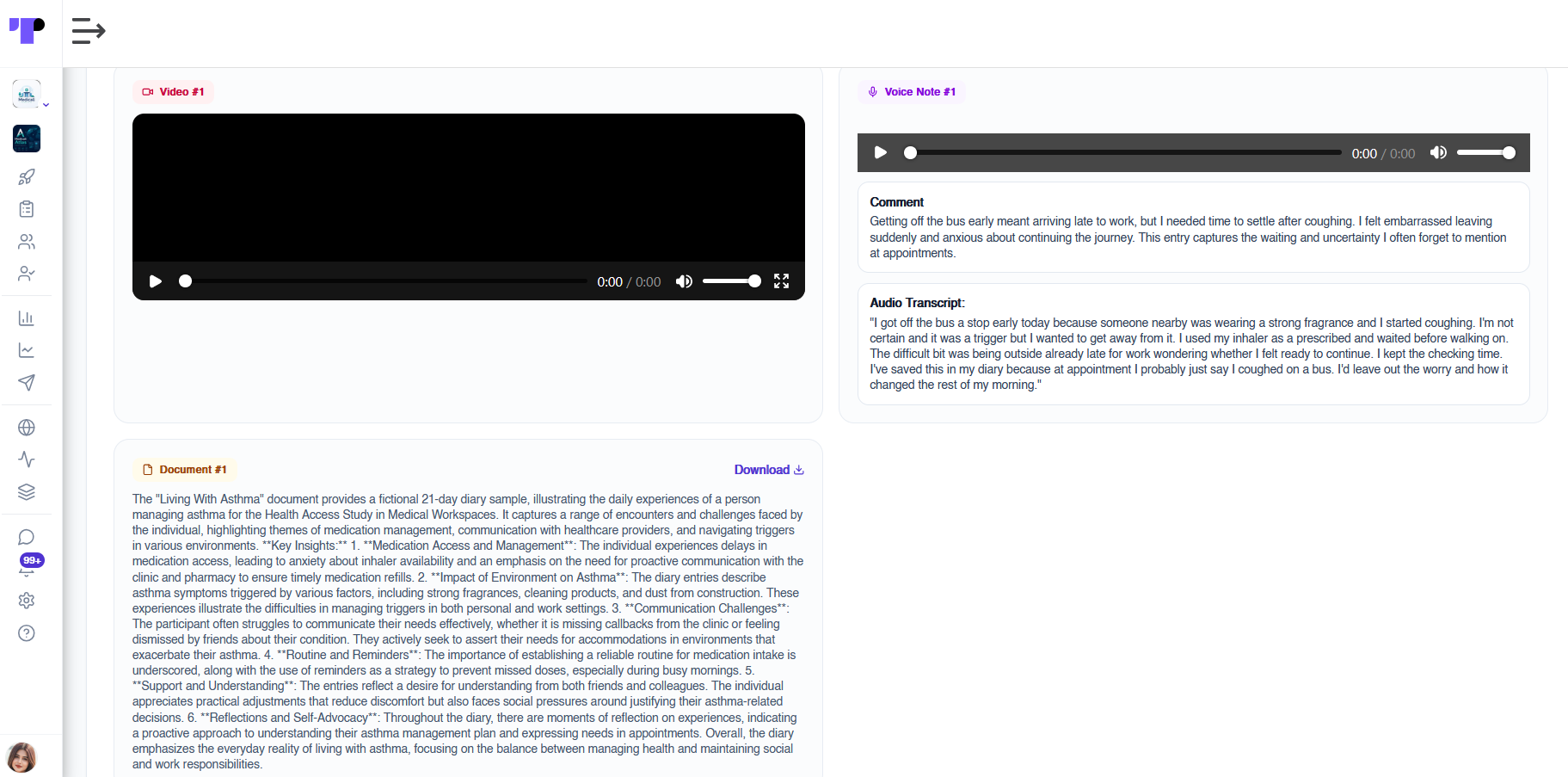
After a coughing fit or on a busy commute, typing is the last thing a patient wants to do. Voice notes let them simply tap and speak, capturing the moment while it is still fresh.
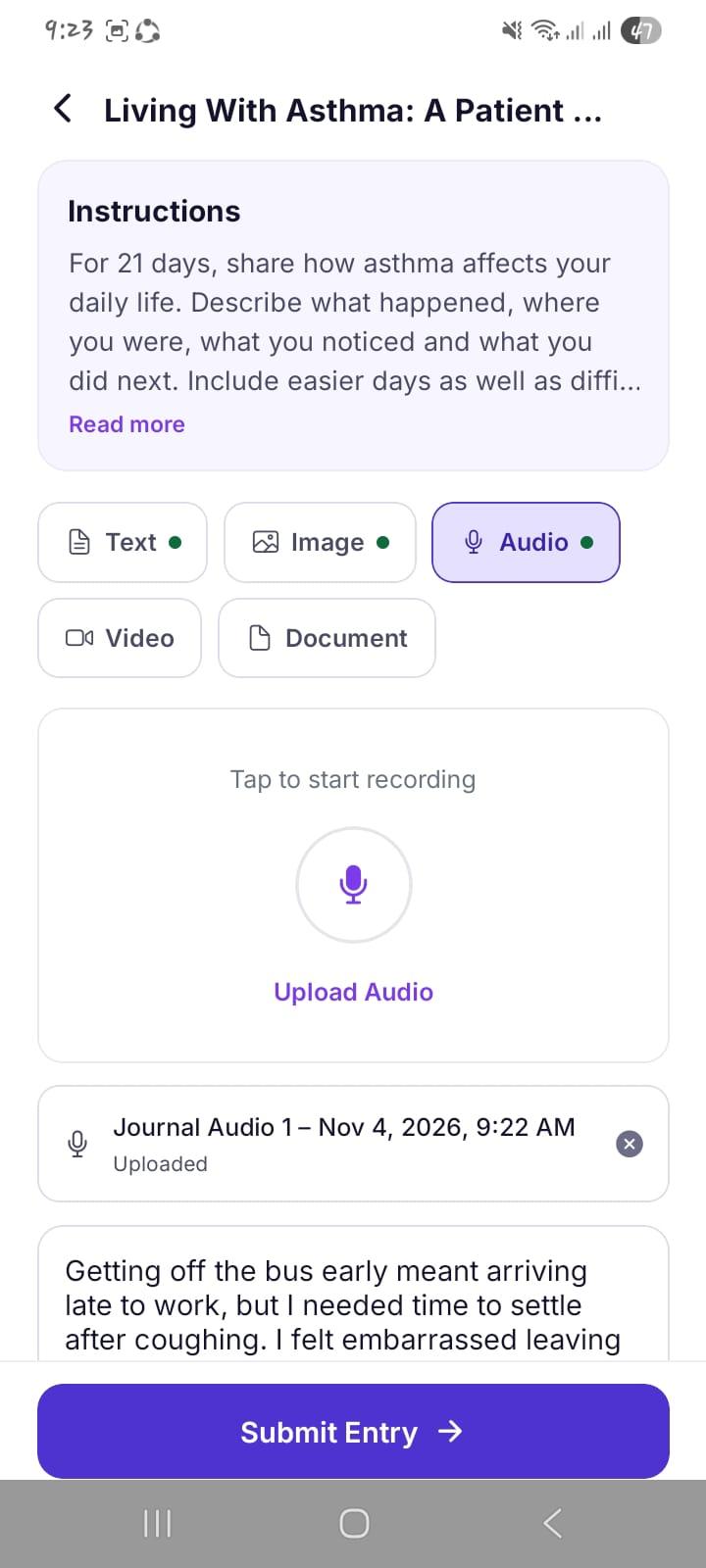
Patients can add a short note to each recording. Here, a patient describes leaving the bus early after a coughing fit, a detail often forgotten at appointments.
Showing Daily Health Routines Through Video and Documents
Videos show routines in action, such as how a patient uses their inhaler or prepares for bed. Patients can record in the app or upload a video from their phone.
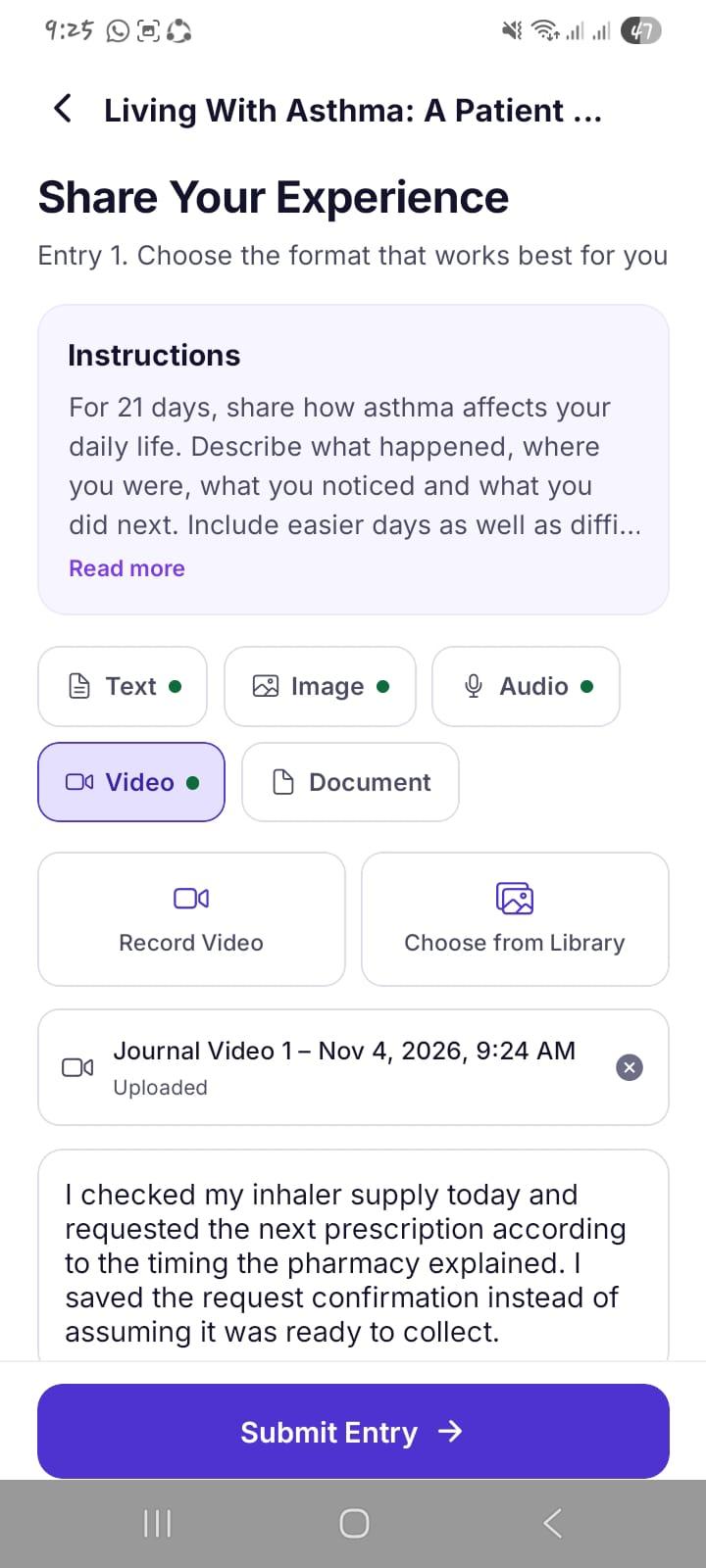
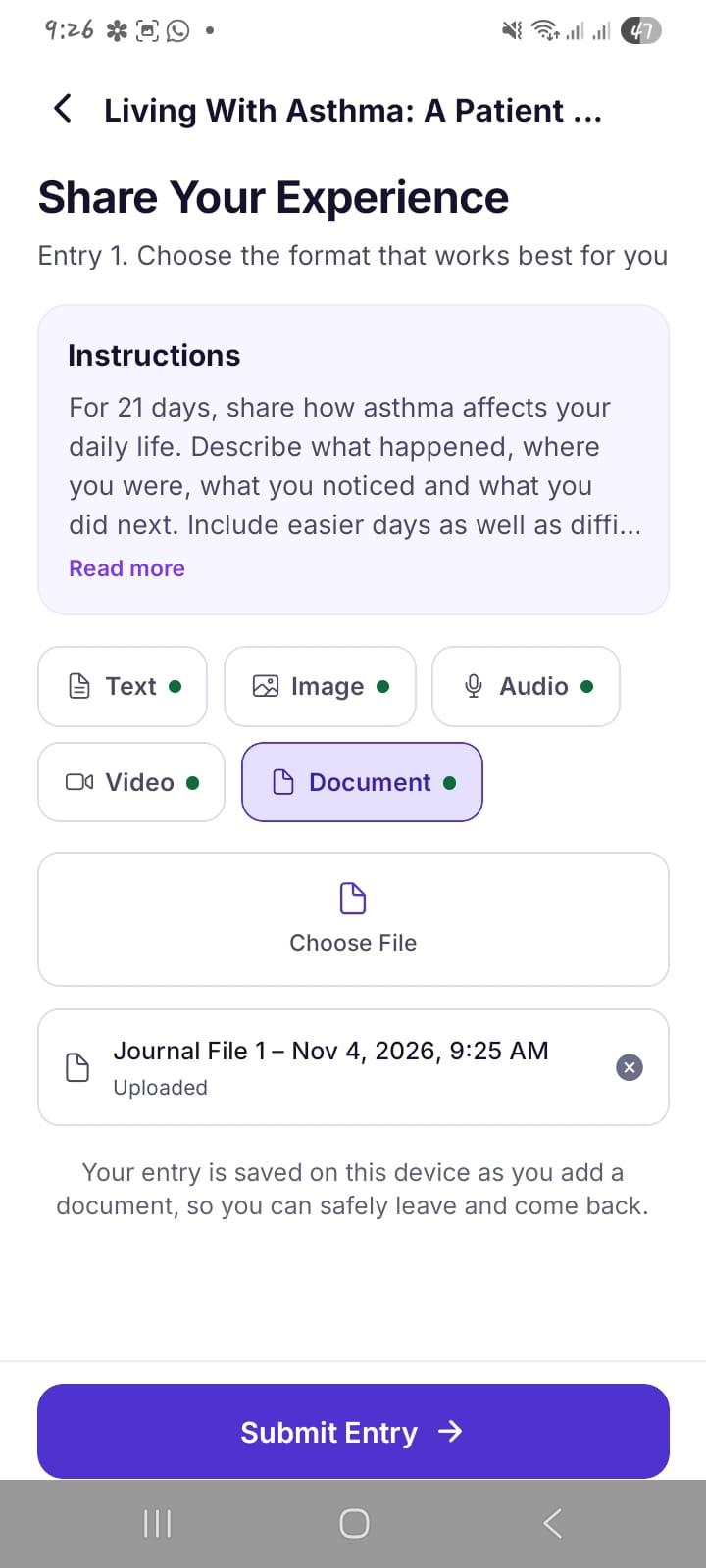
Documents add another layer. Patients can upload their asthma action plan, a prescription leaflet or their own notes, helping researchers compare medical advice with what patients actually do.
Bringing Every Patient Story Into One Feed
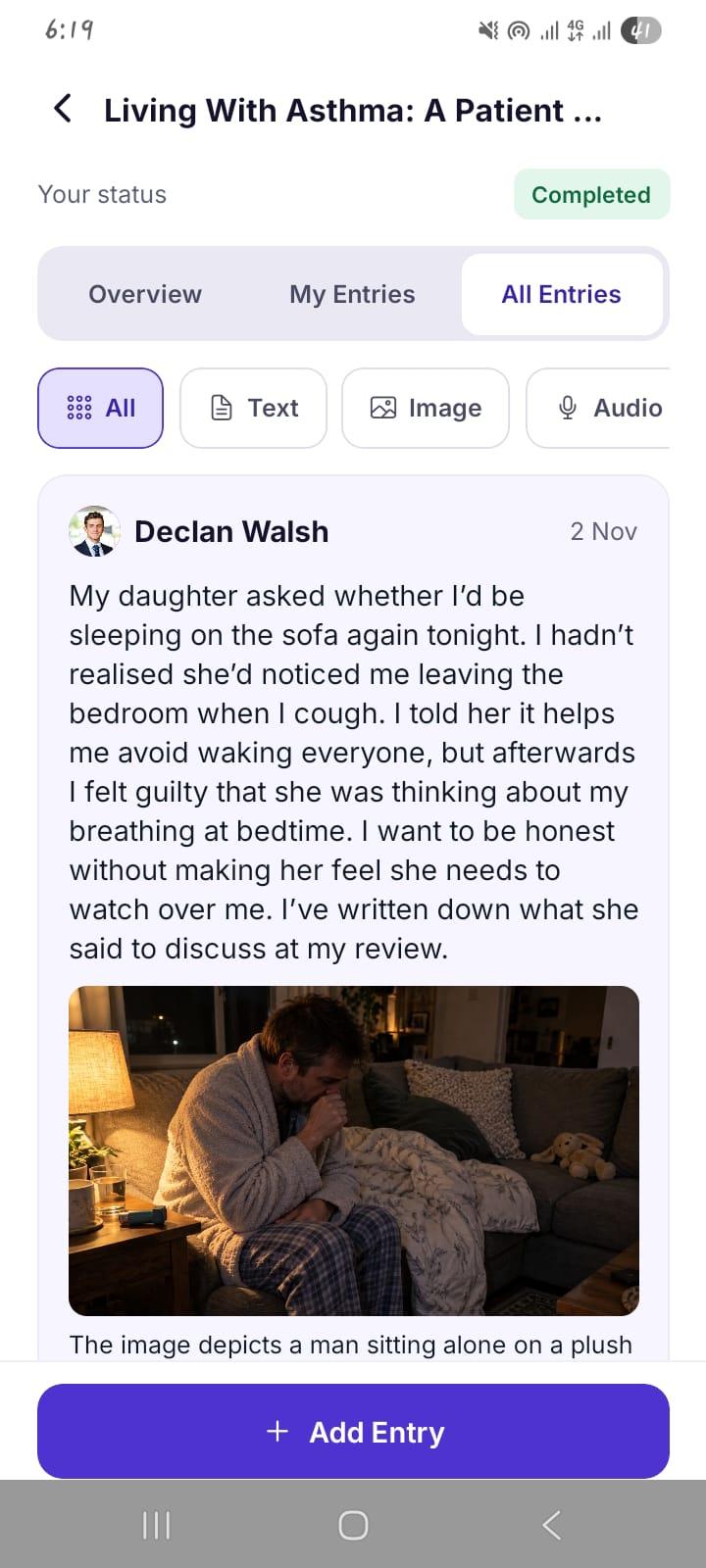
All entries come together in one feed that can be filtered by text, image, audio or video. AI also describes each photo, so visual entries can be analysed alongside written ones. This entry shows how asthma affects the whole family, as a patient’s daughter notices him sleeping on the sofa. See how real-time patient narratives are transforming healthcare.
Going Deeper Into the Patient Journey With Live Video Interviews
Diary entries often raise new questions. Why does a patient not follow their action plan? What stops them from seeking help sooner? A one-to-one video interview lets researchers explore these answers directly. Learn more about AI-powered live video interviews.
Scheduling One-to-One Patient Interviews
Our follow-up, the Asthma Journey Deep-Dive Interview, is a 30-minute session. The overview shows the scheduled date, duration, status and completion points in one view.
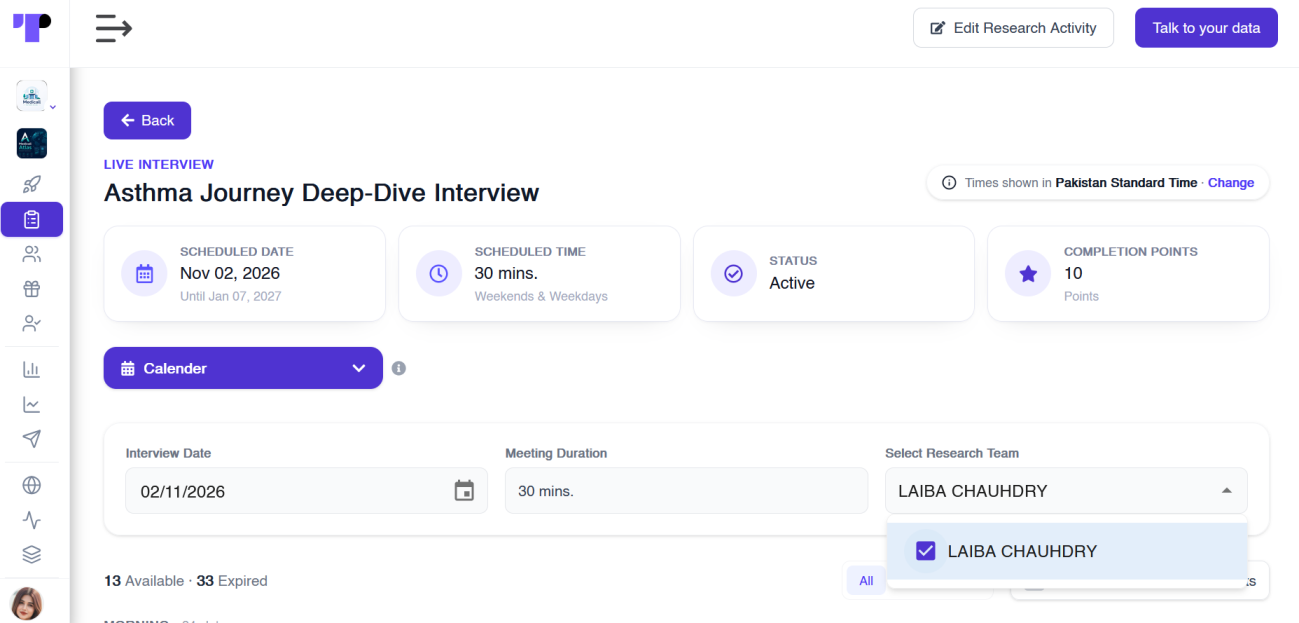
The Calendar menu gives researchers everything they need to run the interview, from scheduled meetings and in-meeting tasks to participants and the Interview Brief.
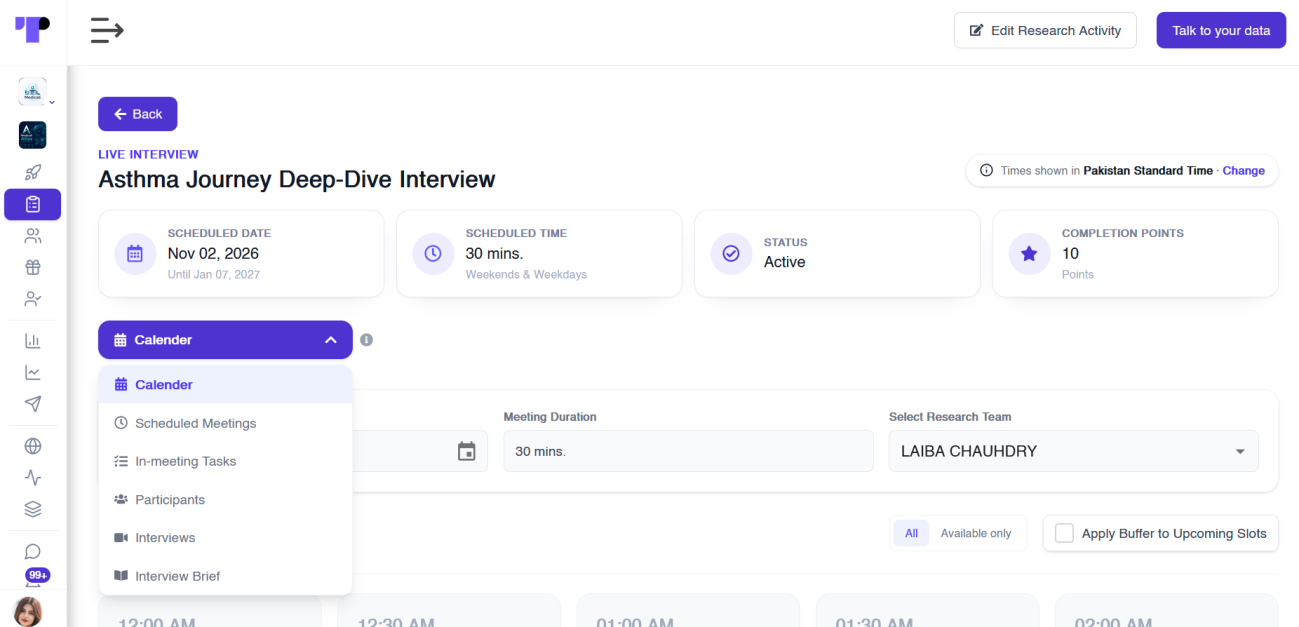
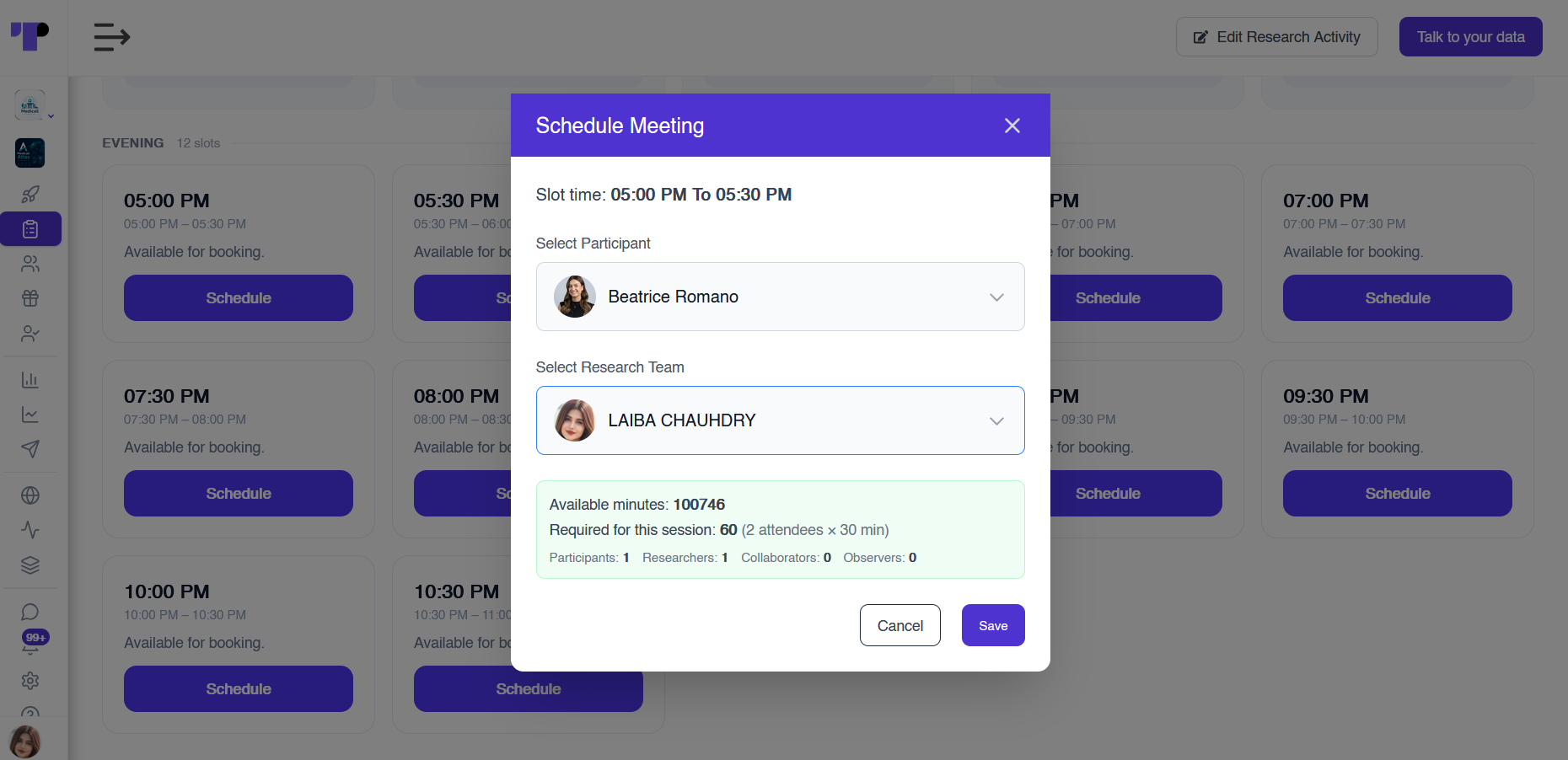
To book a session, researchers choose a time slot, select a patient who completed the diary and assign a moderator from the research team.
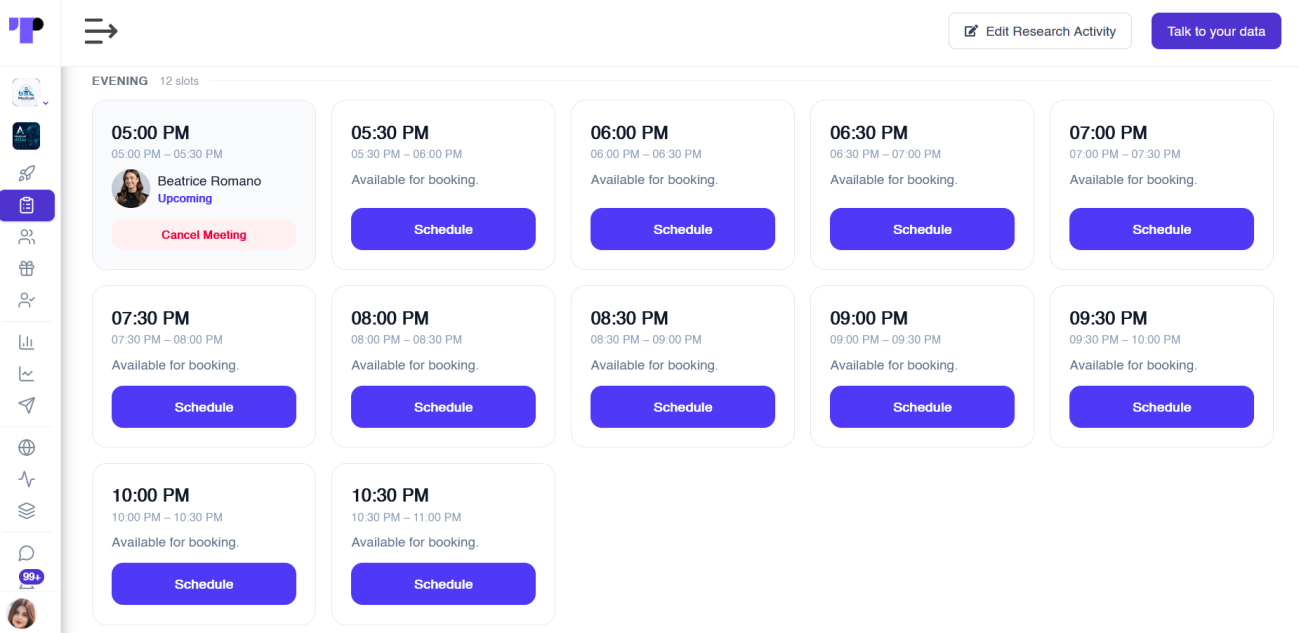
Once saved, the slot is marked as Upcoming and can be cancelled if plans change.
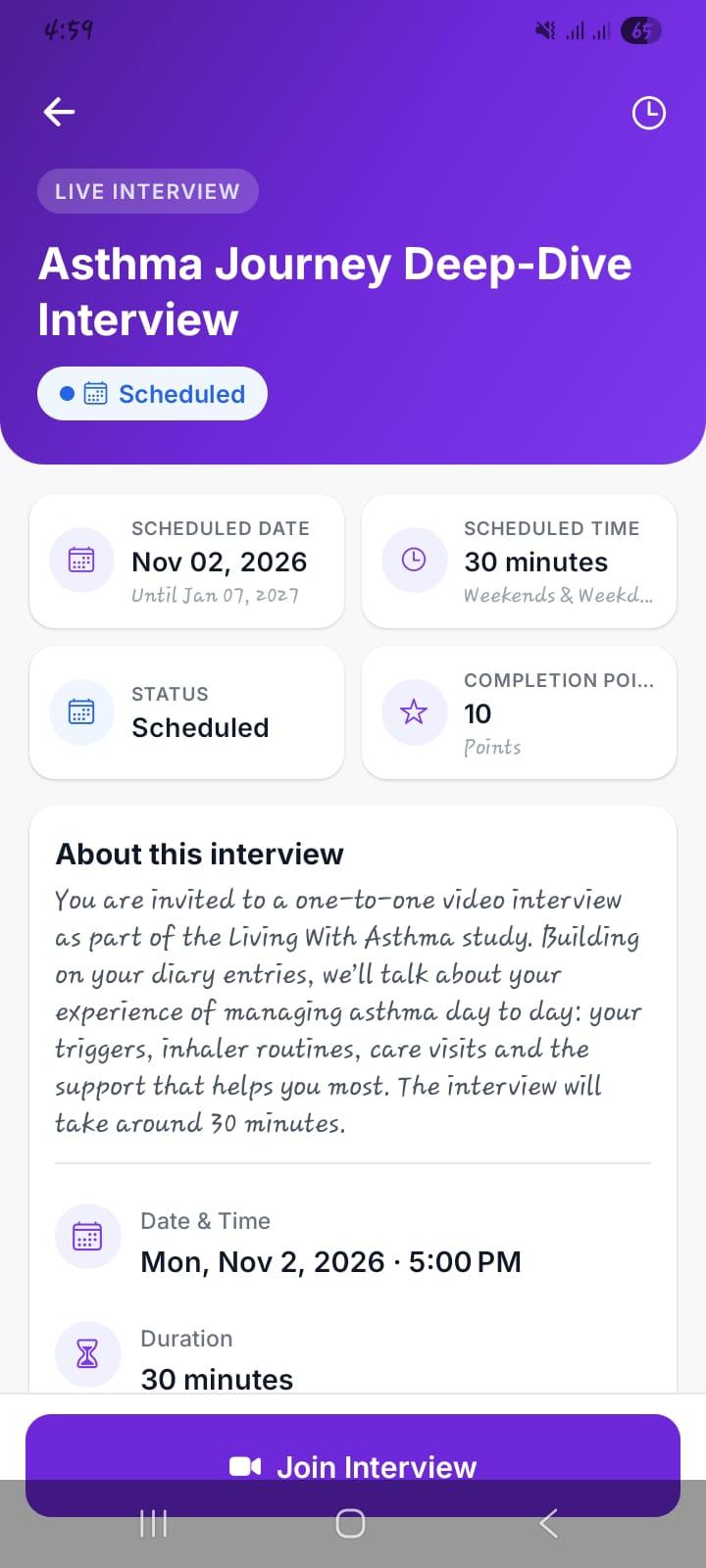
A Mobile-First Interview Experience for Patients
Patients see the interview details on their phone, including what the session will cover and how it builds on their diary entries.
Before joining, they can check their camera and microphone, or choose to join with audio only.
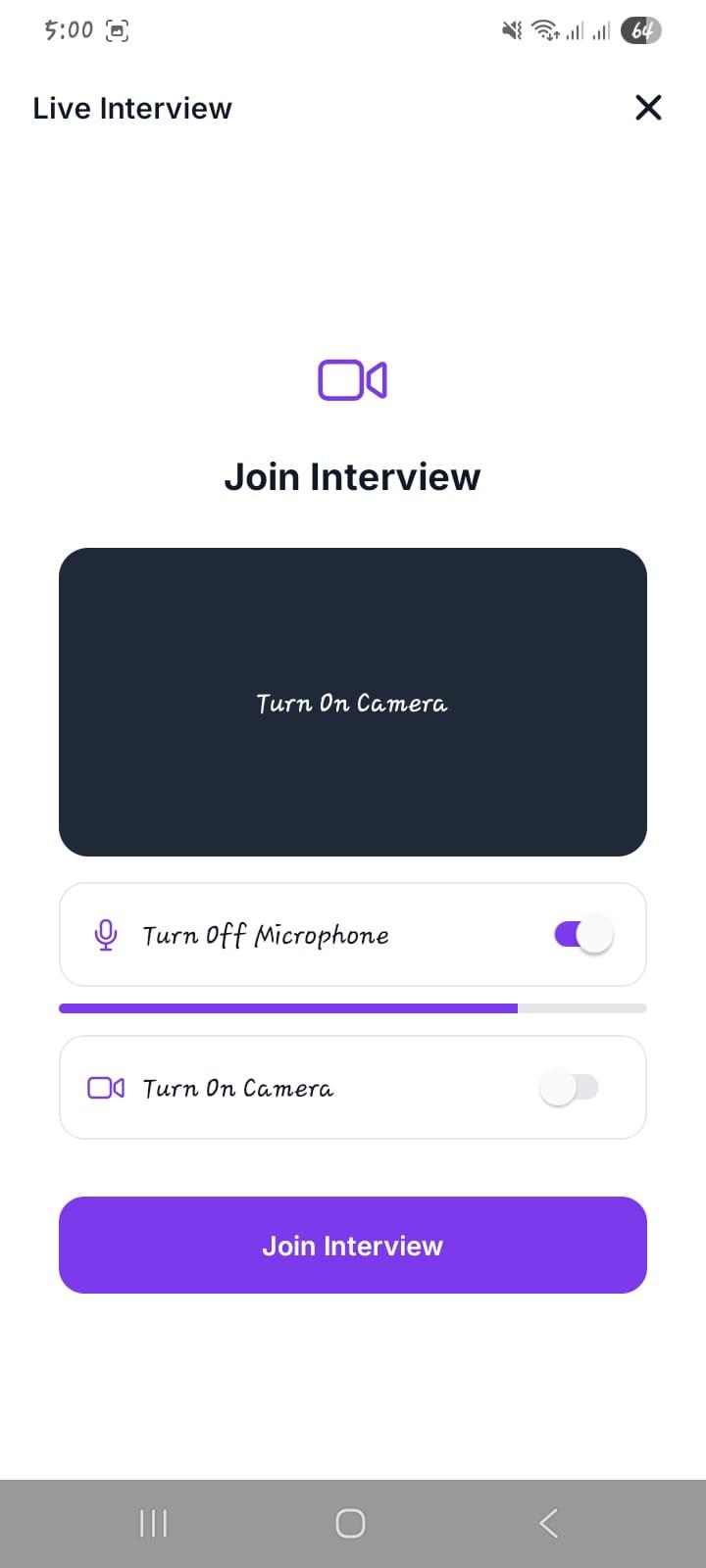
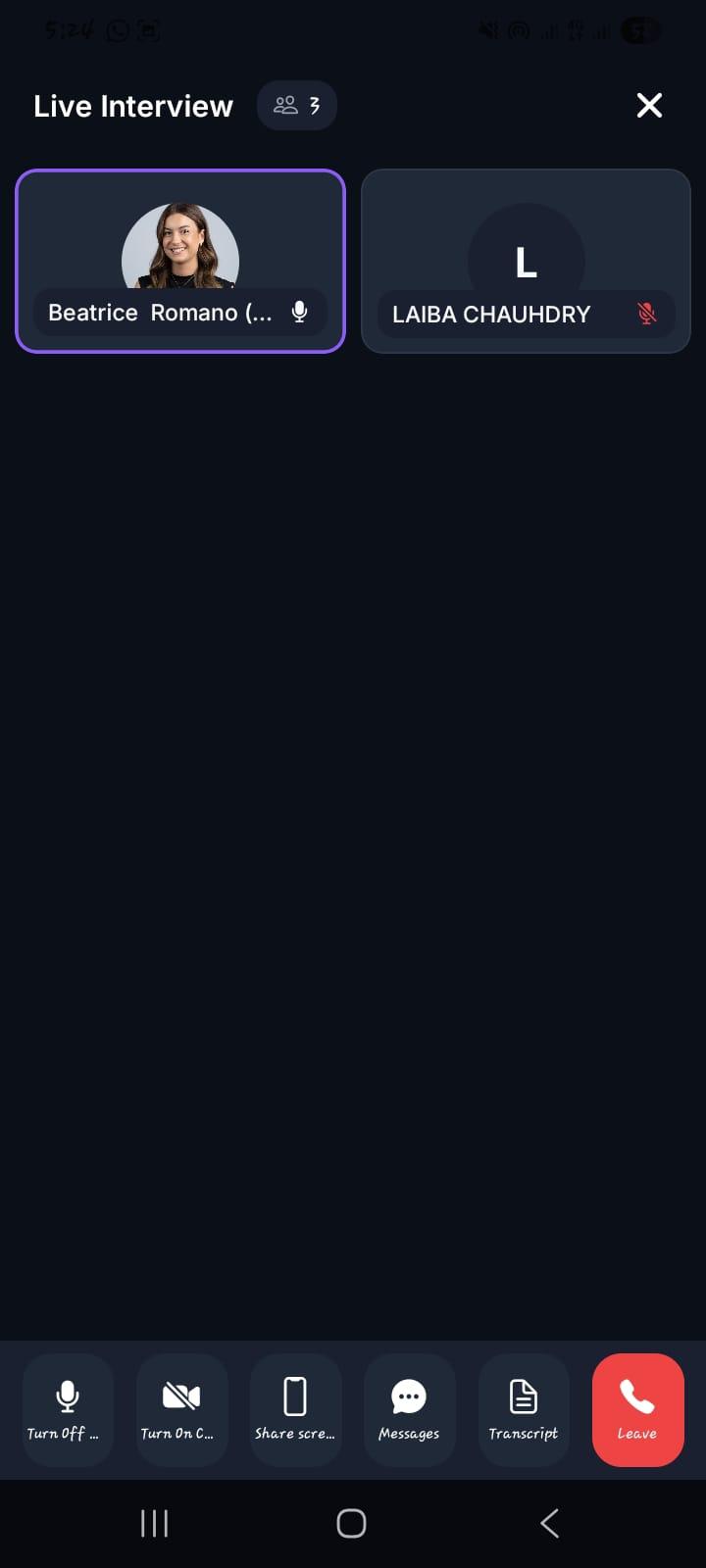
During the call, simple controls for the microphone, camera, chat and live transcript make it easy to take part. Joining from home helps patients feel relaxed and speak openly.
In-Interview Tasks That Reveal Real-Life Behaviour
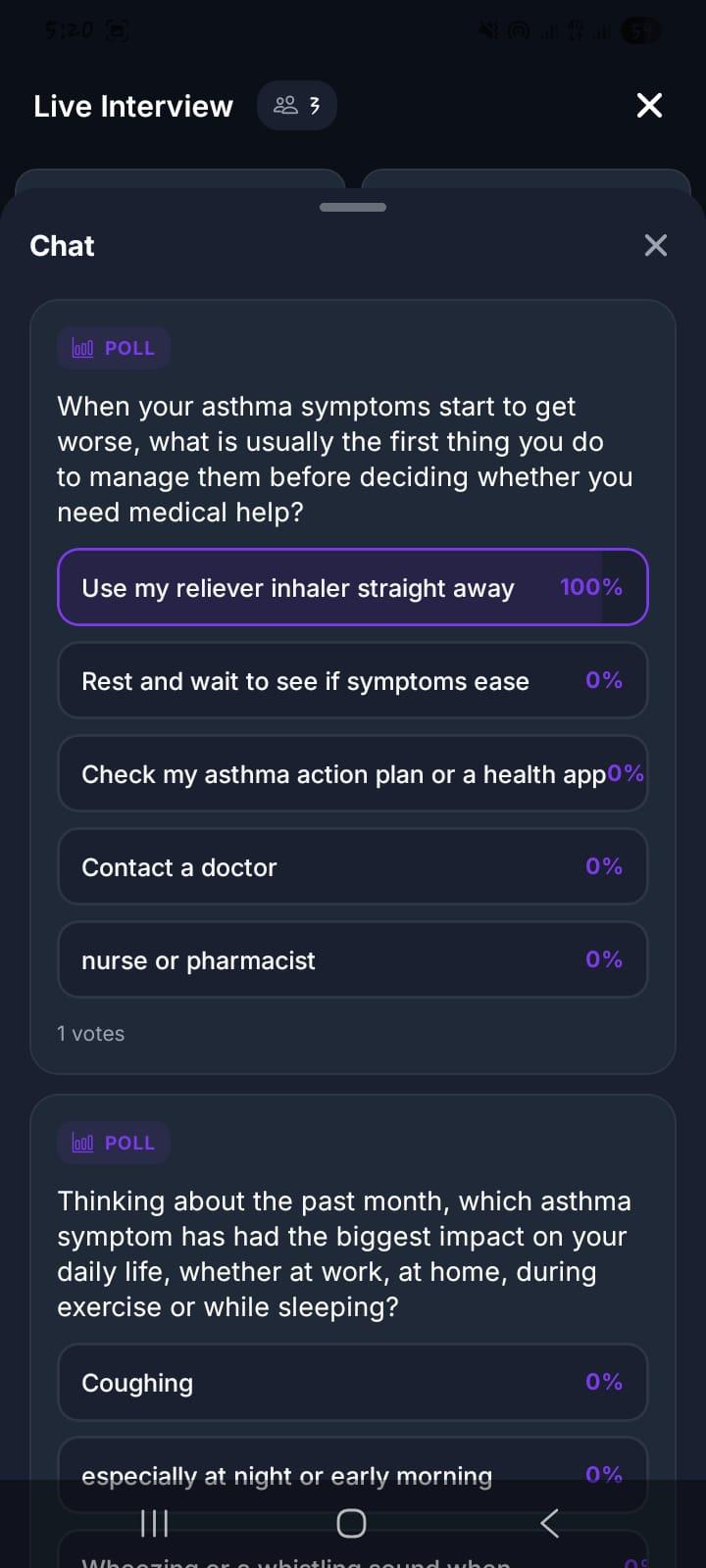
Researchers can send questions, images and polls into the chat during the interview. An open question lets patients tell their story, from diagnosis to how asthma affects them today.
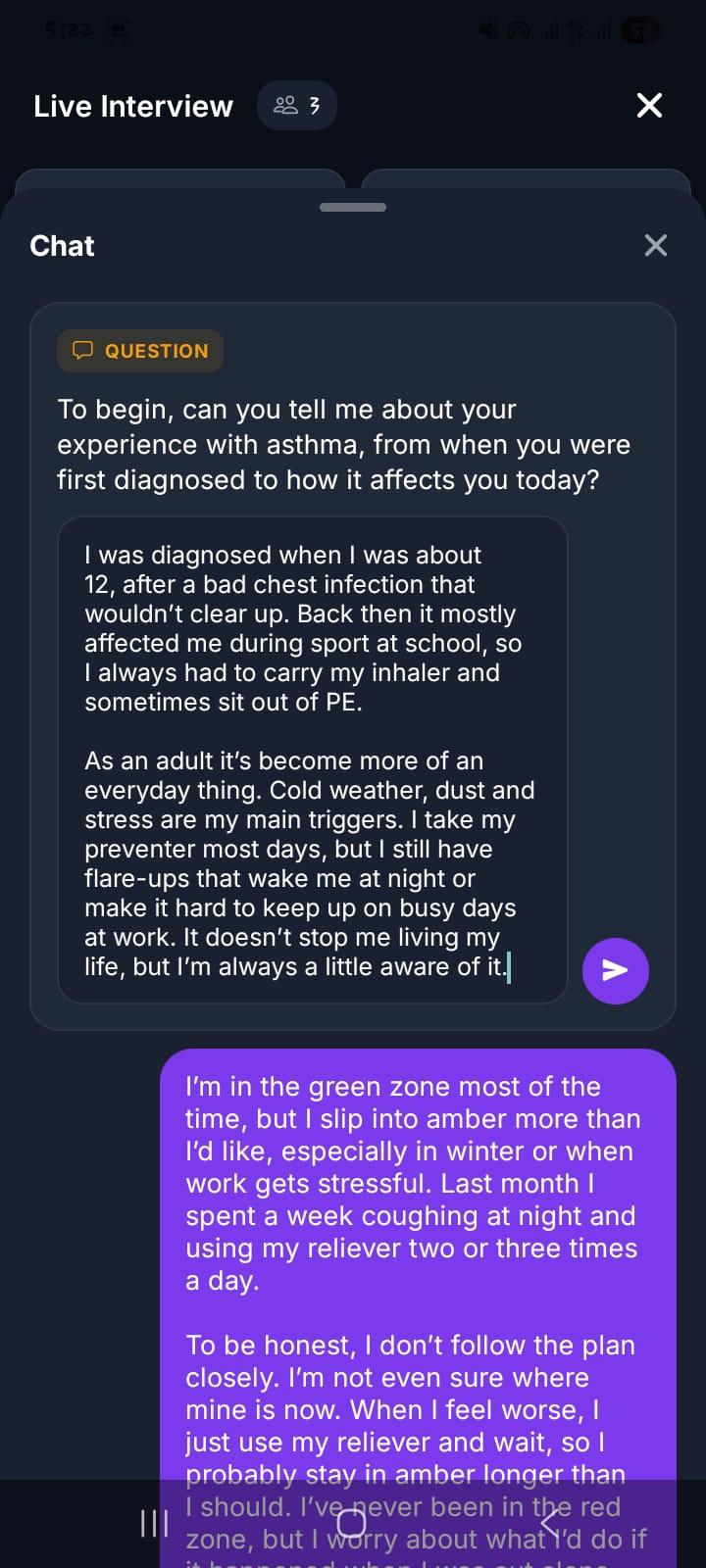
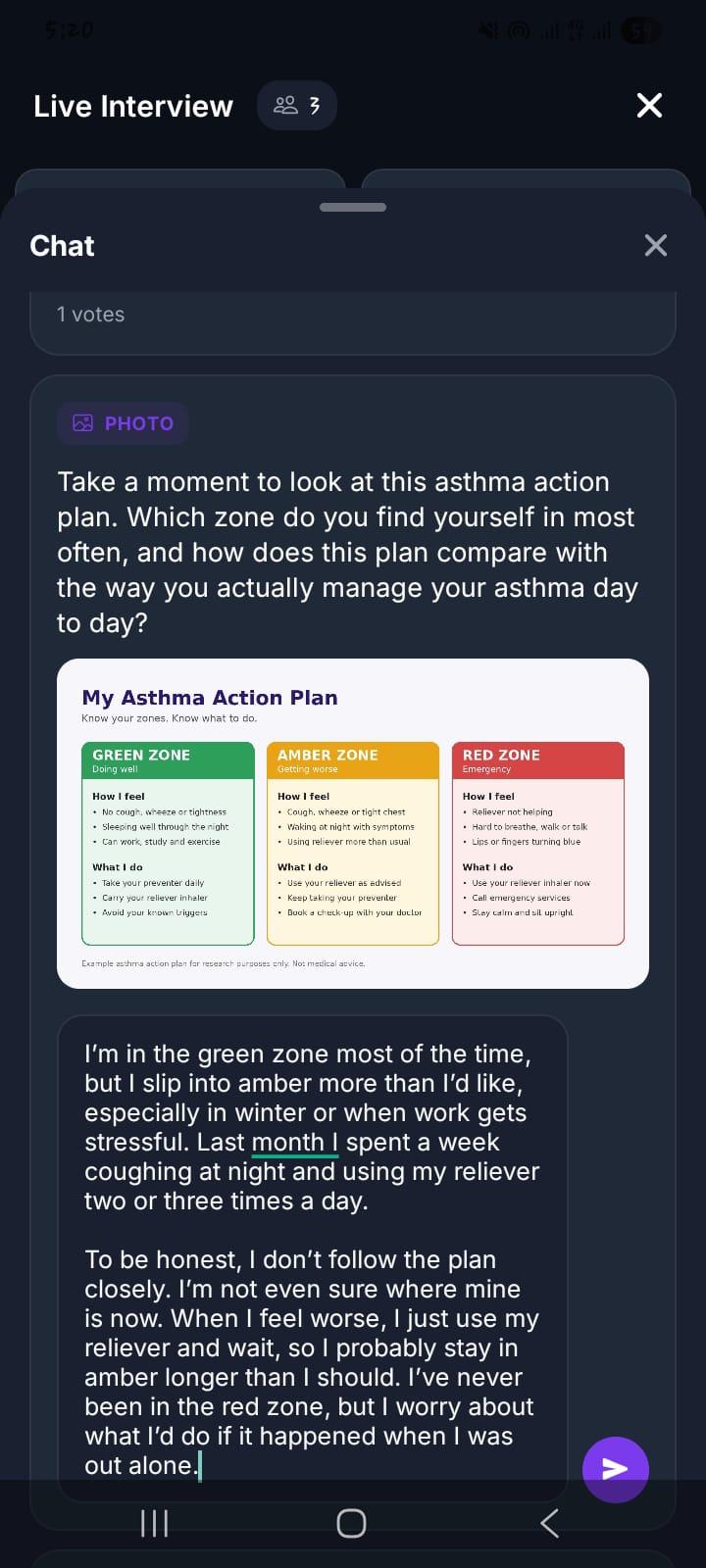
Image tasks help patients react to something concrete. When shown an asthma action plan, this patient admitted they don’t follow it closely and often stay in the amber zone too long, revealing a clear gap between advice and real behaviour.
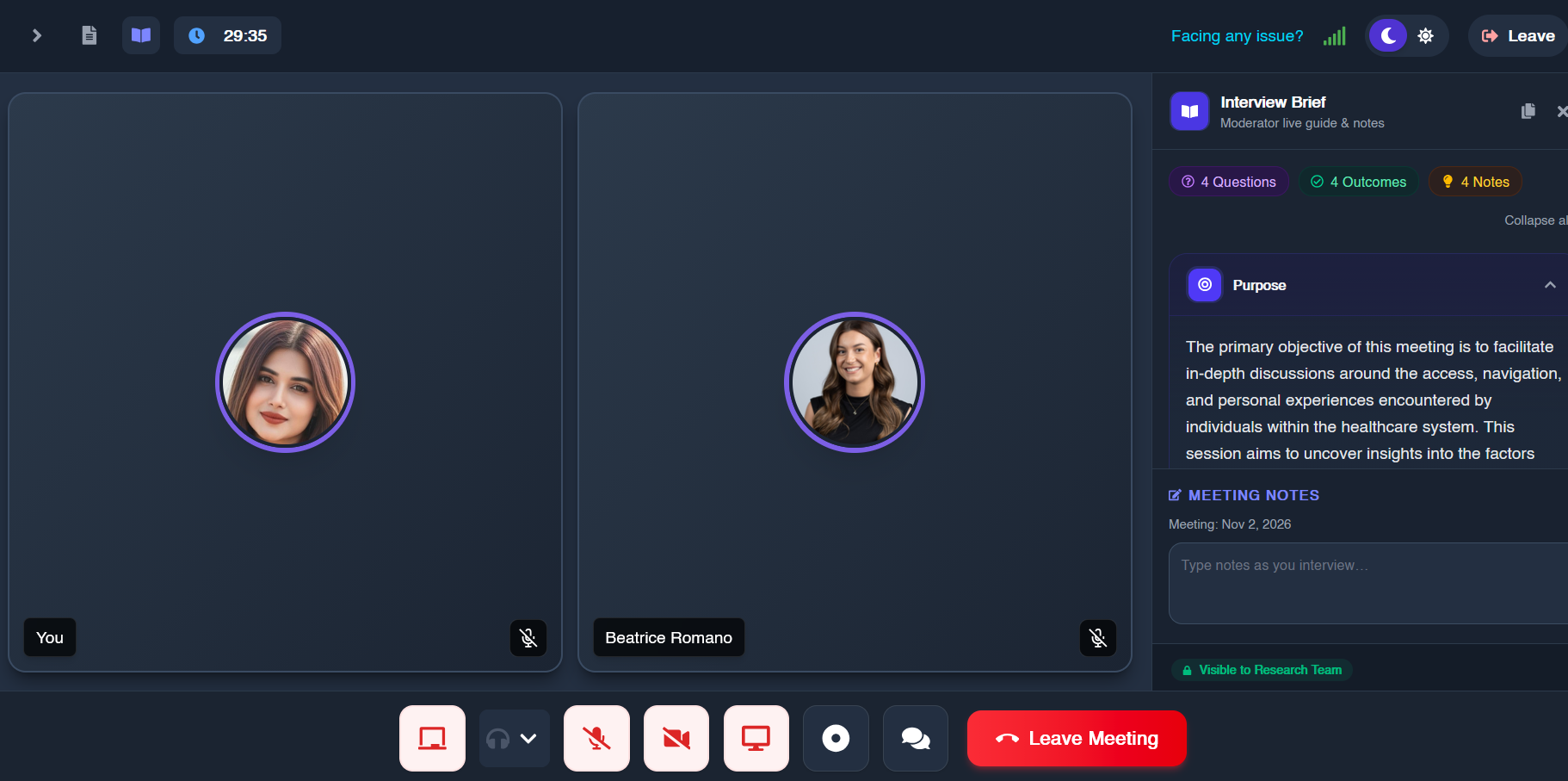
Guided Moderation With Interview Briefs and Live Transcripts
The Interview Brief sits beside the video and holds the session purpose, key questions, expected outcomes and meeting notes. It keeps the moderator focused and the conversation on track.
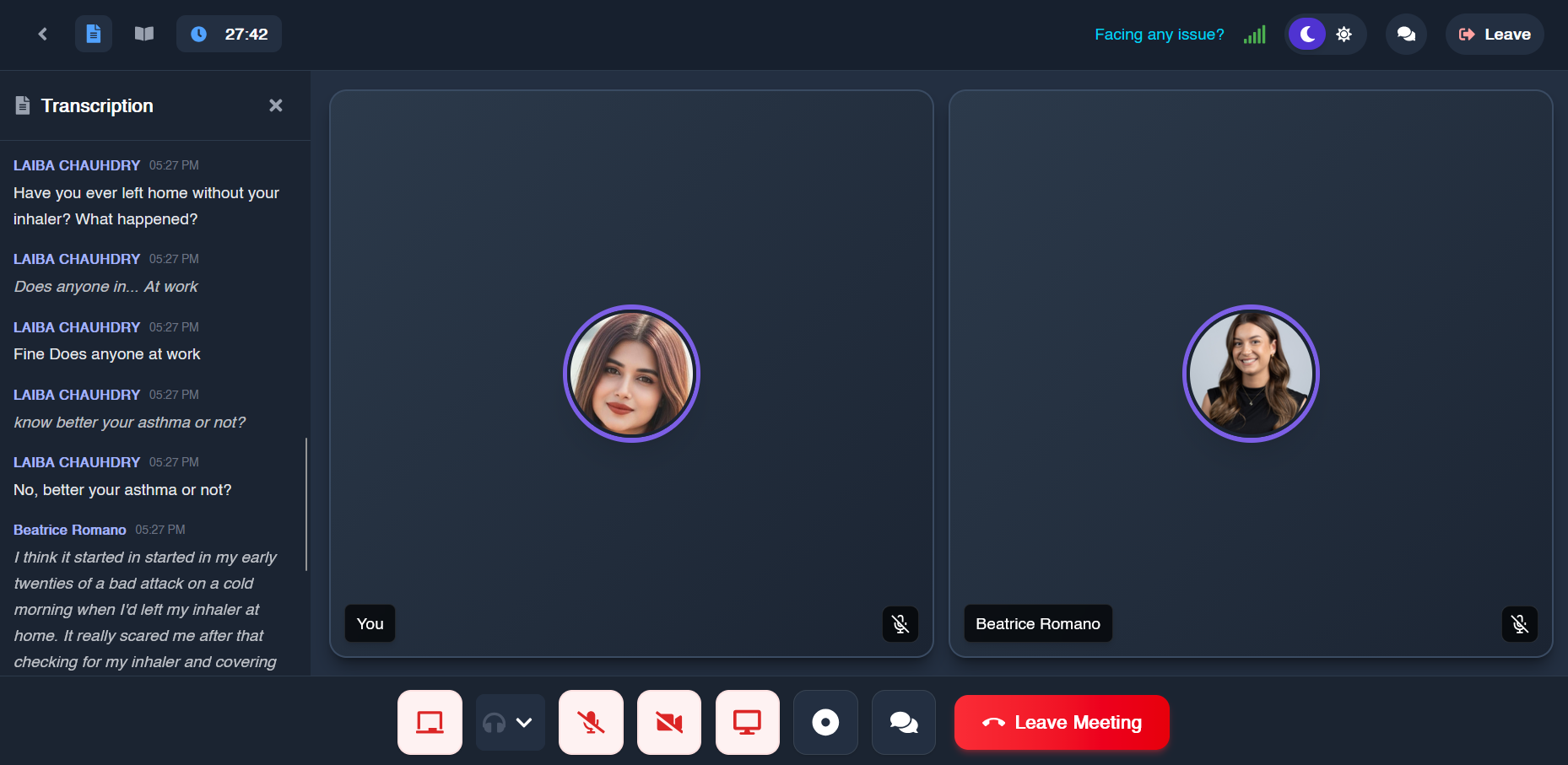
Live transcription captures every word as it is spoken, so moderators can focus on listening instead of taking notes.
Turning Real-Life Patient Experiences Into Insights
Collecting patient stories is only half the job. Terapage’s AI-powered insights turn diary entries and interview answers into clear findings, so researchers can see the patterns across the whole patient journey without reading every entry by hand.
Tracking Patient Diary Participation at a Glance
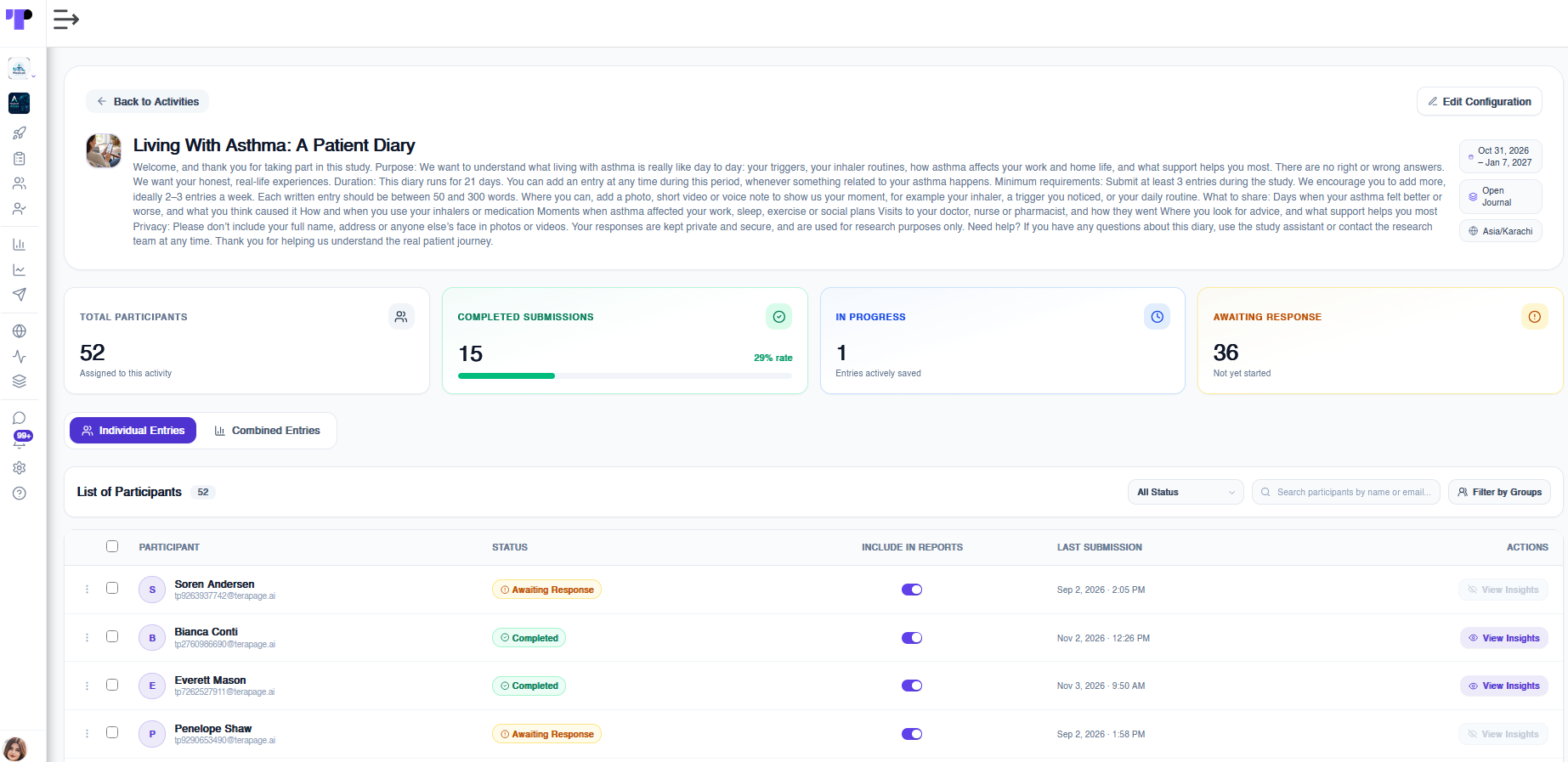
The activity dashboard shows how many patients are taking part, how many have completed the diary, who is in progress and who has not started yet. Researchers can filter by status, include or exclude patients from reports and open each person’s insights in one click.
Reviewing Each Patient’s Journey
Every patient has their own page with all their diary entries in one place. AI automatically describes each photo, picking out details such as an inhaler on the nurse’s desk or symptom notes on a phone screen.
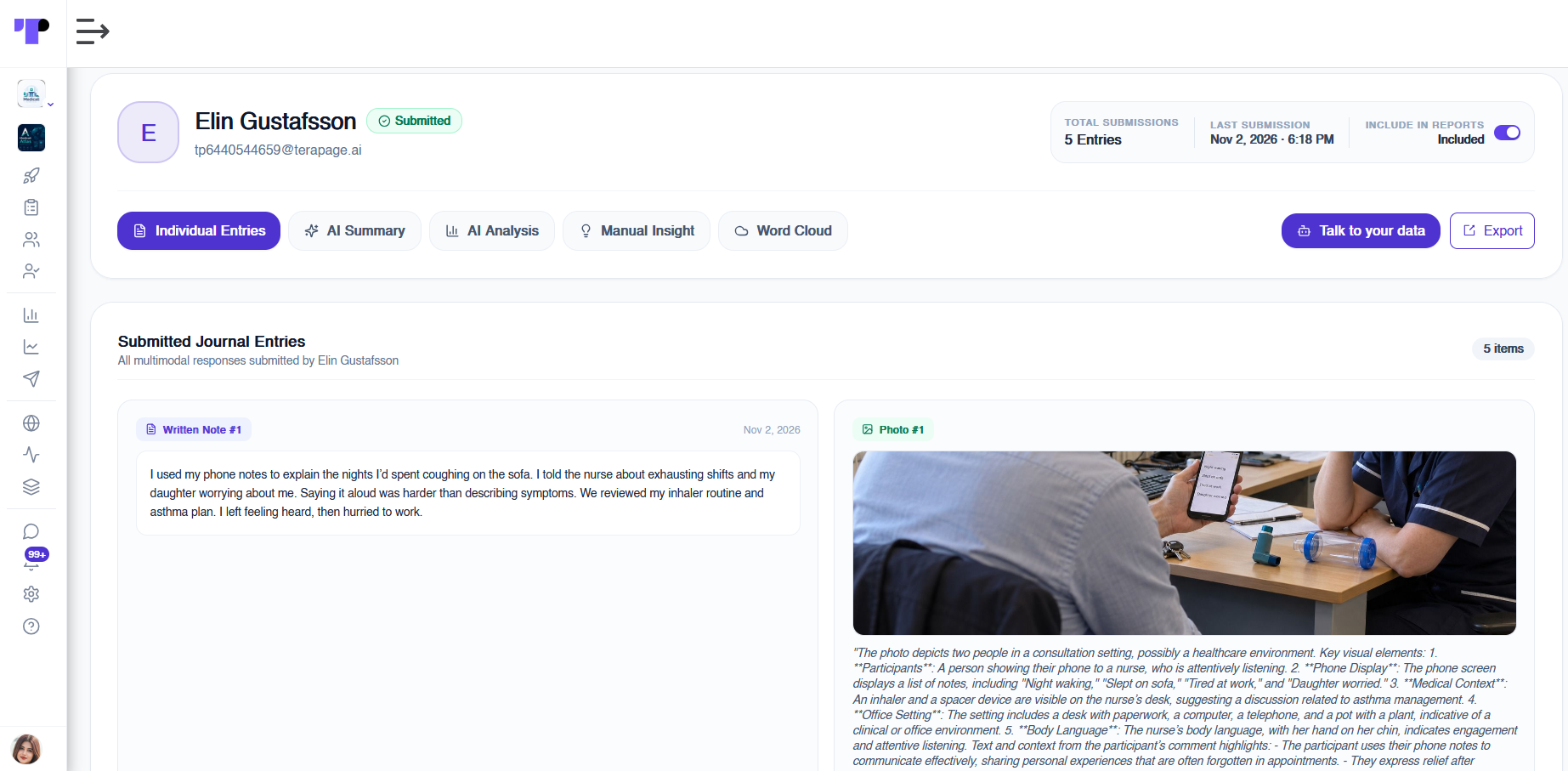
Voice notes are transcribed automatically and documents are summarised by AI. Here, the transcript reveals that a strong fragrance on the bus triggered the coughing, a detail the patient said they would usually leave out at appointments.
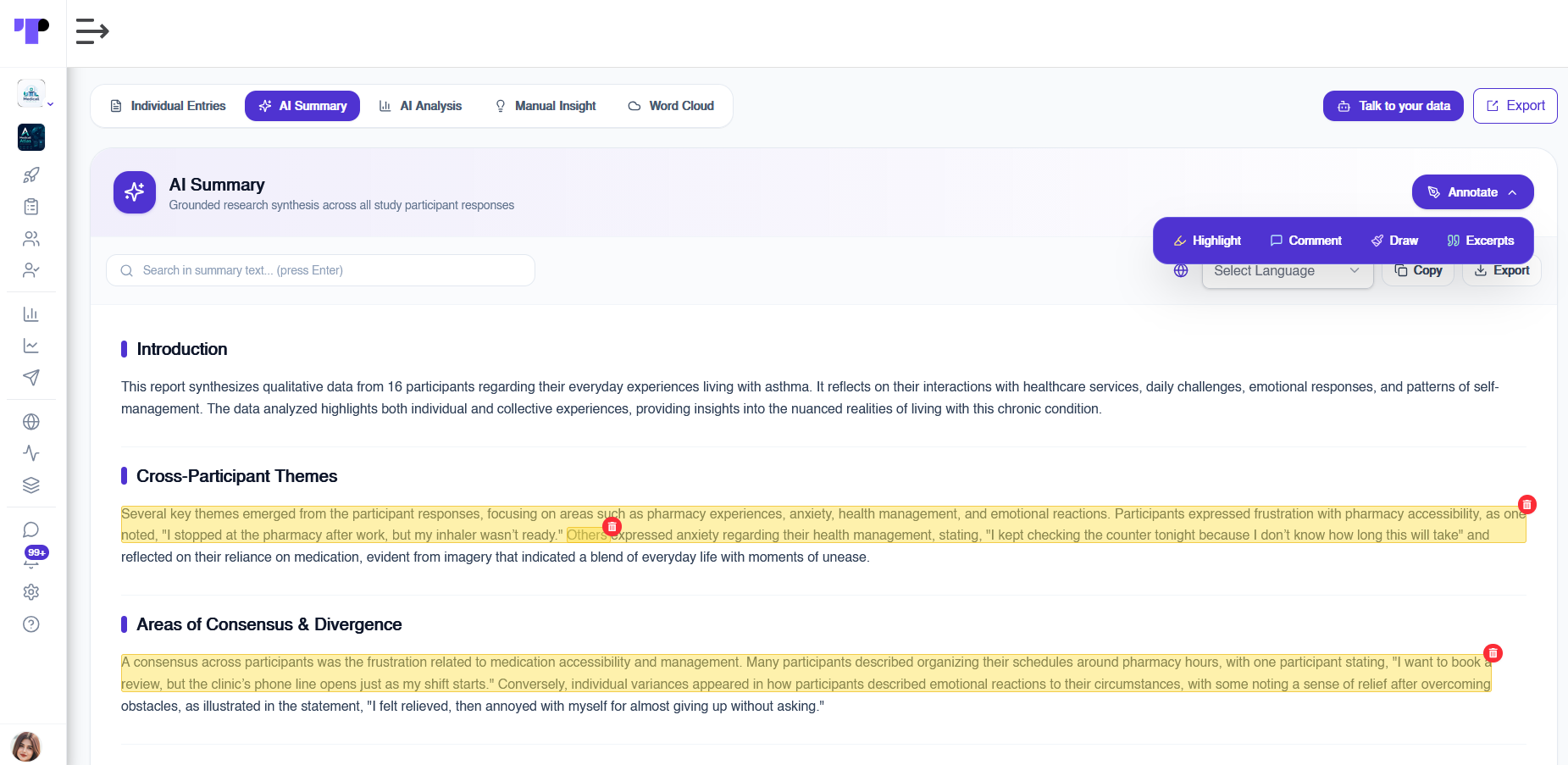
AI Summaries That Connect Patient Stories
The AI Summary brings all responses together into one report, covering cross-participant themes, areas of agreement and differences between patients. In this study, it shows a shared frustration with getting inhalers from the pharmacy on time. Researchers can highlight, comment and save key excerpts directly on the summary.
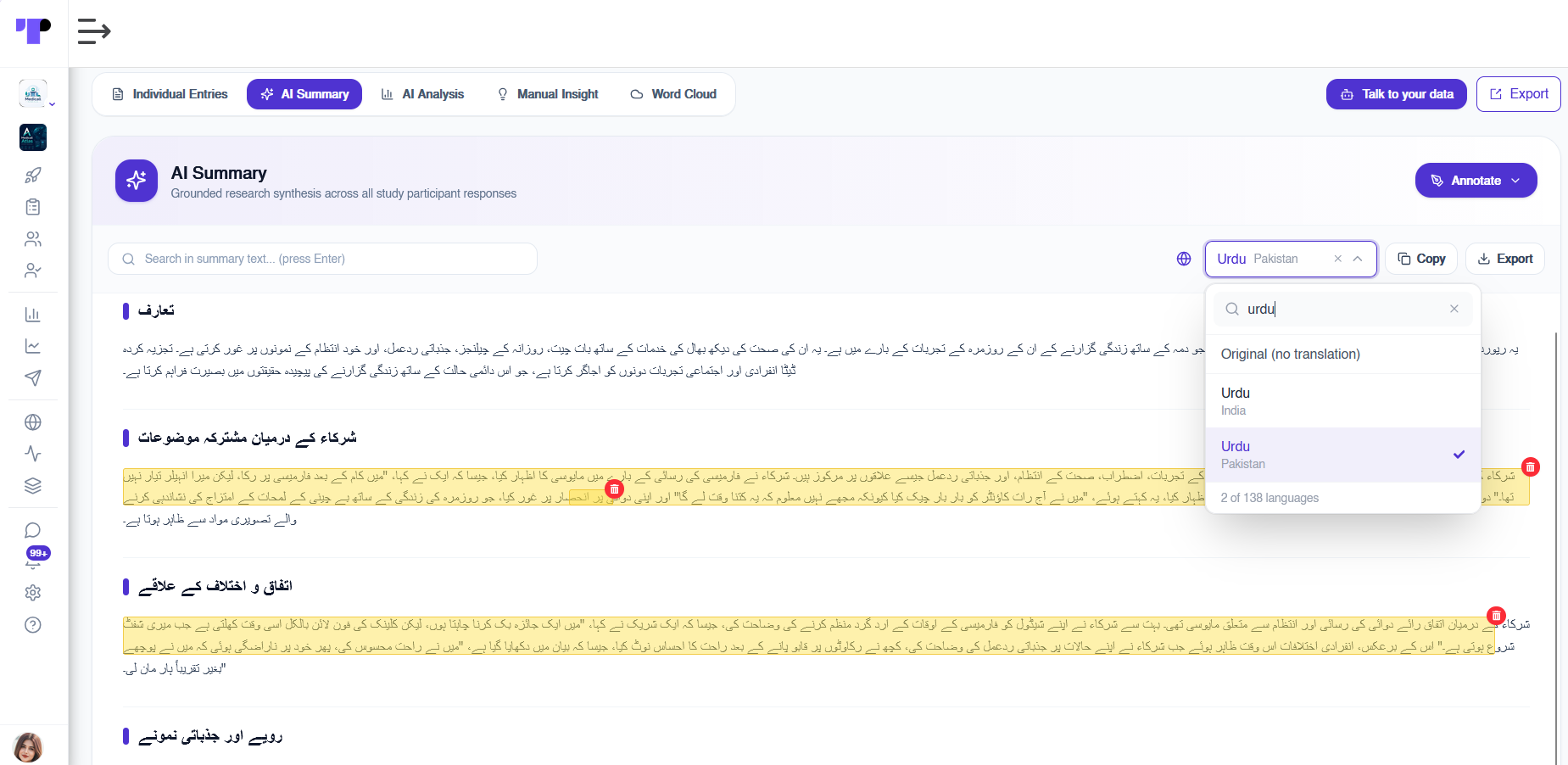
Summaries can also be translated into more than 130 languages, which makes it easy to share findings with global healthcare teams or run patient studies across different countries.
How Does Sentiment Analysis Reveal the Emotional Side of the Patient Journey?
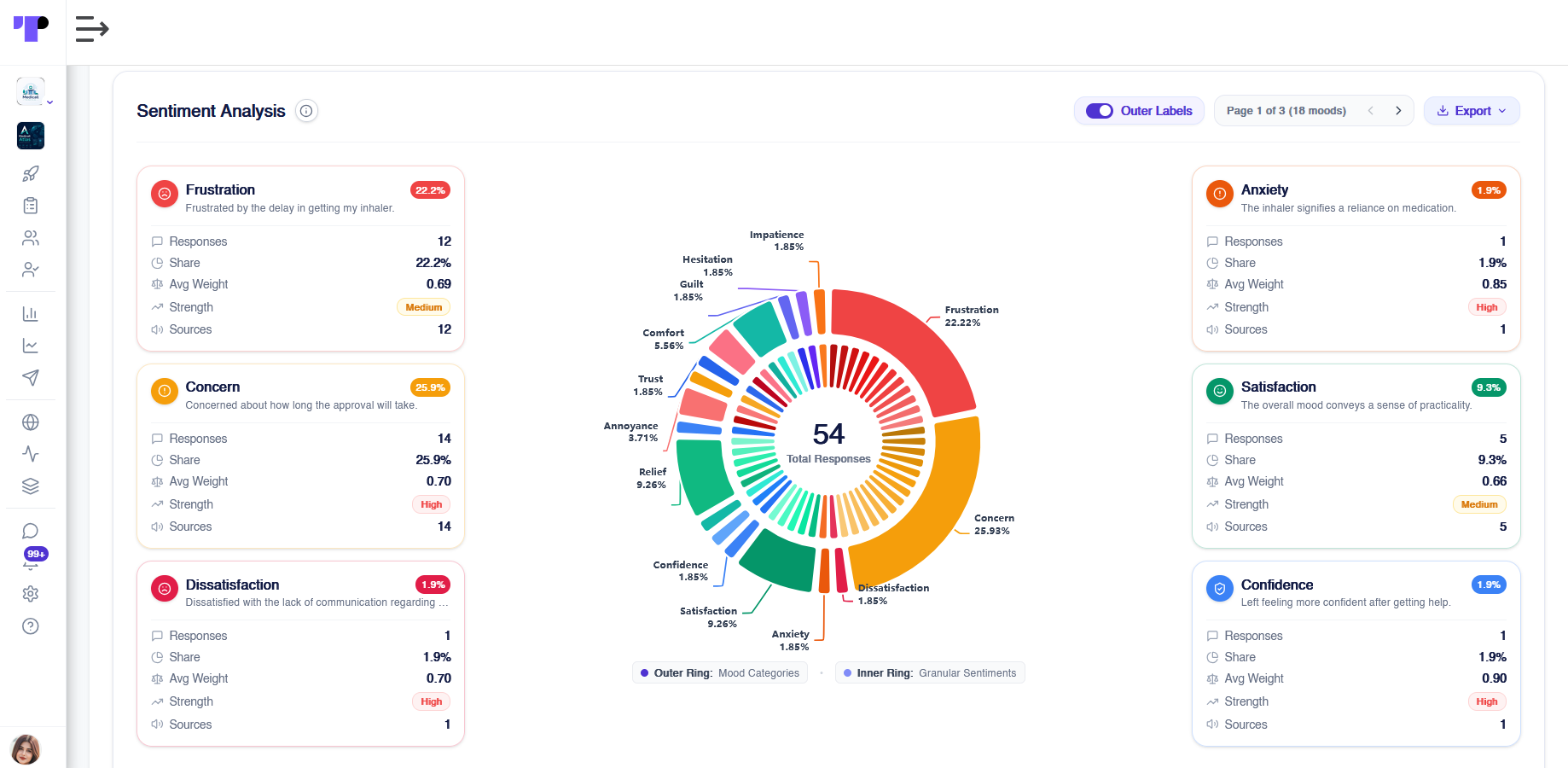
Living with a long-term condition is emotional, and sentiment analysis shows how patients really feel. In this study, concern and frustration were the strongest moods, mostly linked to delays in getting medication and booking appointments. Each mood comes with its key statement, strength and number of responses. Learn more in our beginner’s guide to AI sentiment analysis.
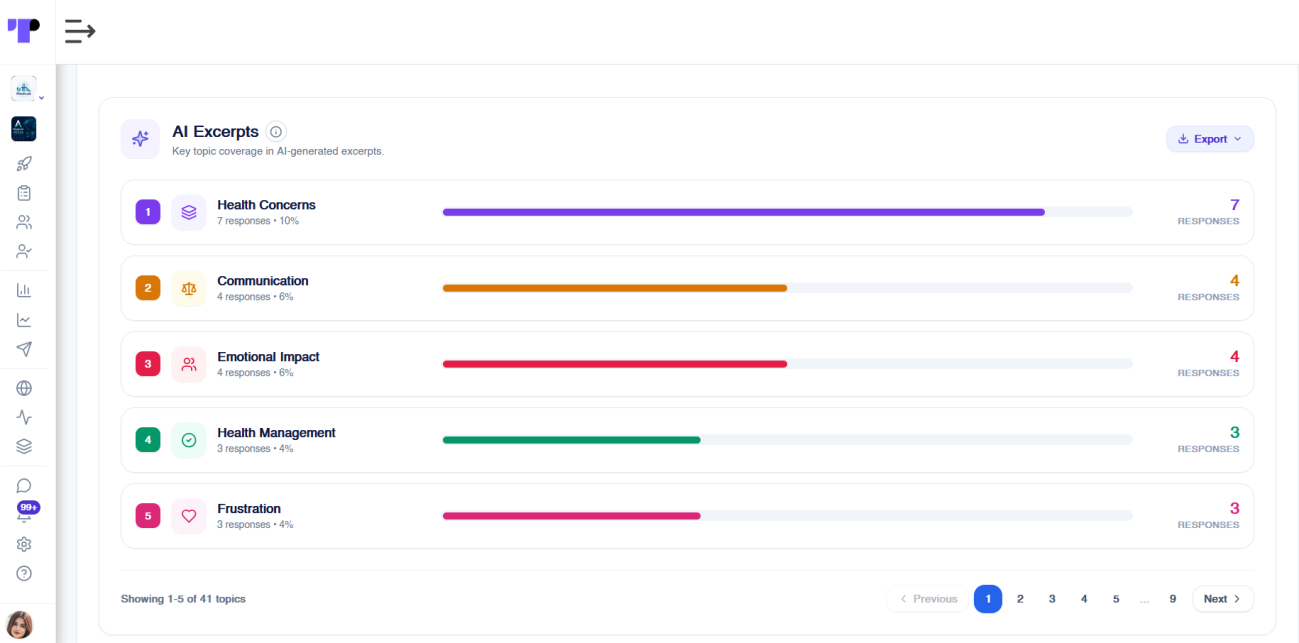
Uncovering Patient Journey Themes With AI Excerpts and Taxonomies
AI excerpts rank the topics patients mention most, such as health concerns, communication with care teams and emotional impact. This shows researchers where to focus first.
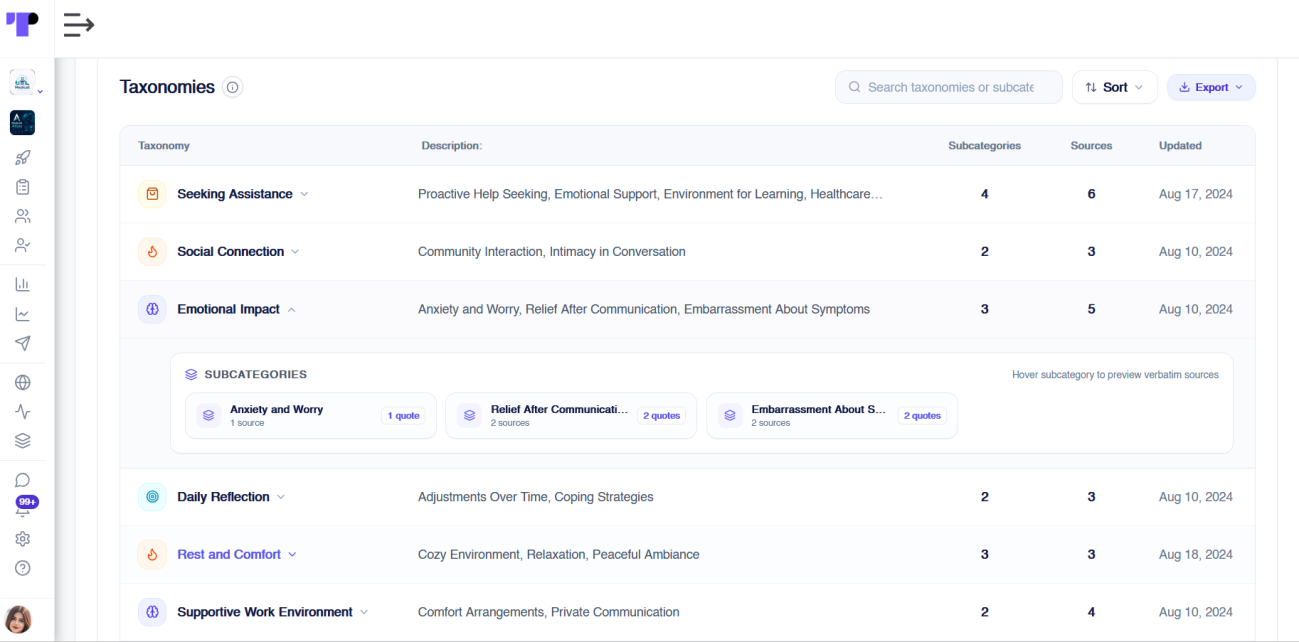
Taxonomies organise these findings into categories and subcategories, each linked to real patient quotes. For example, Emotional Impact breaks down into anxiety and worry, relief after communication and embarrassment about symptoms. Findings can then be shared through branded insight reports.
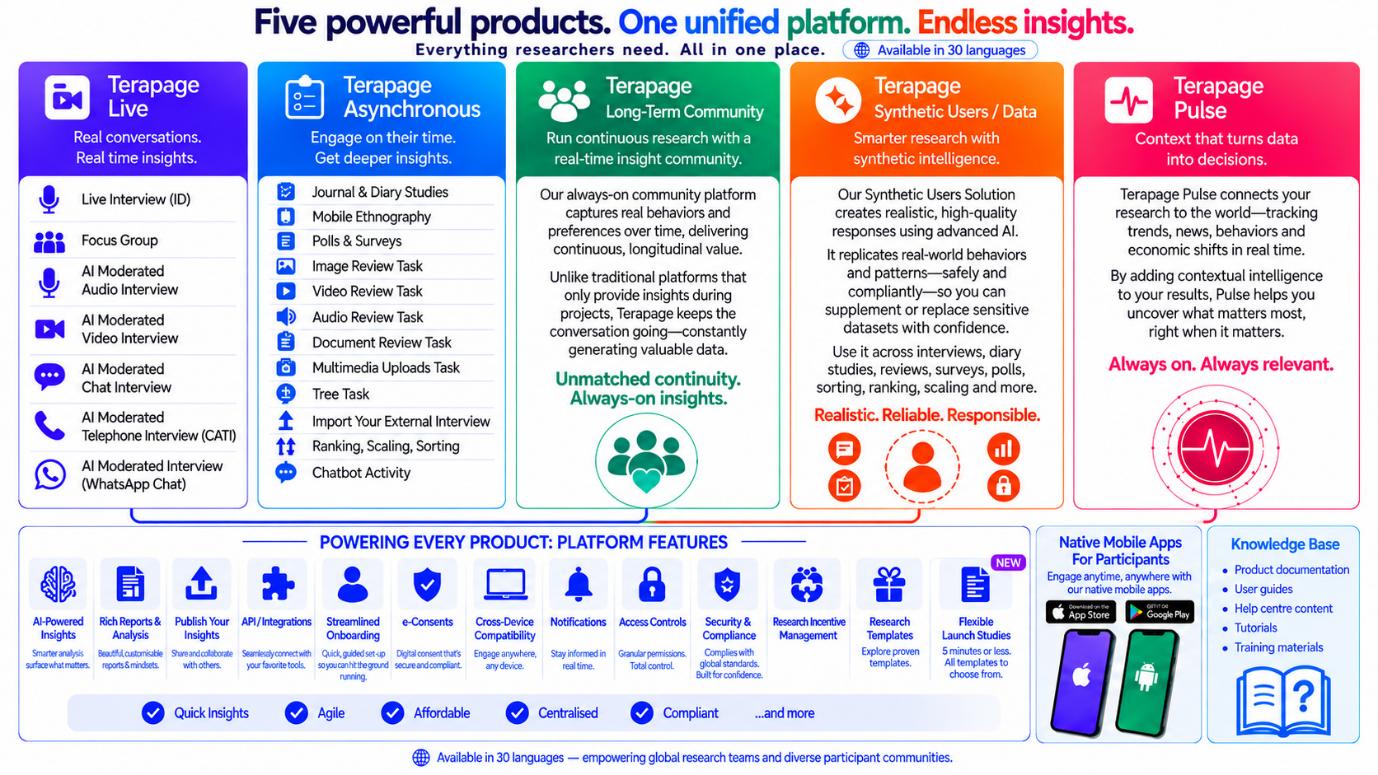
Map the Real Patient Journey With Mobile Ethnography on One Unified Platform
Patients live with their condition every day, not just on clinic days. Terapage brings every step of patient journey research into one place. Terapage Asynchronous captures real-life moments through journal, diary and mobile ethnography studies, Terapage Live explores the reasons behind them in one-to-one interviews, and a long-term insight community keeps patients engaged across months, not just one study.
Every product is powered by shared platform features, including AI-powered insights, e-consents, security and compliance, native mobile apps for participants and support for 30 languages. See how Allied Care improved its care services with Terapage.
Request a demo or start a free trial to map the real patient journey on your next study.
Ready to map the real patient journey?
No credit card required. Need help recruiting patients? See our participant recruitment services.